English
  عربى
عربى  中文简体
中文简体 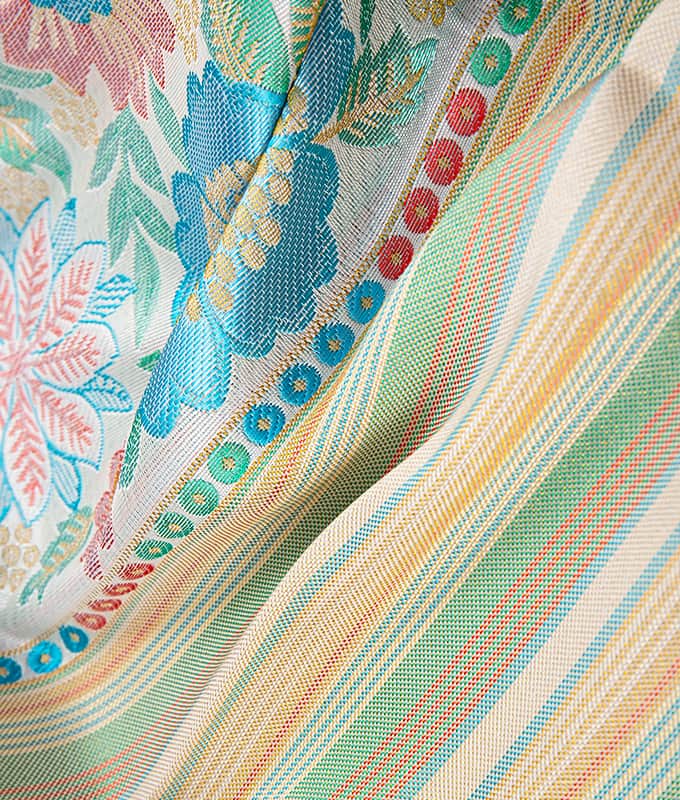
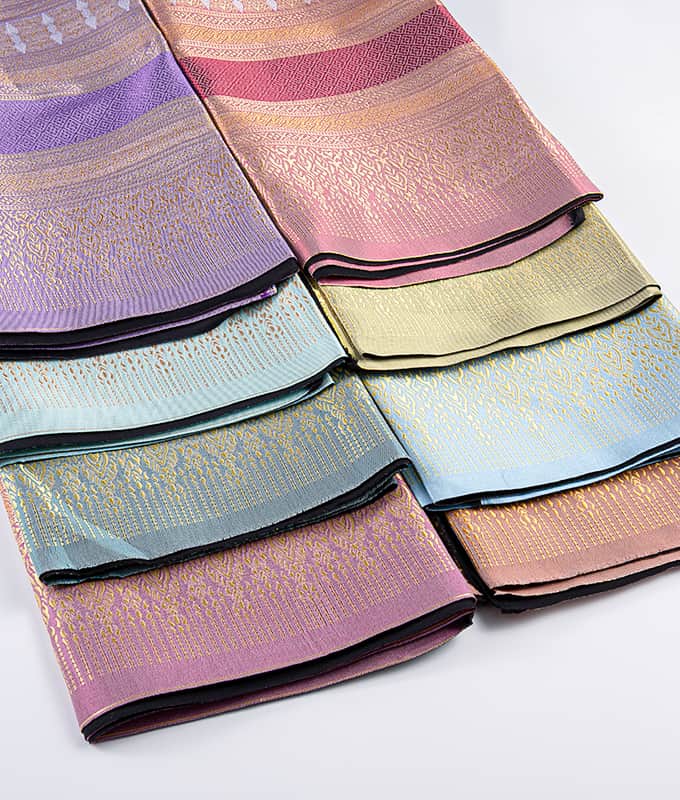
100% Polyester Jacquard Pattern Colorful Southeast Asian Sarong Fabric – durable, vibrant, and easy to care for, designed to bring both beauty and pra...
See Details100% Polyester Jacquard Southeast Asia Sarong Fabric: The Complete Buyer's Guide
Industry News-Content
- 1 Why 100% Polyester Jacquard for Sarong Fabric?
- 2 Understanding Jacquard Technology: How It Creates Superior Patterns
- 3 Top 5 Southeast Asian Sarong Styles & Their Fabric Requirements
- 4 How to Customize Your Sarong Fabric: A Step-by-Step Process
- 5 Quality Standards & Certifications: What to Look For
- 6 Pricing & MOQ: How to Budget for Your Order
- 7 Why Choose a Chinese Manufacturer for Your Sarong Fabric?
Why 100% Polyester Jacquard for Sarong Fabric?
80% of the sarong fabric orders we process each quarter specify 100% polyester jacquard. Buyers across Thailand, Indonesia, Malaysia, and the Philippines consistently choose this construction over cotton, silk, or printed polyester. The reason is a balance of three hard business metrics: cost per meter, pattern durability, and supply chain reliability.
A 100% polyester jacquard sarong fabric typically lands at $0.90–$1.50 per meter for bulk orders, roughly 40% cheaper than silk blends and 20% more affordable than premium combed cotton sarong fabrics. At the same time, its color fastness rating reaches Grade 4–5 under ISO 105-C06 standards, outlasting many direct-print alternatives that fade after 15–20 washes. Supply reliability is equally critical: polyester yarn prices fluctuate far less than natural fibers, and jacquard weaving runs on 24/7 automated looms with consistent output.
For quick reference, here is how 100% polyester jacquard stacks up against the two most common alternatives:
- Vs. 100% Cotton (printed or woven): Cotton sarongs wrinkle heavily and require higher care; polyester jacquard releases creases instantly and dries 3x faster. Cotton also absorbs moisture, making it heavier in humid climates, whereas polyester stays lightweight at 75–85 gsm.
- Vs. Silk / Silk blends: Silk delivers unmatched luster, but unit cost is 3–5x higher and silk cannot withstand machine washing. Polyester jacquard mimics silk sheen through filament yarns and special weave structures without the fragility.
- Vs. Printed polyester (non-jacquard): Printed designs sit on the fabric surface and crack or peel after repeated washing; jacquard patterns are woven into the structure and remain intact for the life of the garment.
Understanding Jacquard Technology: How It Creates Superior Patterns
Jacquard weaving controls each warp thread individually via a punch-card or electronic dobby system, allowing intricate multi-color motifs to be formed directly during weaving. Unlike surface printing, the design is not applied with pigments or dyes after the base cloth is produced. Instead, the pattern and the fabric are born simultaneously.
This has two practical consequences for sarong production. First, pattern registration is perfect because every yarn is locked in position by the weave structure. Second, the fabric face and back often show different but complementary effects—some of our jacquard sarong fabrics even qualify as reversible, a feature impossible to achieve with conventional print methods. When buyers run their fingers across a 100% polyester jacquard sarong fabric, they can feel a subtle raised texture that adds depth to ethnic motifs such as paisley, lotus, or geometric diamonds.
From a manufacturing standpoint, jacquard also allows the incorporation of specialty yarns. Gold or silver metallic threads are frequently woven into Thai and Indonesian sarong designs to simulate traditional songket brocade, yet the polyester base keeps the fabric machine-washable and featherlight. No additional embroidery or post-treatment is needed.
Top 5 Southeast Asian Sarong Styles & Their Fabric Requirements
Each market in Southeast Asia has distinct preferences for sarong width, weight, pattern density, and cultural motifs. Importers and wholesalers who align product specs with these regional norms see repeat order rates above 70%. Below is a summary table built from our last 24 months of export data.
| Country / Style | Common Name | Typical Width | Preferred Weight | Dominant Patterns |
|---|---|---|---|---|
| Thailand | Pha Sin (tube skirt) | 58–60" | 80–90 gsm | Lotus, flame motifs, gold metallic accents |
| Indonesia | Batik Sarong / Kain Panjang | 44–45" | 90–110 gsm | Parang, kawung, mega mendung (geometric & cloud patterns) |
| Philippines | Malong | 58–60" | 75–85 gsm | Vertical stripes, okir, with contrasting border panels |
| Laos | Sinh | 40–44" | 80–95 gsm | Diamond lattice (naga-inspired), supplementary weft motifs |
| Myanmar | Longyi | 44–48" | 85–100 gsm | Horizontal stripes, interlaced waves, natural dye color palettes |
When purchasing Southeast Asia national traditional sarong fabric, confirming width and weight against the target market is essential. A 44" fabric cannot serve the Pha Sin market, and a 110 gsm fabric will feel too heavy for a Filipino malong. We strongly recommend requesting a physical swatch book with at least three weight variations before finalizing a bulk order.
How to Customize Your Sarong Fabric: A Step-by-Step Process
Custom jacquard sarong fabric accounts for 65% of our production volume. Buyers typically want to adapt an existing traditional motif to a modern color palette or create an exclusive pattern for their brand. The process is straightforward, but expectations must be calibrated around textile physics—jacquard weaving cannot reproduce photographic gradients the way digital printing can. What it delivers is crisp, high-contrast designs with a luxurious dimensional feel.
Here is the typical timeline from concept to delivery:
- Design submission & feasibility check (1–2 days). Send your artwork in vector format (AI, CDR, or high-res PDF). Our textile engineer reviews color separation and weave compatibility. Complex designs with more than 6 colors may require slight simplification.
- Digital simulation & loom programming (1 day). We generate a realistic fabric simulation showing exactly how the design will look after weaving, including the texture effect. Once approved, the pattern is programmed into the electronic jacquard loom.
- Lab dip & handloom sample (3–5 days). A 30 cm × 30 cm fabric swatch is woven on a sampling loom using the exact yarn colors specified. This is the critical check for color accuracy and pattern registration. Buyers often iterate once at this stage.
- Bulk production (15–20 days for 10,000 meters). After sample approval, production runs on high-speed air-jet jacquard looms. Daily capacity for a standard 240-hook design is approximately 1,200–1,500 meters.
- Quality inspection & dispatch (2–3 days). Each roll undergoes an on-line inspection system that marks defects, followed by a 4-point system final audit. The fabric is then packed in polybags with silica gel and shipped.
For buyers new to custom jacquard, we often suggest starting with a small bridging order of popular traditional Thai sarong fabric to understand the base quality and pattern precision before investing in full custom tooling.
Quality Standards & Certifications: What to Look For
Not all 100% polyester jacquard fabrics meet the safety and durability benchmarks required by EU and North American importers. The most credible suppliers will provide third-party test reports covering dye safety, physical performance, and restricted substances. When evaluating a manufacturer, insist on these five indicators.
- OEKO-TEX Standard 100 Class I or II. Certifies that every component—yarn, dyes, finishing agents—is free from harmful substances like carcinogenic arylamines, formaldehyde, and heavy metals. Class I (baby articles) is the strictest level.
- Formaldehyde content ≤ 75 ppm. Japanese and European regulations demand a maximum of 75 mg/kg on fabric. A simple spot test with a phloroglucinol reagent can detect formaldehyde presence on-site.
- Color fastness to washing (ISO 105-C06). A rating of 4–5 for color change and staining is the commercial norm for sarong fabric that will be laundered frequently.
- pH value between 4.0 and 7.5. Fabric that is too alkaline or acidic can cause skin irritation. Balanced pH also ensures dye stability and prevents degradation during storage.
- Heavy metals (Sb, As, Pb, Cd, Cr, Co, Cu, Ni, Hg) under the limits set by REACH Annex XVII. Ask for an ICP-OES test report covering all extractable metals. A single violation can block an entire container at customs.
Our in-line inspection system also checks for weaving defects: missing ends, double picks, reed marks, and pattern misalignment. The industry acceptance standard is 2.5 penalty points per 100 square meters under the 4‑point system—meaning a flawless roll with zero points is the target, not the exception.
Pricing & MOQ: How to Budget for Your Order
Unit price for 100% polyester jacquard sarong fabric moves in three distinct bands, driven by order quantity, pattern complexity, and whether metallic yarn is included. The figures below reflect the FOB Shanghai price for a standard 80 gsm, 2‑4 color jacquard design. Complex 6‑color patterns with metallic thread can add $0.15–$0.25 per meter.
| Order Quantity | Price per Meter (USD) | Total Order Value | Typical Lead Time |
|---|---|---|---|
| 1,000 m | $1.40 – $1.70 | $1,400 – $1,700 | 15–18 days |
| 5,000 m | $1.10 – $1.30 | $5,500 – $6,500 | 20–25 days |
| 10,000 m | $0.90 – $1.10 | $9,000 – $11,000 | 25–30 days |
Minimum order quantity (MOQ) for custom jacquard is usually 1,000 meters per design. For stock designs, we sometimes accept mixed orders as low as 500 meters per colorway, but the price will be near the top of the range. Sample development costs $80–$120 per design and is refunded when the production order exceeds 5,000 meters. Sea freight to Bangkok or Jakarta typically adds $0.04–$0.06 per meter depending on the container load factor.
Why Choose a Chinese Manufacturer for Your Sarong Fabric?
China supplies over 65% of the world's polyester filament yarn and hosts the densest concentration of high-speed jacquard looms in Zhejiang and Jiangsu provinces. For volume buyers, this translates into shorter lead times, lower logistical overhead, and deeper customization capabilities than most local mills in Southeast Asia.
The comparison below summarizes the key advantages:
- Production scale & speed. A medium-sized Chinese mill runs 150–200 jacquard looms and can deliver 50,000 meters per month. Most domestic Thai or Indonesian mills operate 20–30 looms, creating capacity bottlenecks during peak festive seasons.
- Customization depth. Chinese manufacturers routinely handle 8‑color jacquard, metallic thread integration, and double-faced weaving. Access to a complete domestic dyeing supply chain means color matching takes days, not weeks.
- Logistics convenience. Our factory is located in Huzhou, Zhejiang, 100 km from Shanghai Pudong Airport and 120 km from Ningbo Port. Air freight samples reach Singapore or Kuala Lumpur in 3 days; sea freight full containers land in 7–10 days.
- Price stability. Fully integrated processes from yarn extrusion to finished fabric eliminate middlemen and stabilize costs, even when crude oil prices fluctuate.
Some buyers worry about communication barriers. We assign a dedicated English-speaking account manager and provide weekly production photos and video updates. An on-site factory visit can be arranged with 48-hour notice. For a deeper look at regional fabric traditions and how they inform modern production, see our Southeast Asia national traditional sarong fabric guide.
Related products
-
-
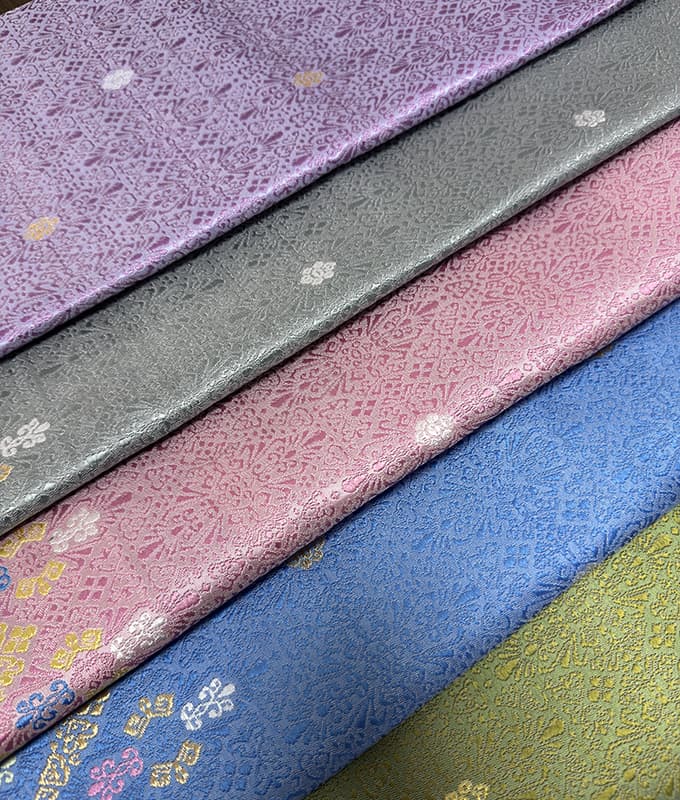
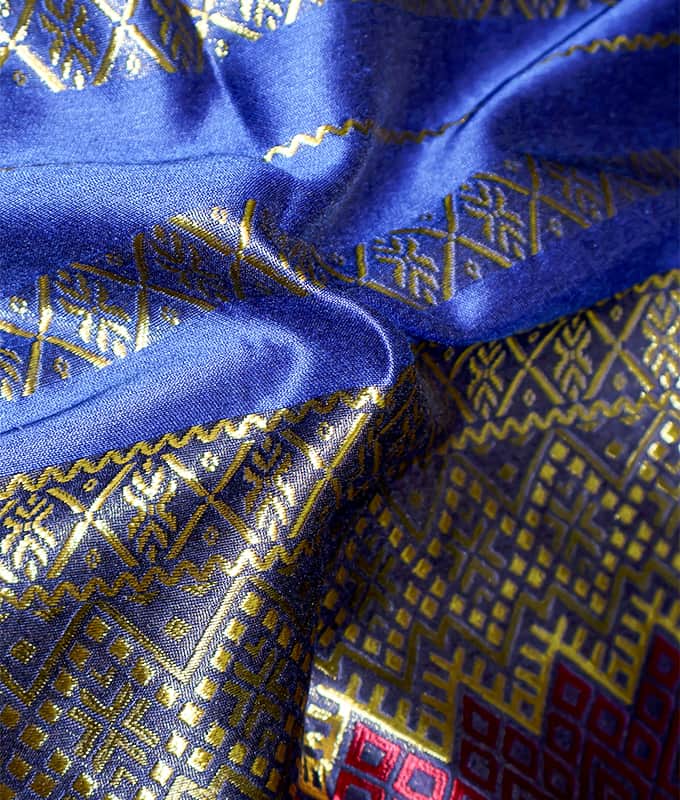
This Southeast Asian-style polyester jacquard fabric is made with a jacquard weaving technique and blends traditional ethnic geometric patterns into a...
See Details -
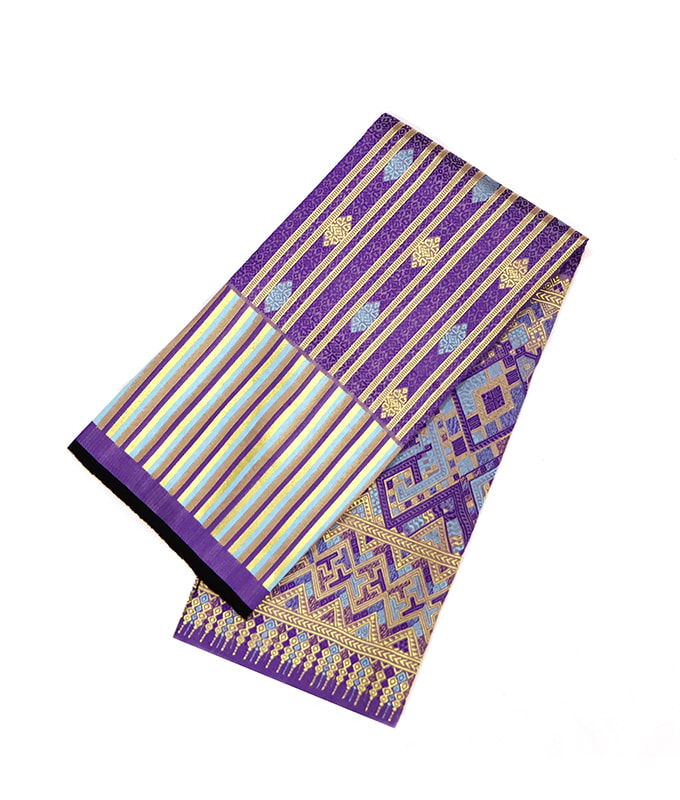
This Southeast Asian-style jacquard sarong fabric combines ethnic geometric motifs with striped elements. A soft light-purple ground is paired with go...
See Details -
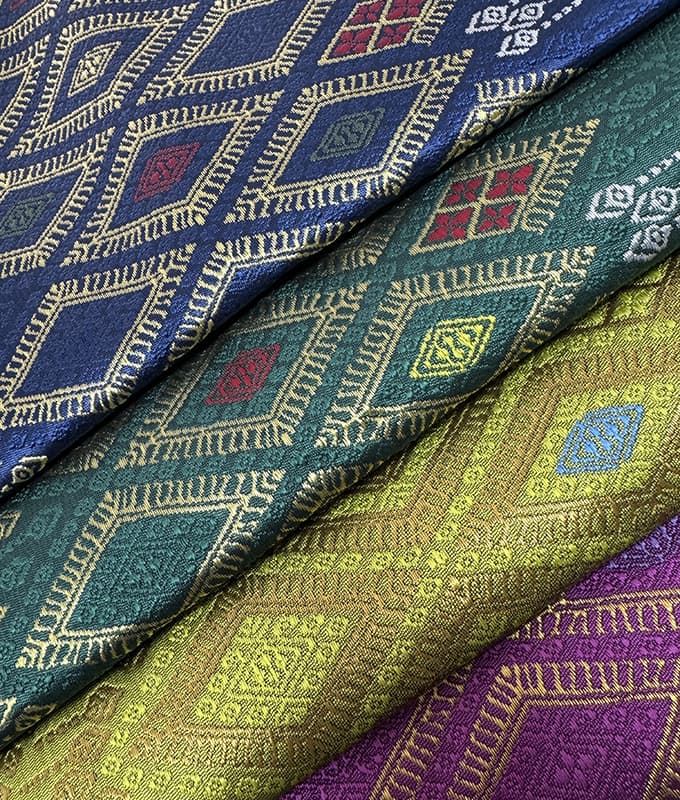
This Southeast Asian ethnic-style polyester jacquard fabric is made with a jacquard weaving technique. A classic diamond geometric pattern is paired w...
See Details -
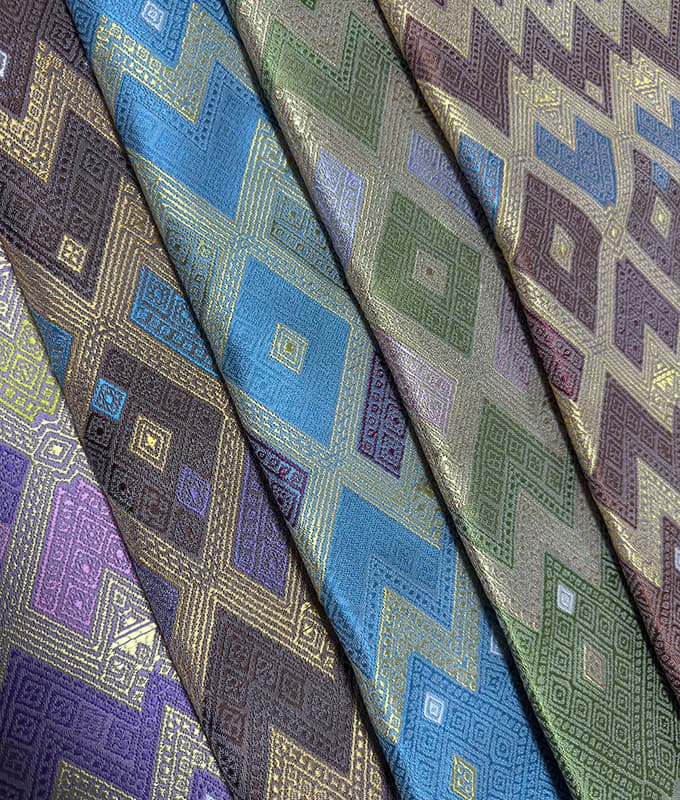
This Southeast Asian ethnic-style polyester jacquard fabric is made with a jacquard weaving technique. The staggered zigzag and diamond patterns carry...
See Details -
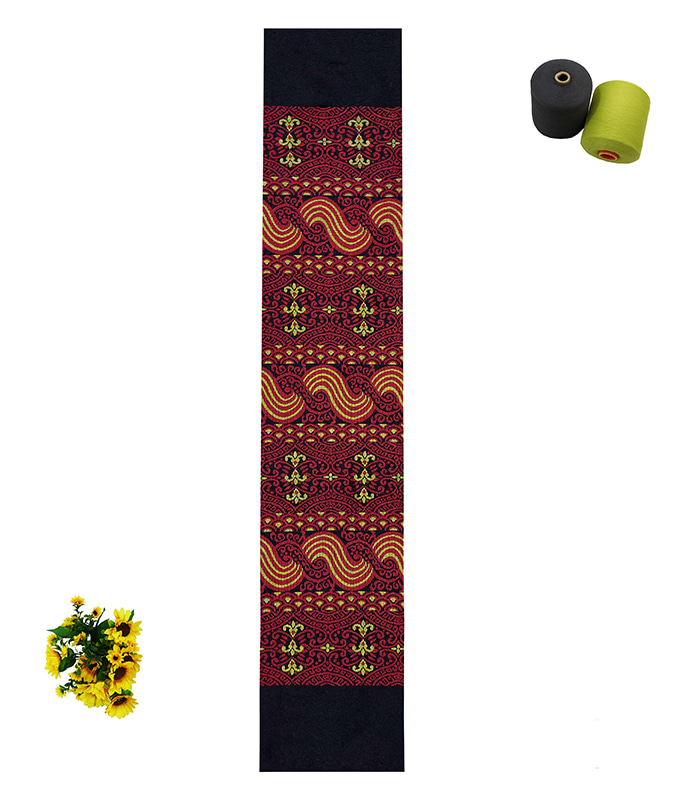
This Southeast Asian ethnic-style jacquard sarong fabric uses a sectioned structure. The top and bottom ends are solid-color blocks, while the main mi...
See Details