English
  عربى
عربى  中文简体
中文简体 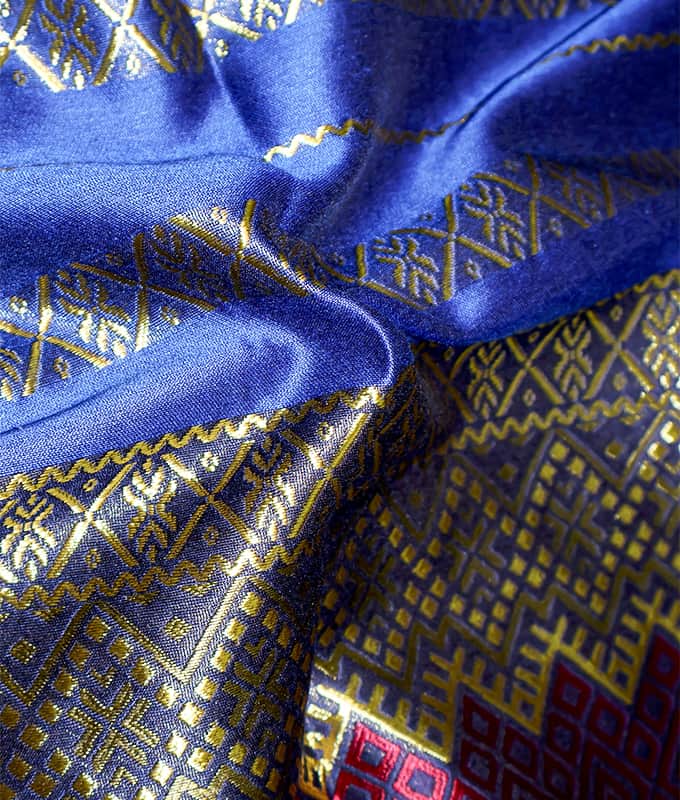
The Polyester Fabric for Popular Traditional Thai Sarong is crafted from carefully selected polyester filaments, with strict quality control from the ...
See DetailsAll-Polyester Thai Sarong Fabric: Wholesale Buying Guide
Industry News-Content
- 1 Why Choose 100% Polyester for Thai Sarong Fabric?
- 2 Key Types of All-Polyester Thai Sarong Fabric (Jacquard vs. Printed vs. Silk-like)
- 3 B2B Sourcing Guide: Price, MOQ, and Customization
- 4 Performance Metrics: What to Look for in Polyester Sarong Fabric
- 5 How to Verify the Quality of Your Polyester Sarong Fabric
- 6 Packaging, Shipping, and Logistics for Bulk Orders
In 2026, wholesale buyers of Southeast Asian textiles are redirecting their orders toward 100% polyester Thai sarong fabric. The reason is straightforward: a meter of quality all-polyester sarong fabric costs 40–60% less than cotton or silk equivalents, yet delivers comparable drape and far better resistance to humidity, mildew, and daily wear. For importers, garment manufacturers, and distributors supplying markets from North America to the Middle East, the switch to all-polyester isn’t just a cost decision — it’s a supply-chain advantage that cuts lead times and standardizes quality across production runs.
Why Choose 100% Polyester for Thai Sarong Fabric?
The decision between polyester, cotton, and silk comes down to three factors that matter most in bulk purchasing: cost per meter, maintenance demands, and performance in tropical climates. Cotton sarongs, while breathable, wrinkle heavily and can shrink up to 5% after washing. Silk offers unmatched luster but requires delicate care and often doubles the per-unit cost. All-polyester Thai sarong fabric avoids both traps. It holds vivid prints and jacquard patterns without bleeding, dries in half the time of cotton, and resists creasing so effectively that it often needs no ironing after transport.
The table below breaks down the key trade-offs across the three most commonly sourced sarong materials. Wholesale buyers prioritizing margin and consistent quality will find the figures telling.
| Attribute | 100% Polyester | Cotton | Silk |
|---|---|---|---|
| Typical Cost per Meter (FOB) | USD 0.45–0.65 | USD 0.90–1.40 | USD 2.50–5.00 |
| Drying Time (hours) | 2–4 | 5–8 | 4–6 |
| Shrinkage Rate | Less than 1% | 3–5% | 1–2% |
| Wrinkle Resistance | Excellent | Poor | Moderate |
| Color Fastness (wash cycles) | 40+ | 20–30 | 15–25 |
For buyers shipping into humid coastal regions — from Africa’s Gulf of Guinea to the Caribbean — polyester’s resistance to mold and mildew is another hard economic benefit. A single shipment of cotton sarong fabric stored in a warm, damp warehouse can develop spotting that leads to returns; all-polyester fabric eliminates that risk almost entirely.
Key Types of All-Polyester Thai Sarong Fabric (Jacquard vs. Printed vs. Silk-like)
Not all 100% polyester Thai sarong fabric is manufactured the same way. Three production methods dominate the wholesale market, each targeting different price tiers and aesthetic expectations. Jacquard weaving integrates the pattern directly into the fabric structure through warp and weft interlacing, creating dimensional motifs that never fade or peel. Rotary printing, by contrast, applies dyes to the surface of a plain polyester base, offering faster production but lower durability. Silk-like finishing uses a chemical or mechanical softening process on lightweight polyester to mimic the hand-feel of premium Thai silk at a fraction of the cost.
Your choice should align with the end consumer’s expectations. A luxury boutique selling formal pha-sin skirts will prefer the rich texture of jacquard. A mass-market retailer focused on beachwear sarongs will prioritize the cost efficiency of printed polyester. The table below lays out the practical differences that influence sourcing decisions.
| Feature | Jacquard | Printed | Silk-like |
|---|---|---|---|
| Pattern Durability | Woven-in, lasts fabric lifetime | Surface print, may fade after 20+ washes | Varies by base fabric; typically printed or dyed |
| Hand Feel | Textured, substantial | Smooth, flat | Soft, fluid, silk-like |
| Cost Range (FOB) | USD 0.55–0.75/m | USD 0.40–0.55/m | USD 0.50–0.70/m |
| Typical Lead Time (custom) | 20–30 days | 10–15 days | 15–25 days |
| Best Application | Formal sarongs, wedding wear | Casual daily sarongs, promotional items | Mid-range pha-sin, dress sarongs |
For buyers sourcing traditional Southeast Asian patterns — such as the intricate geometric borders of a teen jok or the floral repeats found in northern Thai designs — jacquard is often the only process that reproduces the complexity authentically. Our own polyester jacquard Thai sarong fabric line, for instance, develops 3D surface textures that printed polyester simply cannot achieve. This becomes a discernible quality signal that retailers can charge a premium for.
B2B Sourcing Guide: Price, MOQ, and Customization
Wholesale procurement of all-polyester Thai sarong fabric typically splits into two tracks: buying stock inventory or commissioning custom production. Stock items offer the lowest entry barrier — minimum order quantities as small as 100 meters, immediate dispatch from warehouse, and no additional sample fees. Custom orders, on the other hand, let you control the pattern, color palette, and finish, but they demand a higher MOQ and a longer lead time. The break-even point where custom becomes cheaper per meter often lies between 1,000 and 3,000 meters, depending on the complexity of the design.
| Parameter | Stock Purchase | Custom Production |
|---|---|---|
| MOQ | 100–500 meters | 1,000–3,000 meters |
| Lead Time | 3–7 days | 15–30 days |
| Price per Meter | Standard (USD 0.45–0.65) | Tiered discount above MOQ (USD 0.38–0.55) |
| Sample Fee | Free stock swatches | USD 50–150 per strike-off |
| Pattern Ownership | Shared catalog | Exclusive to your order |
Smart buyers often start with a stock sample to evaluate the base fabric weight and hand feel, then transition to a custom run once they confirm the market’s preference for specific colors. To explore what’s possible with jacquard customization — from designing teen jok borders to modifying pattern repeats — our team has detailed guidance on customizing polyester jacquard patterns for pha-sinh sarongs. The process covers everything from digital mockup approval to lab-dip color matching.
Performance Metrics: What to Look for in Polyester Sarong Fabric
A spec sheet tells you more about a fabric’s real-world performance than any sales description. When evaluating a 100% polyester Thai sarong fabric sample, four metrics deserve close scrutiny. Weight, measured in GSM (grams per square meter), directly influences how the garment hangs: 80–100 GSM yields a light, airy sarong suitable for beachwear, while 120–150 GSM gives the structure required for formal, floor-length pha-sin. UPF (Ultraviolet Protection Factor) becomes critical for sarongs sold in sun-intensive markets; anything below UPF 30 offers minimal protection, so aim for UPF 50+ for a marketing edge. Shrinkage must stay under 1%, and the anti-pilling grade should reach at least 4 on the ICI pillbox scale to ensure the fabric looks fresh after repeated wear.
- GSM (Weight): 80–100 GSM for casual use; 120–150 GSM for structured garments.
- UPF Rating: Minimum 30; 50+ is ideal and allows UV-protection labeling.
- Shrinkage: Less than 1% after washing at 40°C.
- Anti-pilling: ICI scale rating of 4 or above (out of 5).
- Colorfastness to rubbing: Grade 4 dry / Grade 3 wet (AATCC standard).
Insist on a mill test certificate for each batch. Suppliers who cannot produce one for these metrics are often masking inconsistencies in the polyester yarn quality or dyeing process. The small investment in lab testing upfront pays back tenfold in reduced returns and chargebacks.
How to Verify the Quality of Your Polyester Sarong Fabric
Factory visits aren’t always feasible, but three lightweight field tests give you a reliable quality snapshot within minutes. These methods don’t require special equipment, just a lighter, a white cloth, and your eyes.
- Burn test for fiber content: Clip a small swatch and ignite it. Polyester melts and shrinks from the flame, producing black, hard smoke and leaving a hard, bead-like residue. Cotton burns with an afterglow and yields soft, grey ash. This simple check confirms there’s no undisclosed cotton blend inflating the price.
- Rub test for color fastness: Dampen a clean white cotton cloth and rub it vigorously against the dyed surface of the fabric 20 times. Any color transfer beyond a faint tint signals poor dye fixation. Fabrics that fail this test will bleed during the first wash and generate customer complaints.
- Selvage and seam slippage check: Anchor the fabric at one edge and pull firmly along the grain. Examine the selvage for loose threads or unravelling. A soundly woven polyester sarong fabric will not ladder or fray at the edge, even under tension. This indicates proper warp lock and sufficient weave density.
Combine these checks with the performance metrics from the previous section, and you can reject substandard shipments before they leave the loading dock. For large orders, consider requesting a third-party inspection from a firm like SGS or Bureau Veritas to add an extra layer of assurance.
Packaging, Shipping, and Logistics for Bulk Orders
How your all-polyester Thai sarong fabric is packed and loaded directly impacts landed cost. The two standard formats are roll packing and flat-fold packing. Rolls — typically 50 or 100 meters per roll, wrapped in polyethylene film — maximize container space and minimize creasing, making them the default for most container-load shipments. Flat folds, where fabric is cut and folded into stackable bolts of 20–30 meters, are easier to handle for small order quantities but consume 15–20% more volume and can introduce hard creases that require steaming on arrival.
| Packaging Type | Typical Length per Unit | 40-ft Container Capacity (approx.) | Pros | Cons |
|---|---|---|---|---|
| Roll (PE-wrapped) | 50–100 m | 70,000–90,000 meters | Minimum creasing, high volume efficiency | Harder to handle for partial picks |
| Flat-fold (bolt) | 20–30 m | 55,000–70,000 meters | Easy to pick, pack, and distribute | Higher volume cost, risk of fold creases |
For sea freight, a 40-foot high-cube container loaded with rolls typically accommodates 80,000 to 90,000 meters of 120-GSM polyester fabric. Air freight is only economical for rush samples or very high-value jacquard orders, with rates that can be 6–8 times higher per kilogram. Always request FOB pricing and then negotiate with your freight forwarder, rather than accepting CIF terms that mask logistics markups. The fabric’s low moisture absorption also means you avoid dimensional weight surcharges, keeping shipping costs predictable.
Related products
-
-
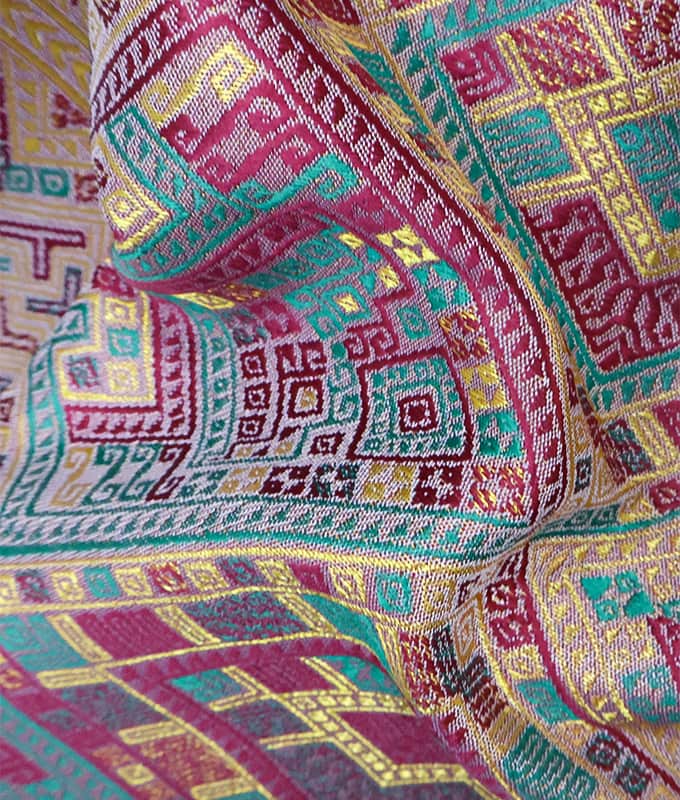
Silk-like Polyester Jacquard Fabric for Thai Pha Sinh Sarong — combining the elegance of silk-like texture with high-precision jacquard craftsmanship,...
See Details -
100% Polyester Jacquard Pattern Colorful Southeast Asian Sarong Fabric – durable, vibrant, and easy to care for, designed to bring both beauty and pra...
See Details -
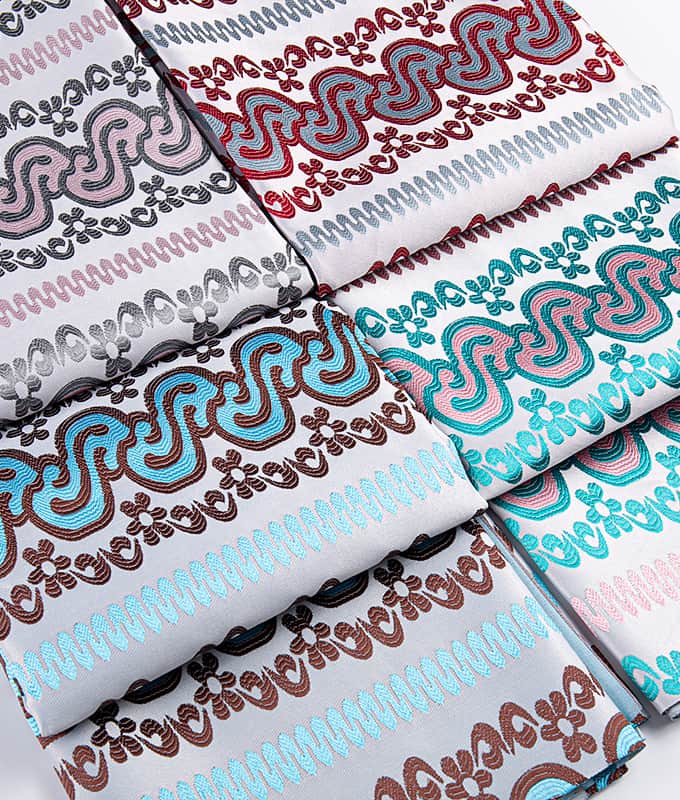
The S-Shaped 3D Textured Polyester Jacquard Fabric for Sarong combines elegance with durability. Crafted with advanced electronic jacquard technology,...
See Details -
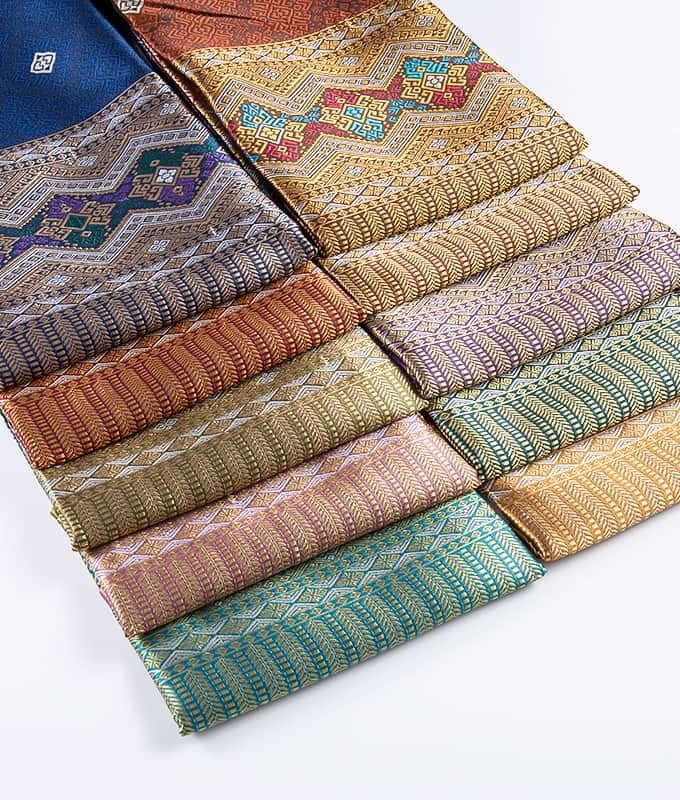
The Polyester Fabric for Traditional Southeast Asian Sarong Skirt bridges heritage and modernity. Rooted in cultural traditions, this fabric revitaliz...
See Details -
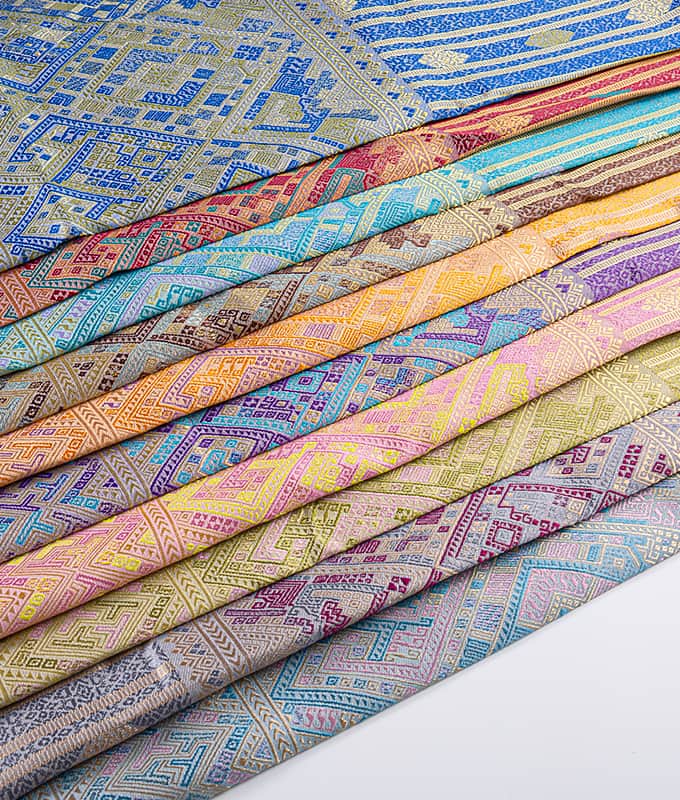
Hollow Polyester Jacquard Fabric for Laotian Traditional Sarong — a perfect fusion of Lao cultural heritage and modern fiber innovation. With symbolic...
See Details