


 English
  عربى
عربى  中文简体
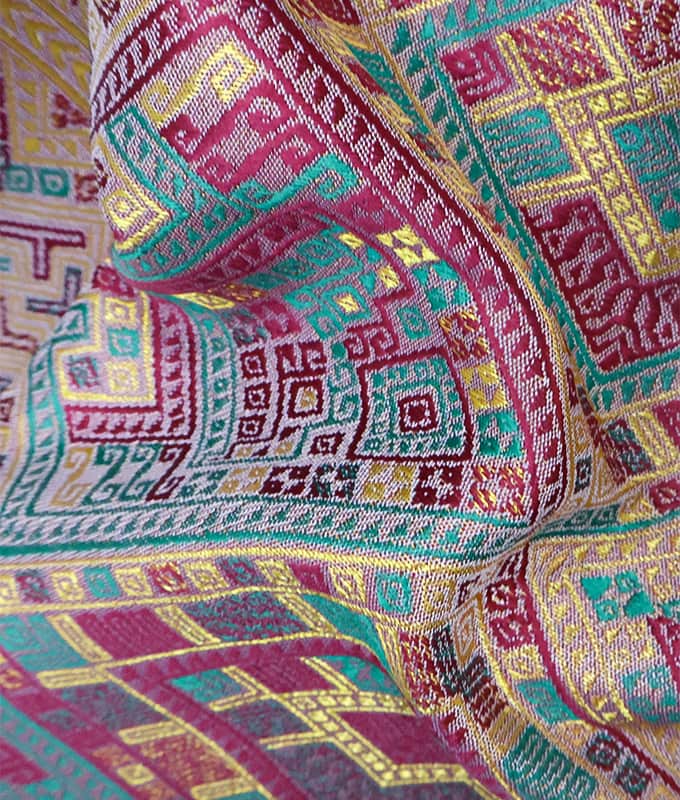
中文简体 Silk-like Polyester Jacquard Fabric for Thai Pha Sinh Sarong — combining the elegance of silk-like texture with high-precision jacquard craftsmanship,...
See DetailsSilk-like Polyester Jacquard Fabric for Thai Pha Sinh Sarong | Wholesale Supplier
Industry News-Content
- 1 The Pha Sinh Sarong and Why Fabric Choice Matters
- 2 What Makes Jacquard Weaving the Right Technique for Pha Sinh
- 3 Why Polyester Outperforms Silk for Bulk Pha Sinh Production
- 4 Key Product Specifications Buyers Should Know
- 5 Suitable Use Cases and Target Markets
- 6 Customization Options and How to Place a Bulk Order
The Pha Sinh Sarong and Why Fabric Choice Matters
The Pha Sinh is far more than a wrap skirt. Worn by Thai women across ceremonies, religious festivals, and formal court occasions, it is a tube-style garment that carries centuries of weaving tradition. Thailand has formally nominated the Chud Thai ensemble — which includes the Pha Sinh — for UNESCO Intangible Cultural Heritage recognition, a move that reflects how deeply these textiles are embedded in national identity. Demand for Pha Sinh fabric comes not only from Thailand itself but from regional garment manufacturers, tourism operators, dance costume suppliers, and ethnic fashion retailers across Southeast Asia.
For suppliers and wholesalers sourcing at scale, the fabric decision shapes everything: the drape of the finished skirt, the sharpness of the pattern, and whether the garment holds up through frequent use. A fabric that combines visual elegance with practical performance is not a compromise — it is the standard that today's commercial Pha Sinh market demands. That is precisely where the full range of polyester jacquard sarong fabrics for Southeast Asian markets becomes the go-to sourcing solution.
What Makes Jacquard Weaving the Right Technique for Pha Sinh
Traditional Thai textiles are defined by their woven structure. Techniques like chok (supplementary weft insertion) and mudmee (ikat dyeing) produce patterns that are part of the fabric's physical construction — not sitting on the surface, but built into every thread. Jacquard weaving follows the same logic. By controlling individual warp threads through a programmable loom mechanism, jacquard technology allows complex geometric and floral motifs to be woven directly into the textile, creating raised, three-dimensional patterns with a depth that print processes simply cannot replicate.
For a Pha Sinh sarong, this matters aesthetically and commercially. The finished fabric catches light differently across its surface — highlights appear on raised elements while recessed sections absorb light — producing the kind of tonal richness traditionally associated with silk brocade. At the production level, electronic jacquard looms reproduce the same pattern with precision across every meter of fabric, eliminating the inconsistency that hand-weaving introduces and making large-volume orders reliably uniform.
The result is a fabric that respects the visual language of traditional Thai textile design while meeting the repeatability requirements of modern wholesale production.
Why Polyester Outperforms Silk for Bulk Pha Sinh Production
Genuine silk remains the prestige material for handcrafted, ceremonial Pha Sinh pieces. But for manufacturers producing ready-to-wear garments, costume suppliers filling large orders, or retailers stocking seasonal collections, silk introduces a set of constraints that consistently complicate operations.
Silk is sensitive to moisture, sunlight, and mechanical stress. It requires hand washing or dry cleaning, cannot tolerate high heat, and is prone to color shift after repeated exposure to perspiration. In tropical climates — exactly where Pha Sinh sarongs are worn most — these limitations translate into real end-user frustration and increased return rates for retailers.
Silk-like polyester jacquard addresses each of these friction points directly:
- Durability: Polyester fibers resist stretching, shrinking, and tearing under the stresses of regular wear and commercial laundering. The fabric maintains its shape through hundreds of wash cycles.
- Color fastness: Polyester's colorfast properties keep dyes vibrant over time, preventing the fading that affects silk garments exposed to sunlight and detergents.
- Care simplicity: Machine or hand washable without deformation — a critical advantage for end users in markets where dry-cleaning infrastructure is limited.
- Wrinkle resistance: The fabric recovers well after folding and packing, making it practical for travel retail and garment export.
- Cost consistency: Unlike natural silk, which is subject to sericulture yield fluctuations and seasonal price swings, polyester input costs remain stable — an important factor for manufacturers operating on fixed-margin contracts.
The silk-like surface finish bridges the visual gap. Through yarn selection and finishing processes, the polyester achieves a smooth, lustrous hand-feel that reads as elegant at the retail level, giving buyers the aesthetic of silk with none of its operational overhead. For further comparison, the colorful 100% polyester jacquard sarong with traditional Southeast Asian patterns illustrates how high-fidelity pattern reproduction and color saturation can be achieved without relying on natural fiber inputs.
Key Product Specifications Buyers Should Know
The DLTH-1002 Silk-like Polyester Jacquard Fabric for Thai Pha Sinh Sarong is produced to the following standard specifications. All parameters can be adjusted for custom orders:
| Parameter | Standard Value | Customizable |
|---|---|---|
| Composition | 100% Polyester | No |
| Width | 110 / 180 cm | Yes |
| Weight | 450 g/piece | Yes |
| Craftsmanship | Jacquard Woven | No |
| Price Unit | Piece / Meter | — |
| Standard Colors | Royal blue, orange, burgundy, red, dark purple, tea green, ha blue, gray, brown, emerald blue | Yes |
| Origin | Mainland China (Huzhou, Zhejiang) | — |
| Compliance | European environmental standards | — |
The 450g weight delivers the substantial hand-feel that Pha Sinh wearers expect — light enough to drape gracefully but with enough body to hold the wrap shape without constant readjustment. The two standard width options (110 cm and 180 cm) correspond to the most common sarong cut dimensions in the Thai and broader Southeast Asian markets. Buyers requiring non-standard dimensions for specific garment constructions can request samples before committing to a production run.
For applications where surface texture is the primary design driver, the S-shaped 3D textured jacquard sarong fabric for structured drape and visual depth offers an alternative construction with distinct relief geometry.
Suitable Use Cases and Target Markets
The DLTH-1002 fabric is designed for garment manufacturers and distributors supplying end markets where traditional Thai aesthetics meet commercial volume requirements. The primary use cases break down as follows:
- Traditional festival and ceremonial wear: Events like Songkran (Thai New Year) and Loy Krathong drive seasonal demand for Pha Sinh-style skirts. Garment factories supplying school uniforms, community organizations, and government event vendors represent a consistent B2B buyer segment in this category.
- Dance and performance costumes: Classical Thai dance, tourism cultural shows, and regional folk performance groups require fabric that photographs well under stage lighting and withstands repeated dressing and undressing. The jacquard pattern's light-reflective properties and the fabric's structural durability make it well suited to this application.
- Tourism retail: Souvenir shops, hotel boutiques, and cultural experience operators across Thailand and neighboring countries stock machine-finished Pha Sinh sarongs as accessible cultural fashion items. Polyester's ease of care aligns with what these retail customers need from a garment they may wear occasionally.
- Cross-border regional markets: Pha Sinh-style garments share design language with traditional tube skirts across Laos, northern Myanmar, and parts of Yunnan Province in China. Distributors serving these adjacent markets can position DLTH-1002 fabrics across multiple ethnic garment categories with minimal product adjustment.
Customization Options and How to Place a Bulk Order
Zhengyan Textile, established in 2006 and headquartered in Huzhou, Zhejiang Province, operates as an integrated manufacturer — combining in-house production with a professional development laboratory. This structure allows the factory to handle custom orders without routing through intermediaries, which compresses sampling lead times and reduces per-unit cost at scale.
For DLTH-1002 and related jacquard sarong fabrics, the following parameters are available for customization:
- Color: Beyond the 10 standard colorways, Pantone-referenced custom colors can be developed through the in-house dyeing process. Color matching accuracy is confirmed via physical sample before bulk production begins.
- Dimensions: Width and piece length can be adjusted to fit specific garment cutting patterns or retail packaging requirements.
- Pattern design: Buyers with proprietary motifs or regional design requirements can work with the factory's development team to adapt or create jacquard patterns that reflect specific ethnic or brand aesthetics.
The factory's workforce of 80 employees supports regular domestic and international exhibition participation, providing buyers with an opportunity to examine physical samples in person before committing to a production order. All products comply with European environmental standards, meeting the compliance requirements of buyers selling into EU-adjacent or sustainability-conscious markets.
To explore the full breadth of available styles — from jacquard to cotton plaid and poly-cotton blends — the complete Southeast Asia national traditional sarong fabric collection provides an overview of all product lines available for wholesale inquiry.
Related products
-
-
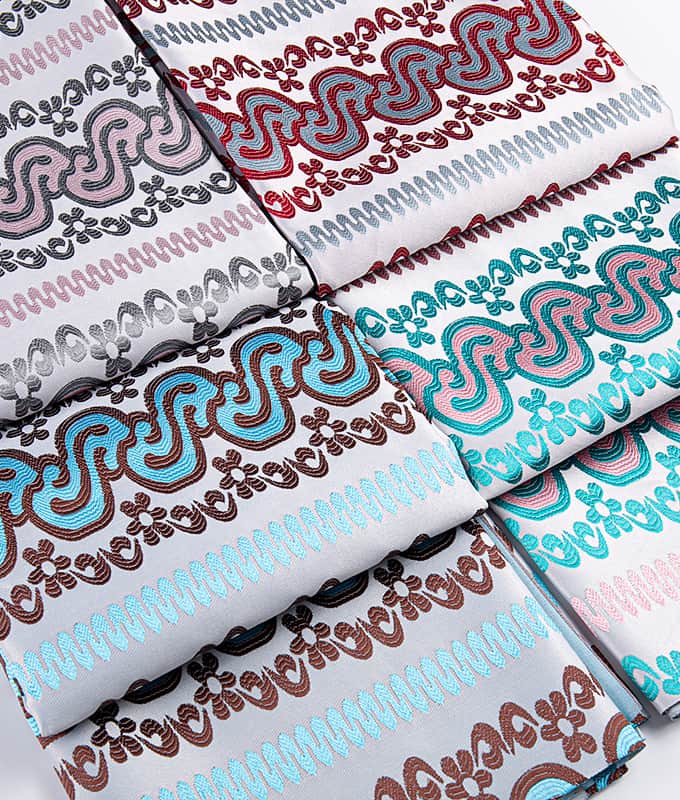
The S-Shaped 3D Textured Polyester Jacquard Fabric for Sarong combines elegance with durability. Crafted with advanced electronic jacquard technology,...
See Details -
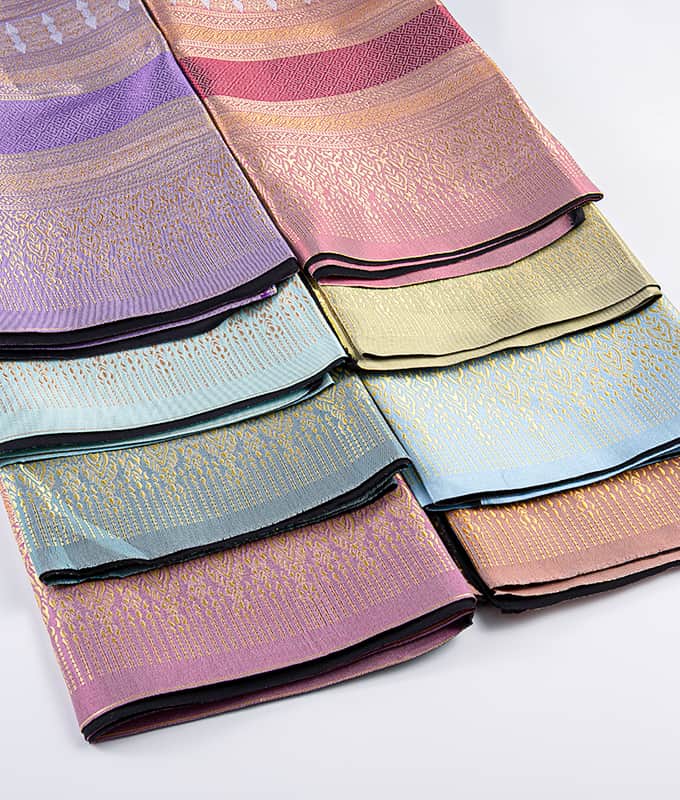
The Polyester Fabric for Popular Traditional Thai Sarong is crafted from carefully selected polyester filaments, with strict quality control from the ...
See Details -
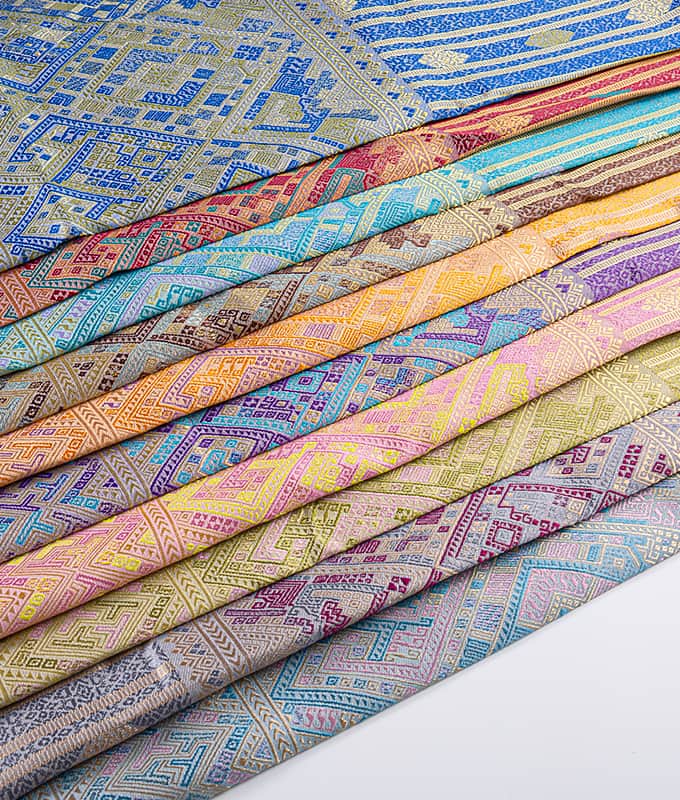
Hollow Polyester Jacquard Fabric for Laotian Traditional Sarong — a perfect fusion of Lao cultural heritage and modern fiber innovation. With symbolic...
See Details -
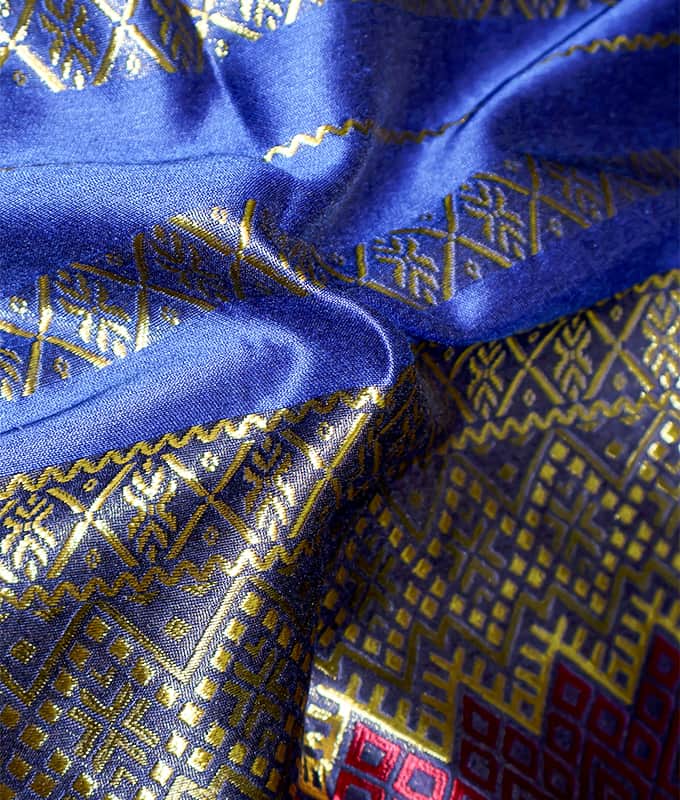
100% Polyester Jacquard Pattern Colorful Southeast Asian Sarong Fabric – durable, vibrant, and easy to care for, designed to bring both beauty and pra...
See Details -
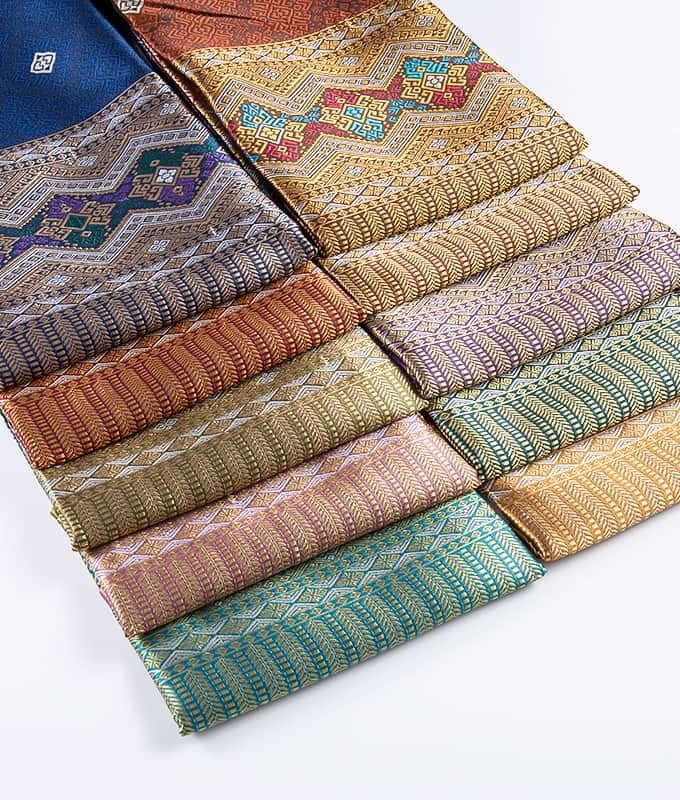
The Polyester Fabric for Traditional Southeast Asian Sarong Skirt bridges heritage and modernity. Rooted in cultural traditions, this fabric revitaliz...
See Details

