English
  عربى
عربى  中文简体
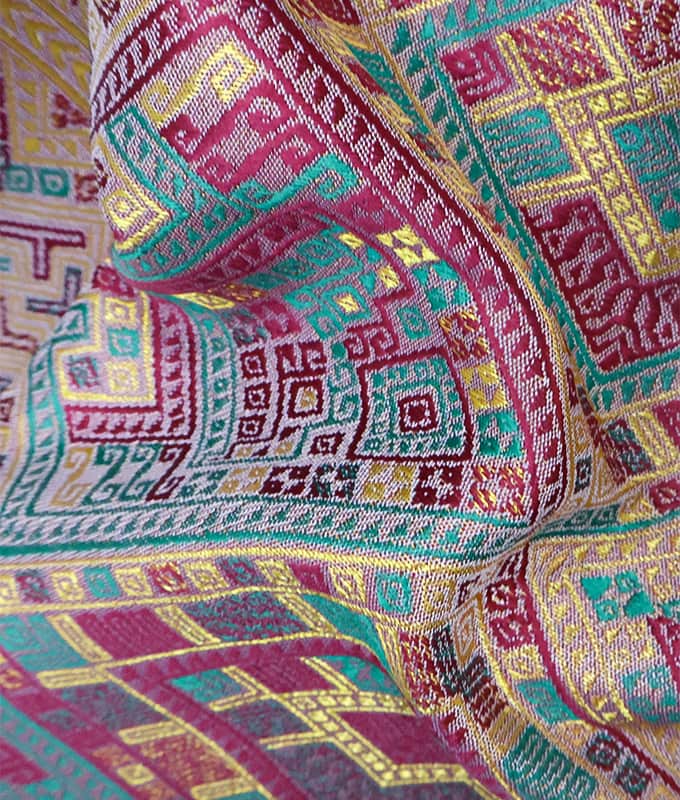
中文简体 Silk-like Polyester Jacquard Fabric for Thai Pha Sinh Sarong — combining the elegance of silk-like texture with high-precision jacquard craftsmanship,...
See DetailsCotton Plaid vs Polyester Jacquard Sarong: Use Case Breakdown for Buyers
Industry News-Content
- 1 What Makes These Two Fabrics Fundamentally Different
- 2 Where Cotton Plaid Sarong Excels: Use Cases
- 3 Where Polyester Jacquard Sarong Excels: Use Cases
- 4 Head-to-Head Comparison: Key Specs for Buyers
- 5 How Climate and Market Destination Should Guide Your Choice
- 6 Can You Stock Both? A Mixed Sourcing Strategy
Pick up two sarong fabrics side by side—a cotton plaid and a polyester jacquard—and the differences are immediate: one feels soft and slightly textured, the other carries a structured sheen with raised pattern geometry. But for buyers sourcing at scale, the relevant question isn't which looks better in isolation. It's which one belongs in which market, and why stocking both might be the smartest decision you make this season.
What Makes These Two Fabrics Fundamentally Different
The distinction between cotton plaid and polyester jacquard isn't simply fiber content—it starts at the construction stage. Cotton plaid sarong fabric is built from pre-dyed yarns woven in an over-under plain or twill structure, producing checks and stripes that are literally part of the fabric's architecture. The color lives in the yarn, not on the surface, which is why the pattern looks consistent on both sides of the cloth.
Polyester jacquard takes a different route entirely. An electronic jacquard loom controls individual warp and weft threads to create raised, three-dimensional surface patterns—geometric motifs, floral forms, or traditional Southeast Asian designs—without any printing involved. The structure itself generates the visual. This matters for durability: jacquard patterning doesn't fade the way printed designs do, because there's no dye layer to wear away.
These aren't competing products on a quality spectrum. They're different solutions built for different jobs.
Where Cotton Plaid Sarong Excels: Use Cases
Cotton plaid consistently outperforms other sarong fabrics in contexts where skin comfort, breathability, and natural-fiber preference drive buying decisions. In humid coastal climates—think beach markets across Thailand, Bali, Indonesia, or Sri Lanka—cotton's moisture-wicking properties make it the practical choice for daily wear. A fabric in the 120–160 GSM range drapes well without feeling heavy when damp, which matters significantly in tropical heat.
Retail buyers targeting tourism channels will find cotton plaid has a clear advantage in perceived authenticity. Travelers specifically seeking "traditional" or "natural" textiles respond to cotton's hand-feel and visible weave structure in a way that synthetic alternatives rarely replicate. The plaid format—clean, geometric, classically associated with Southeast Asian lungi and sarong traditions—reinforces that positioning at a glance.
Cotton plaid also performs well in markets with growing sustainability awareness, particularly export buyers sourcing for European or North American beachwear lines where natural fiber labeling carries real commercial value. For a detailed breakdown of GSM ranges, yarn-dyed vs printed plaid quality, and pre-wash specifications, the 100% cotton plaid sarong fabric for Southeast Asian markets offers a full range of options. Buyers who want deeper sourcing guidance can also refer to the detailed buyer's guide for cotton plaid sarong fabric covering testing protocols, shrink control, and spec checklists.
Key use cases where cotton plaid delivers best value:
- Beach resort retail and holiday souvenir channels
- Export lines targeting natural-fiber or eco-conscious markets
- Everyday casual sarong wear in warm, humid climates
- Lightweight travel wraps where packability and quick laundering matter
Where Polyester Jacquard Sarong Excels: Use Cases
Polyester jacquard earns its place in markets that demand visual impact, pattern consistency at scale, and low-maintenance performance. The fabric's woven-in designs—often featuring elaborate geometric or floral motifs associated with Thai Pha Sinh, Laotian tube skirts, and formal Southeast Asian ceremonial dress—carry a richness that print processes struggle to match at comparable price points.
For traditional ceremonial and religious contexts across Thailand, Laos, Myanmar, and Cambodia, polyester jacquard is frequently the default fabric of choice. It holds its structure through repeated dressing and undressing, doesn't require ironing in the way cotton does, and—critically for buyers supplying festival or temple-wear markets—maintains its appearance across the kind of repeated use that traditional garments receive. The raised jacquard texture also photographs exceptionally well, making it a strong performer for e-commerce product imagery.
From a wholesale logistics standpoint, polyester jacquard offers advantages that cotton cannot: it resists wrinkles during transit, requires no special moisture management in storage, and its color stability under the ISO 105-C06 laundering colorfastness standard is typically higher than yarn-dyed cotton over extended wash cycles. Buyers working at high volume—particularly those supplying Southeast Asian wholesale markets or exporting to Middle Eastern and African garment markets where polyester sarongs have deep category penetration—will find the supply chain consistency of polyester jacquard a meaningful operational advantage.
Browse the full polyester jacquard sarong fabric collection including silk-like Pha Sinh styles, S-shaped 3D textured options, and traditional colorful patterns suited for ceremony and retail alike.
Key use cases where polyester jacquard delivers best value:
- Traditional ceremonial and religious garments (Thailand, Laos, Myanmar, Cambodia)
- Formal sarong wear where visual structure and sheen are expected
- High-volume wholesale to Southeast Asian and export markets
- E-commerce product lines where photographic appeal drives conversion
- Markets prioritizing wrinkle resistance and minimal care requirements
Head-to-Head Comparison: Key Specs for Buyers
The table below summarizes the most decision-relevant parameters for buyers evaluating both fabric types side by side. All performance ratings are relative to typical sarong use conditions in Southeast Asian climates.
| Parameter | 100% Cotton Plaid | Polyester Jacquard |
|---|---|---|
| Breathability | High — natural moisture-wicking | Moderate — traps more heat in high humidity |
| Drape & Hand-feel | Soft, textured, natural touch | Structured, smooth-to-silky, light sheen |
| Pattern Method | Yarn-dyed woven checks | Electronic jacquard loom — woven-in motifs |
| Colorfastness (wash) | Good — yarn-dyed; verify with ISO 105-C06 test | Excellent — structural pattern doesn't fade |
| Shrink Risk | Moderate — specify pre-washed/sanforized finish | Very low — polyester has minimal shrinkage |
| Drying Speed | Slower — absorbs moisture | Fast — hydrophobic fiber |
| Wrinkle Resistance | Low — requires ironing | High — recovers well from folding and transit |
| Typical GSM Range | 90–220 GSM (120–160 recommended) | 80–180 GSM depending on pattern density |
| Market Positioning | Natural, casual, beach, tourism, eco-conscious | Traditional, ceremonial, formal, high-visual retail |
| Care Requirements | Gentle wash, hang dry fully before storage | Machine washable, low maintenance |
For buyers requiring color performance certification on either fabric, the relevant international benchmark is the ISO 105-C06 standard for colorfastness to domestic and commercial laundering, which covers resistance across temperature cycles and detergent exposure. Requesting supplier compliance data against this standard is a reliable way to compare color performance across both fabric types before committing to bulk orders.
How Climate and Market Destination Should Guide Your Choice
Fabric performance doesn't exist in a vacuum—it plays out against specific end-use conditions. The same sarong that excels in coastal Bali retail may underperform in a Bangkok ceremonial garment market, and vice versa. Using market destination as the primary filter simplifies most purchasing decisions significantly.
For tropical coastal and beach tourism markets (Indonesia, Philippines, Sri Lanka, East Africa coast): cotton plaid is the stronger choice. Buyers and end consumers in these contexts prioritize breathability and natural-feel over visual formality. Lightweight cotton at 90–130 GSM suits beach wraps and poolside cover-ups, while 130–160 GSM works for casual daily sarong wear worn from morning through evening.
For inland Southeast Asian markets and traditional ceremonial channels (Northern Thailand, Laos, Myanmar, Cambodia): polyester jacquard is often the category standard. The elaborate motifs align with regional aesthetic traditions, the low-maintenance care profile suits frequent ceremonial use, and the price point remains accessible for high-volume markets. Temple-supply buyers and wedding garment distributors consistently favor jacquard for its visual consistency across large orders.
For export to European, North American, or GCC markets: the decision splits by buyer type. Sustainable fashion importers and boutique resort-wear brands lean toward cotton plaid for its natural-fiber story. Volume wholesale importers servicing Middle Eastern and West African sarong markets—where polyester has deep historical penetration—will typically find jacquard the more commercially reliable product.
Can You Stock Both? A Mixed Sourcing Strategy
The most commercially flexible inventory position isn't a choice between cotton plaid and polyester jacquard—it's a deliberate allocation of both across different product tiers or market segments. These fabrics don't cannibalize each other's sales when positioned correctly; they serve distinct buying occasions.
A practical approach: stock cotton plaid as your core everyday-wear and beach category, and polyester jacquard as your formal, ceremonial, and high-visual tier. This lets you serve the same wholesale customer who supplies both resort boutiques and traditional garment markets without requiring them to source from multiple suppliers.
For buyers who want a middle-ground product—combining the comfort character of cotton with the supply-chain simplicity of synthetic—the polyester-cotton blended sarong options provide a practical bridge between the two categories. Blended fabrics typically offer improved shrink resistance over pure cotton with better breathability than 100% polyester, making them a versatile third tier for buyers building out a complete sarong range.
Browse the full range of Southeast Asia traditional sarong fabrics to compare specifications and available constructions across all three categories.
Related products
-
-
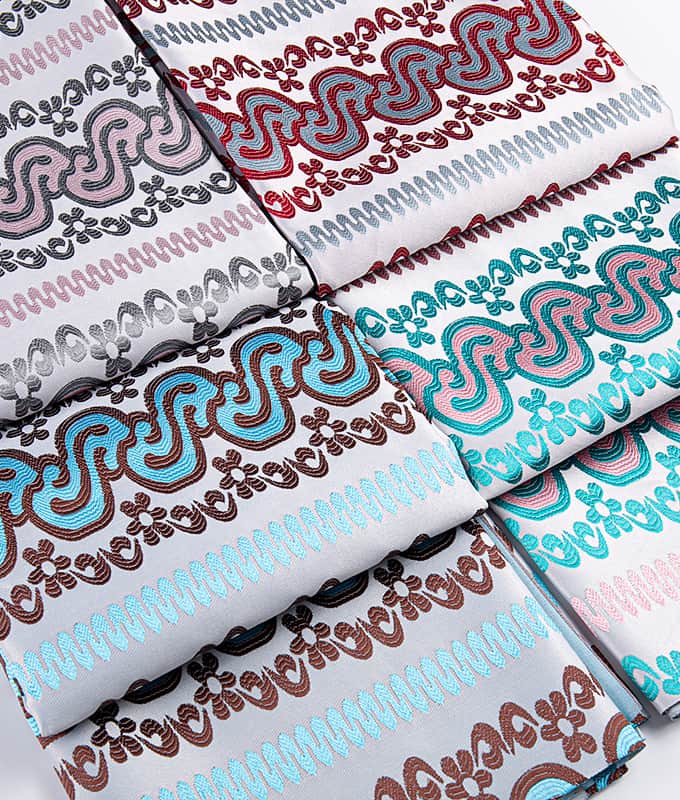
The S-Shaped 3D Textured Polyester Jacquard Fabric for Sarong combines elegance with durability. Crafted with advanced electronic jacquard technology,...
See Details -
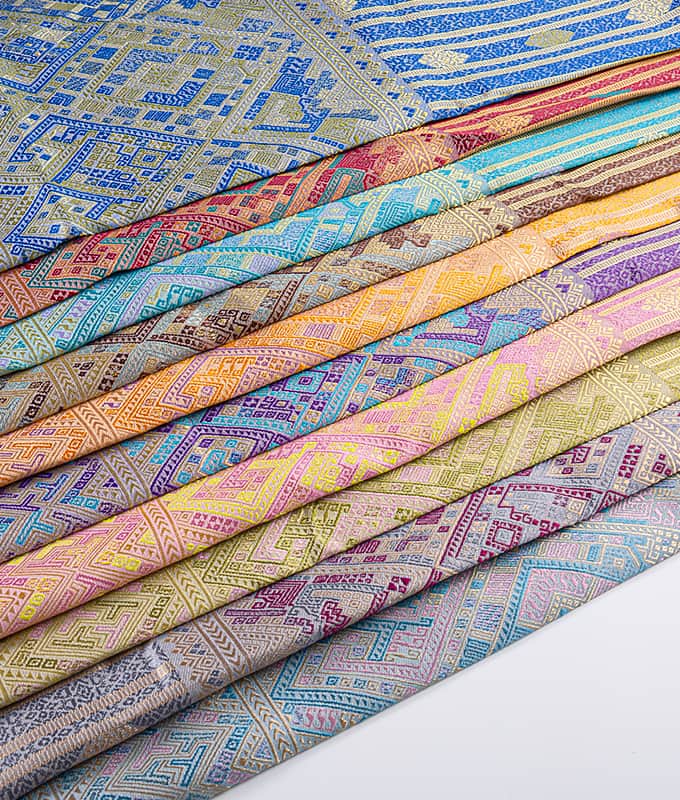
Hollow Polyester Jacquard Fabric for Laotian Traditional Sarong — a perfect fusion of Lao cultural heritage and modern fiber innovation. With symbolic...
See Details -
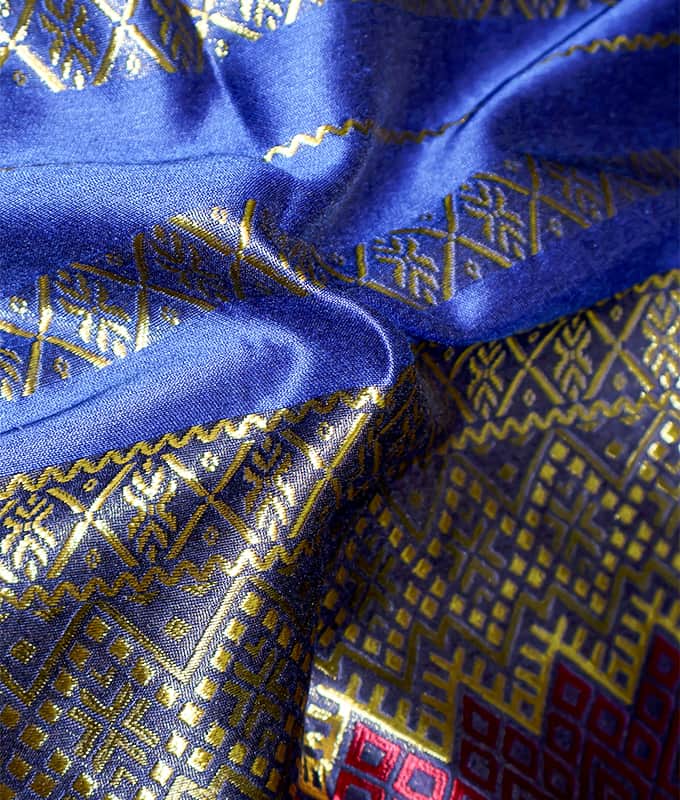
100% Polyester Jacquard Pattern Colorful Southeast Asian Sarong Fabric – durable, vibrant, and easy to care for, designed to bring both beauty and pra...
See Details -
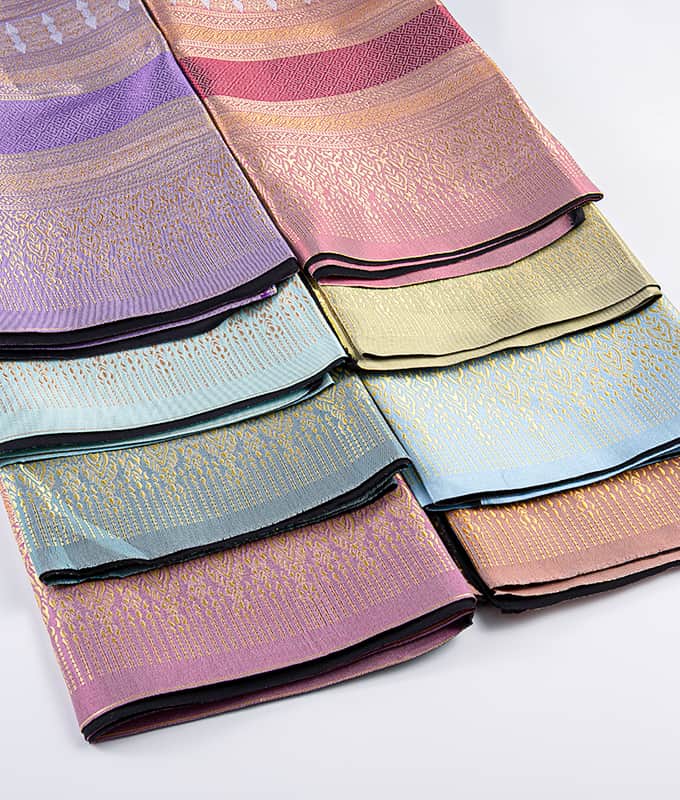
The Polyester Fabric for Popular Traditional Thai Sarong is crafted from carefully selected polyester filaments, with strict quality control from the ...
See Details -
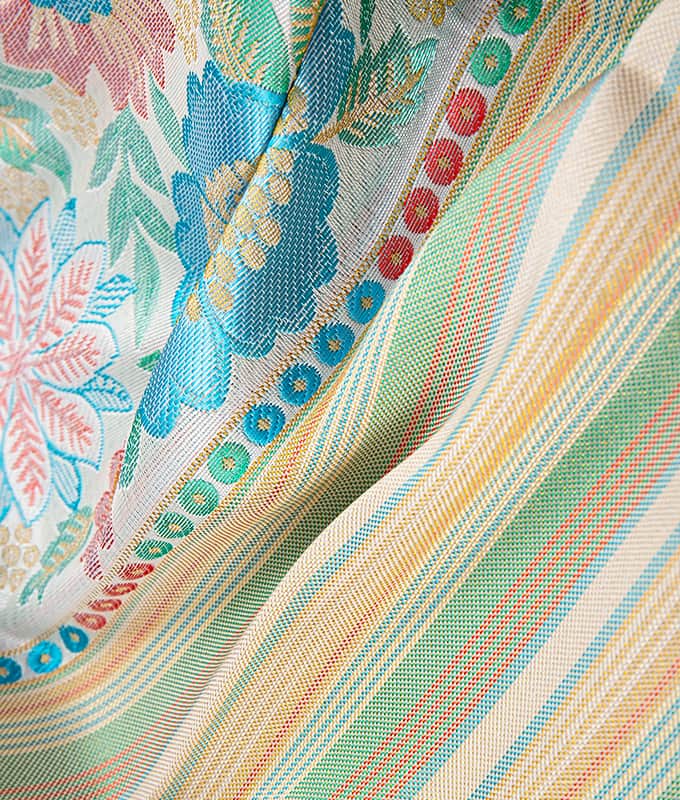
Sunflower Print Poly-Cotton Fabric for Sarong — a vibrant fabric inspired by sunflowers, radiating energy and brightness. Made with soft poly-cotton, ...
See Details