English
  عربى
عربى  中文简体
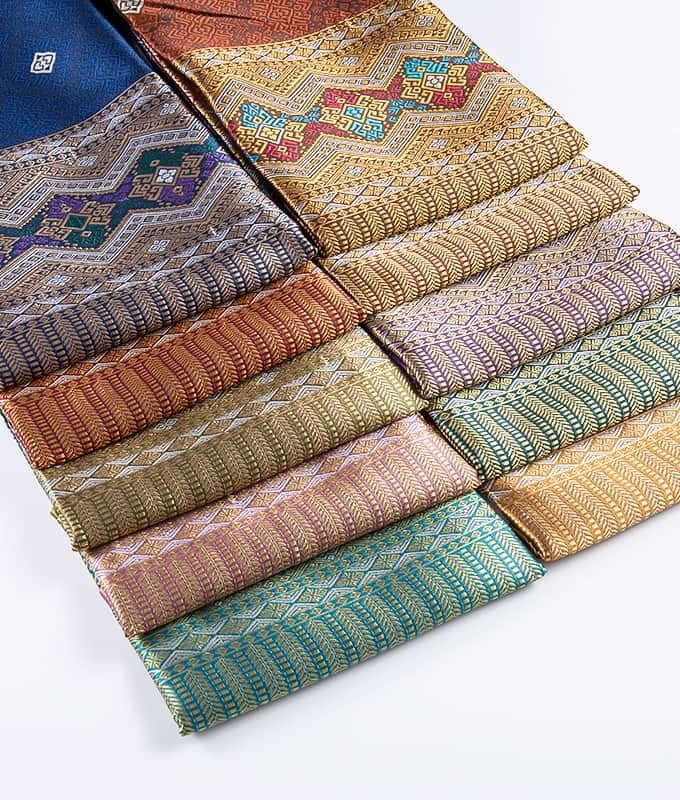
中文简体 The Polyester Fabric for Traditional Southeast Asian Sarong Skirt bridges heritage and modernity. Rooted in cultural traditions, this fabric revitaliz...
See DetailsWhat Is a Sarong? Traditional Wearing Styles Across Southeast Asia
Industry News-Content
Across Southeast Asia, a single piece of fabric has clothed millions of people for centuries—wrapping around the body in dozens of different ways depending on the country, the occasion, and the wearer's identity. That garment is the sarong. Simple in construction but rich in meaning, it remains one of the most culturally significant textiles in the world.
What Is a Sarong?
A sarong is a large, rectangular or tubular piece of fabric worn by wrapping it around the lower body. Most measure between 1 and 2 meters in length and roughly 1 meter in width. The wearer folds, tucks, knots, or ties it at the waist—no buttons, no zippers, no tailoring required.
The word "sarong" comes from the Malay and Indonesian term sarung, meaning "to sheath" or "to cover." Depending on where you are in the region, it may be called kain sarung (Indonesia), longyi (Myanmar), pha sin (Thailand and Laos), malong or patadyong (Philippines), or saram (Sri Lanka). The names differ; the underlying concept—a versatile length of cloth wrapped around the body—stays the same.
Both men and women wear sarongs, though the draping style, fabric pattern, and occasion vary significantly by gender, age, and social standing.
A Brief History: From Trade Routes to Modern Wardrobes
The sarong's origins are tied to the ancient maritime trade networks that connected India, the Arabian Peninsula, and the Indonesian archipelago. Arab and Indian merchant sailors are credited with spreading the garment throughout the region, where local communities adapted both the form and the textile techniques to suit their own cultural practices.
By the time of the Majapahit Empire (1293–1520 CE), sarong production in Java had become a sophisticated art form. Intricate dyeing methods like batik and ikat developed alongside the garment itself, transforming a simple length of cloth into a highly encoded cultural object. The patterns on a sarong could communicate social status, regional origin, marital status, and religious affiliation—all at a glance.
During the colonial era, European powers recognized this coded significance and, in some territories, attempted to suppress sarong-wearing as a symbol of local resistance. The effort largely failed. The garment persisted as a marker of cultural identity and pride, a role it continues to play across the region today.
Traditional Wearing Styles by Country
The sarong's genius lies in its adaptability. Here is how it is worn across five key Southeast Asian nations, each with its own distinct tradition.
Indonesia
Indonesia is arguably the spiritual home of the sarong, and the diversity of wearing styles here is unmatched. In Java, the kain batik—a batik-dyed sarong—is worn for everything from daily errands to royal ceremonies. Men fold it into a triangular front pleat at the waist; women wrap it tightly around the hips and secure it with a stagen (a long sash). In Bali, the sarong is required attire for temple visits, always paired with a selendang (a sash tied at the waist) to signal reverence. The color and pattern of the fabric matter: certain motifs are reserved for ceremonies, while others belong to daily life.
Malaysia and Brunei
In Malaysia, the sarong is a fixture at mosques, family gatherings, and festive occasions. Muslim men commonly pair a plaid or striped sarong with a baju Melayu (a traditional tunic) for Friday prayers and Eid celebrations. A special variant called the songket—a silk sarong woven with gold or silver thread—is reserved for weddings and formal state functions. This distinction between everyday and ceremonial fabric is deeply embedded in Malay textile culture.
Thailand and Laos
In Thailand, the women's equivalent of the sarong is the pha sin: a tube skirt typically made from silk or jacquard fabric, featuring a horizontal band of contrasting design at the hem. It is worn as standard dress in Buddhist temples, traditional dance performances, and formal occasions. In northern Thailand and Laos, the pha sin often displays intricate woven patterns that identify the wearer's ethnic group and village of origin. Men in rural areas wear a shorter, plainer wrap known as the pha khao ma, which doubles as a belt, towel, and prayer mat.
Myanmar
Myanmar's longyi is perhaps the most universally worn sarong in the region—the national dress for both men and women across all ethnicities and religions. Men's longyi are tied at the front with a simple folded knot; women's versions are tucked and folded to the side. The longyi is worn to offices, schools, markets, and weddings alike. The dominant fabrics are cotton plaid for everyday use, and silk or fine weaves for special occasions. Regional patterns—particularly from Shan, Karen, and Bamar weaving traditions—carry deep ethnic significance.
The Philippines
In the southern Philippines, particularly in Mindanao, the tubular sarong is called the malong. It functions as garment, blanket, prayer mat, and baby carrier—sometimes all in the same day. The patadyong, worn in the Visayas, is a checked or striped version used primarily as a skirt. Both garments are central to indigenous and Muslim Filipina women's dress, and the malong's geometric okir motifs carry clan and tribal identity.
Sarong Fabrics and What They Say About the Wearer
Fabric choice is never incidental in sarong culture. Across Southeast Asia, the textile used communicates as much as the way the garment is worn.
Batik is the most globally recognized sarong textile. Produced using a wax-resist dyeing technique, batik patterns are hand-drawn or stamped onto cotton or silk. The motifs are semiotic: certain designs are tied to royalty, specific ceremonies, or geographic regions. UNESCO recognized Indonesian batik as an Intangible Cultural Heritage of Humanity in 2009, acknowledging its deep cultural and artistic significance.
Ikat is a dyeing method where yarns are resist-dyed before weaving, creating patterns with a characteristic "bleeding" softness at the edges. Found across Indonesia, the Philippines, and Cambodia, ikat sarongs are labor-intensive to produce and are often markers of high status or ceremonial use.
Songket is a supplementary weft weave that creates raised gold or silver metallic patterns on a silk base. Reserved for weddings and formal ceremonies in Malaysia and Brunei, it represents the highest tier of sarong textiles in the region.
Cotton plaid is the fabric of daily life. Woven in a straightforward checked or striped pattern, cotton plaid sarongs are lightweight, durable, and affordable. Myanmar's longyi, Filipino patadyong, and mosque-going sarongs across Malaysia are most commonly made from this fabric. Our 100% cotton plaid sarong fabric is produced to meet the specific density and width requirements of these traditional garments.
Polyester jacquard has become the modern backbone of Southeast Asian sarong fabrics, offering the visual complexity of traditional woven patterns at a fraction of the production cost. Widely used for Thai pha sin and Lao tube skirts, jacquard fabrics allow intricate patterns—florals, geometric borders, traditional motifs—to be produced with machine precision while maintaining a luxurious hand feel.
Explore our full range of traditional Southeast Asian sarong fabrics for a complete overview of available weave structures, fiber compositions, and regional specifications.
Sarong Beyond Clothing: Multiple Uses Across Cultures
One of the sarong's most remarkable qualities is how far its utility extends beyond dress. Across the region, the same piece of fabric serves a wide variety of practical and ceremonial purposes:
- Baby carrier: In Indonesia and the Philippines, sarongs are used as slings to carry infants against the body, a practice that predates modern baby carriers by centuries.
- Prayer covering: At mosques and temples throughout the region, sarongs are kept at the entrance for visitors who arrive without appropriate lower-body coverage.
- Beach cover-up: Globally, the sarong has been adopted as a lightweight wrap for beach and resort wear, a function that has driven its spread far beyond Southeast Asia.
- Blanket and sleeping mat: In rural areas, a sarong can be a blanket at night, a mat for resting on, or a privacy screen—a true multi-tool of the tropics.
- Ceremonial cloth: At births, weddings, and funerals across Southeast Asia, specific sarong patterns are used to wrap, cover, or present gifts as part of ritual protocol.
This versatility explains why the sarong has remained in continuous daily use for centuries, resistant to displacement by Western clothing styles even in rapidly modernizing societies.
Choosing the Right Sarong Fabric for Your Needs
For garment manufacturers, brand buyers, or cultural institutions sourcing sarong textiles, the choice of fabric should be guided by end use, target market, and the specific regional tradition being served.
| Target Market | Recommended Fabric | Key Considerations |
|---|---|---|
| Daily wear (Myanmar, Malaysia) | Cotton plaid / poly-cotton blend | Breathability, colorfastness, affordable price point |
| Thai / Lao pha sin | Polyester jacquard | Pattern fidelity, drape, border definition |
| Ceremonial / formal occasions | Silk jacquard / songket-style | Luster, weight, motif complexity |
| Beach resort / fashion export | Lightweight poly-cotton printed | Vivid print reproduction, quick-dry properties |
Our polyester-cotton blended sarong fabric offers a practical middle ground: the durability and print clarity of synthetic fiber combined with the breathability of cotton, making it suitable for both daily wear markets and mid-range fashion applications.
For buyers who want a deeper technical breakdown of construction options, our comprehensive guide to Southeast Asian sarong fabric types covers weave structures, thread counts, standard widths, and regional specification requirements in detail.
The sarong is not a relic. It is one of the most enduring and adaptive garments in human history—and the fabric behind it deserves the same care and intentionality that has been applied to wearing it for generations.
Related products
-
-
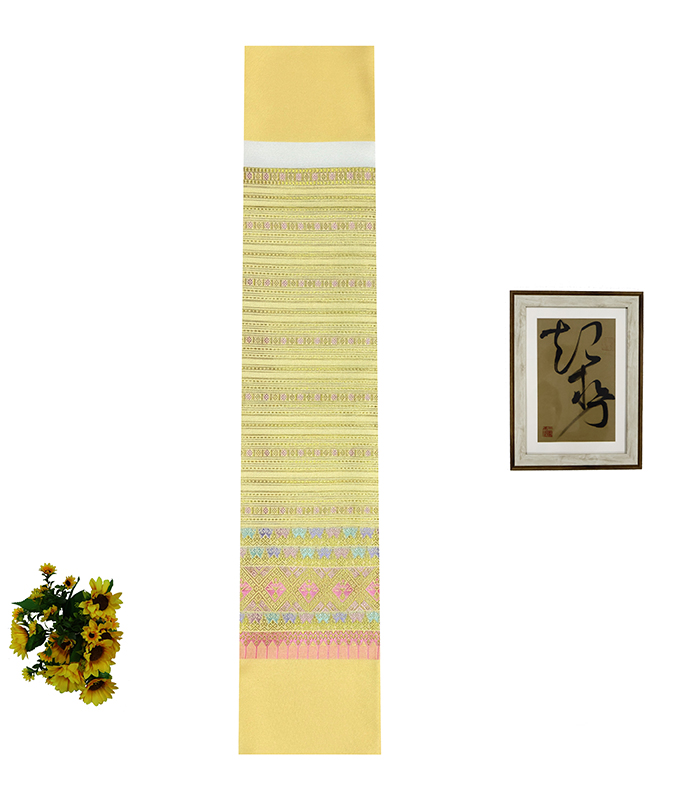
This traditional Southeast Asian jacquard sarong fabric uses a sectioned structure. The two ends are solid-color blocks, the main middle section is ar...
See Details -
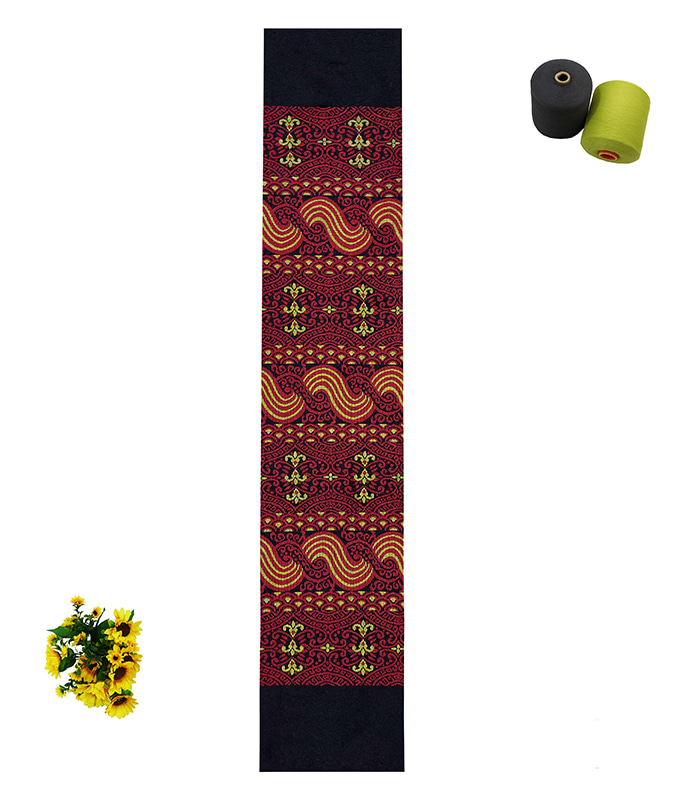
This Southeast Asian ethnic-style jacquard sarong fabric uses a sectioned structure. The top and bottom ends are solid-color blocks, while the main mi...
See Details -
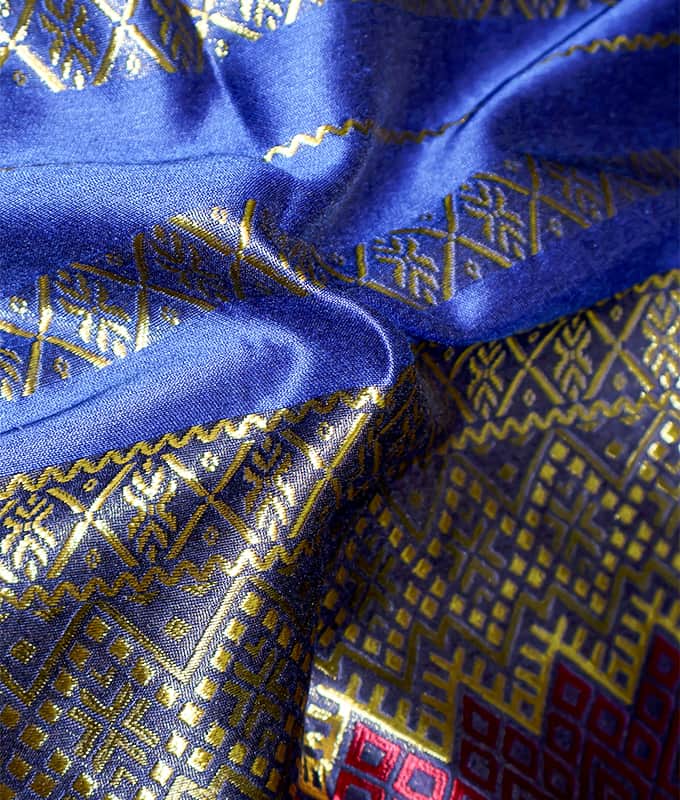
100% Polyester Jacquard Pattern Colorful Southeast Asian Sarong Fabric – durable, vibrant, and easy to care for, designed to bring both beauty and pra...
See Details -
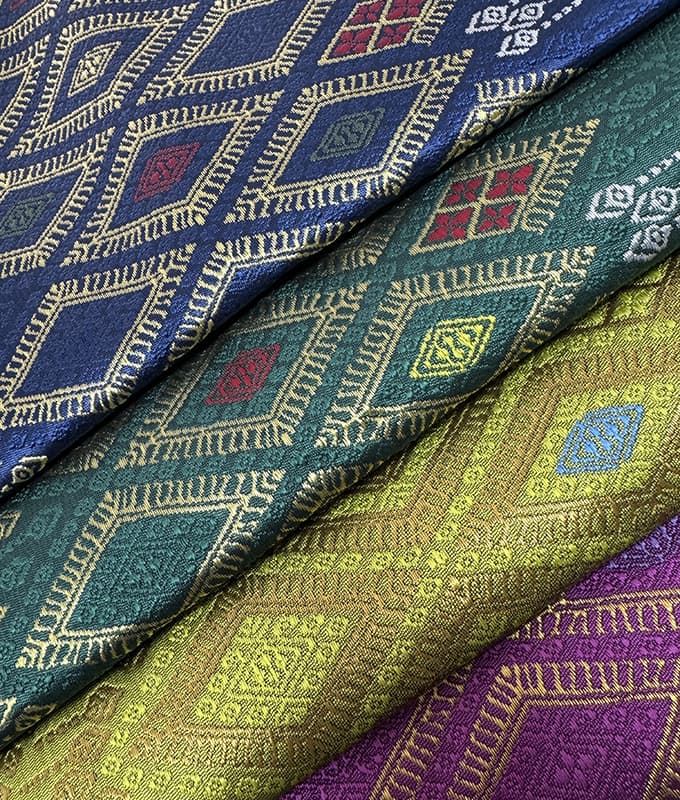
This Southeast Asian ethnic-style polyester jacquard fabric is made with a jacquard weaving technique. A classic diamond geometric pattern is paired w...
See Details -
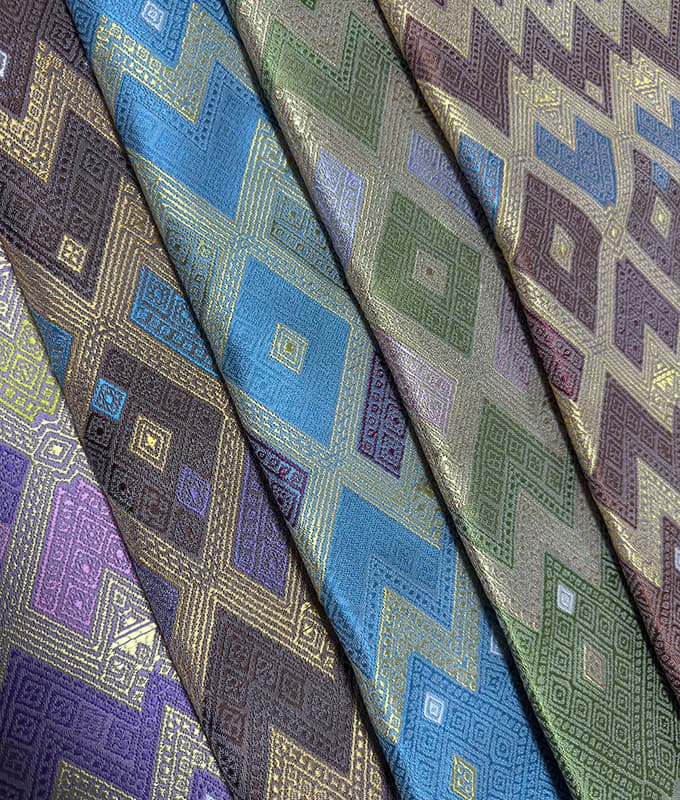
This Southeast Asian ethnic-style polyester jacquard fabric is made with a jacquard weaving technique. The staggered zigzag and diamond patterns carry...
See Details