English
  عربى
عربى  中文简体
中文简体 Sunflower Print Poly-Cotton Fabric for Sarong — a vibrant fabric inspired by sunflowers, radiating energy and brightness. Made with soft poly-cotton, ...
See DetailsKeffiyeh Colors and Their Cultural Significance in Arab CountriesKeffiyeh Colors and Their Cultural Significance in Arab Countries
Industry News-Content
- 1 A Cloth That Speaks Before You Do
- 2 Black and White: Palestine's Enduring Emblem
- 3 Red and White: The Voice of Jordan and the Arabian Peninsula
- 4 White Ghutra: The Language of Gulf Formality
- 5 Green and Blue: Emerging Symbols of Identity
- 6 Country-by-Country Color Guide
- 7 How Color and Fabric Work Together
A Cloth That Speaks Before You Do
Long before a word is exchanged, a keffiyeh's color announces who you are, where you come from, and what you stand for. Originating in the ancient city of Kufa in present-day Iraq — a name that linguists believe gave the garment its modern label — the keffiyeh has been woven into Arab life for thousands of years. According to Britannica's overview of the keffiyeh's origins and historical definition, the word itself literally means "relating to Kufa," anchoring the garment's identity to a specific geography from the very beginning.
What started as practical Bedouin protection against desert sun and sandstorms gradually absorbed the politics, faith, and pride of every region it traveled through. Today, the same square of woven fabric can signal Palestinian resistance in Ramallah, royal dignity in Riyadh, or national unity in Amman — depending entirely on its color and pattern. Understanding that color vocabulary is essential for anyone working with, sourcing, or studying this iconic textile.
Black and White: Palestine's Enduring Emblem
No keffiyeh color combination carries more global recognition than black and white. The fishnet-like weave against a white ground with bold black borders began as ordinary workwear for Palestinian farmers and Bedouins during the Ottoman period — a marker of rural life rather than political conviction. That changed sharply in 1936, when the Arab Revolt against British colonial rule transformed the garment into a mass symbol of resistance. When British authorities moved to ban the keffiyeh, Palestinians wore it en masse, and the black-and-white pattern became inseparable from the concept of Palestinian identity itself.
The patterns embedded in the weave carry their own layered meanings. The bold linear borders are said to represent the ancient trade routes that once passed through Palestine. The fishnet design reflects the people's historical connection to the Mediterranean Sea. The curved, leaf-like stitching along the edges echoes the olive tree — a plant of deep economic and emotional significance to Palestinian families for generations. For a full account of how these symbols evolved, the detailed historical record of the keffiyeh across Arab cultures on Wikipedia traces each turning point from the 1930s to the present day.
The garment reached global audiences in the 1960s and 1970s largely through Yasser Arafat, who wore the black-and-white keffiyeh as a permanent fixture at every public appearance and diplomatic meeting. After Israel banned the Palestinian flag in 1967, the keffiyeh effectively became its substitute at rallies worldwide. The black-and-white keffiyeh is today recognized on every continent as a symbol of Palestinian solidarity — a remarkable journey for a piece of cotton cloth that once simply shaded a farmer from the midday sun. Within Palestinian political life, the black-and-white pattern also became associated specifically with Fatah, illustrating how fine the distinctions within a single color combination can become.
The precision weaving techniques used in jacquard textile production are what allow the intricate fishnet and border patterns of the classic black-and-white keffiyeh to be reproduced consistently at scale — a technical detail that matters greatly to wholesale buyers seeking authentic-looking results.
Red and White: The Voice of Jordan and the Arabian Peninsula
Travel east from Palestine into Jordan, or south into the heartland of the Arabian Peninsula, and the dominant keffiyeh shifts to red and white. Known locally as the shemagh or keffiyeh mhadab, the red-and-white pattern carries a distinct cultural weight that is separate — and should not be confused with — the Palestinian black-and-white tradition. Its roots lie deep in Bedouin tribal culture, where the red threads were said to mirror the warmth of desert sands and the bonds of kinship, while the white ground evoked peace and honor.
In Jordan, the red-and-white shemagh has grown into a national symbol, regularly worn at official occasions and state ceremonies. The size of the tassels on a Jordanian shemagh traditionally indicated social standing — the fuller the fringe, the more prominent the wearer. In Saudi Arabia and across the broader Arabian Peninsula, the red-and-white checkered ghutra sits comfortably between everyday practicality and ceremonial tradition, often paired with the white thobe for both formal and informal settings. The red-and-white pattern is also native to many parts of the southern Arabian Peninsula, where it has been a marker of tribal and regional identity for centuries.
Beyond Jordan and Saudi Arabia, the red keffiyeh carries a secondary layer of pan-Arab symbolism. Its vibrant color has been linked in some political contexts to revolutionary solidarity and collective resistance against colonial forces — a meaning that amplified during various mid-twentieth century independence movements across the Arab world.
White Ghutra: The Language of Gulf Formality
The all-white ghutra — plain, unembellished, and immaculate — is the defining headscarf of Gulf Arab formal culture. Worn predominantly in Saudi Arabia, the UAE, Qatar, Kuwait, and Bahrain, it communicates a precise social message: refinement, purity, and dignity. Unlike the patterned red-and-white shemagh, the white ghutra deliberately removes decoration to let the quality of the fabric and the precision of the drape speak for themselves.
Its occasions are significant: religious ceremonies, government functions, business meetings, and national celebrations. Paired with the white thobe and secured by a black agal, the white ghutra forms the cornerstone of Gulf men's formal dress. The absence of color is not minimalism for its own sake — it reflects a cultural value system that prizes spiritual humility alongside social authority. In the blazing heat of the Gulf summer, the pale fabric also serves its original practical role, deflecting sunlight while retaining a sense of coolness and composure.
Buyers sourcing white ghutras for the Gulf market should note that fabric weight and breathability are critical purchasing criteria. The lightweight gauze scarf constructions available for hot-climate markets offer a useful reference point for the kind of airy, fine-weave fabric that Gulf consumers expect from a quality white ghutra.
Green and Blue: Emerging Symbols of Identity
Green holds deep cultural resonance across the Arab world, and within Palestinian symbolism in particular. Associated with the fertility of the land, the aspirations of a displaced people, and the enduring hope for self-determination, green keffiyehs have been worn by leaders, activists, and community figures for whom the color carries explicit political and spiritual meaning. Islamic tradition reinforces green's significance as a color of paradise and divine favor — making it a natural choice for keffiyehs worn at both religious and nationalist gatherings.
In historical accounts, dark green keffiyehs were worn by sayyids in Iraq — venerated individuals recognized as descendants of the Prophet Muhammad — creating a visual distinction from the black-and-white patterns common to the surrounding community. This use illustrates how the color system within keffiyeh culture has always been granular, capable of marking not just national identity but family lineage and religious standing.
Blue keffiyehs carry a more contemporary resonance. While not tied to a single historical tradition, the blue variation has gained traction in modern contexts as a symbol of cultural solidarity and appreciation, particularly in global diaspora communities and among international supporters of Arab cultural causes. Social media has accelerated the spread of blue keffiyehs, with the color often chosen for its visual distinctiveness and its association with peace and cross-cultural connection.
Country-by-Country Color Guide
The following table summarizes the primary keffiyeh color traditions across key Arab countries, the core meanings attached to each, and the contexts in which they are most commonly worn.
| Country / Region | Primary Color(s) | Local Name | Core Meaning | Common Occasions |
|---|---|---|---|---|
| Palestine | Black & White | Keffiyeh / Kufiya | National identity, resistance, solidarity | Protests, cultural events, daily wear |
| Jordan | Red & White | Shemagh Mhadab | National pride, tribal honor, unity | State ceremonies, national celebrations |
| Saudi Arabia | White / Red & White | Ghutra / Shemagh | Purity, prestige, tribal affiliation | Business, religious ceremonies, formal occasions |
| UAE / Qatar / Kuwait | White | Ghutra / Keffiyeh | Formality, dignity, cultural pride | Official functions, national days, prayers |
| Iraq | Black & White / Green | Keffiyeh / Jamadani | Heritage, religious lineage (green for sayyids) | Religious gatherings, daily wear |
| Gulf Bedouin Communities | Red & White | Shemagh | Tribal identity, desert heritage | Everyday wear, tribal gatherings |
How Color and Fabric Work Together
Color meaning cannot be separated from the material that carries it. A red-and-white shemagh woven from tightly spun cotton will drape, last, and feel entirely different from one made in polyester — and both the symbolic and commercial value of the garment shift accordingly. For buyers and importers targeting specific Arab markets, understanding the relationship between color, construction, and end-use context is as important as knowing the cultural associations themselves.
Cotton remains the traditional material of choice across most Arab countries, valued for its breathability in desert climates and its ability to hold rich, stable dye colors over years of wear. Polyester constructions, meanwhile, offer cost efficiency and colorfastness that makes them well-suited for high-volume markets and fashion-oriented exports where durability under repeated washing matters more than heritage authenticity. The right fabric choice depends on whether the end buyer prioritizes cultural authenticity, price point, or performance — and color selection should be made in tandem with that decision.
For sourcing teams building inventory for Gulf formal markets, white ghutras demand fabric that holds its brightness wash after wash. For Palestinian-market black-and-white keffiyehs, the weave structure and border pattern precision are as important as the color contrast itself. Explore the full range of keffiyeh Arabic head scarves available for wholesale and custom orders, including dedicated options in 100% cotton keffiyeh fabric for heritage-market buyers and 100% polyester keffiyeh constructions suited to large-volume sourcing. Each color tells a story — choosing the right fabric ensures that story is told with the quality it deserves.
Related products
-
-
Trailing Briar Gold-thread Jacquard Fabric is woven with a meandering wild rose vine motif, where full blooms and buds are scattered unevenly along th...
See Details -
This warp-knit lace fabric links tiny, multi-petaled florets together with slender, flowing vines, with branches naturally interweaving and extending....
See Details -
This warp-knit lace fabric is structured around smooth, flowing wave-shaped vines, with tiny florets arranged in an orderly curve along the lines, cre...
See Details -
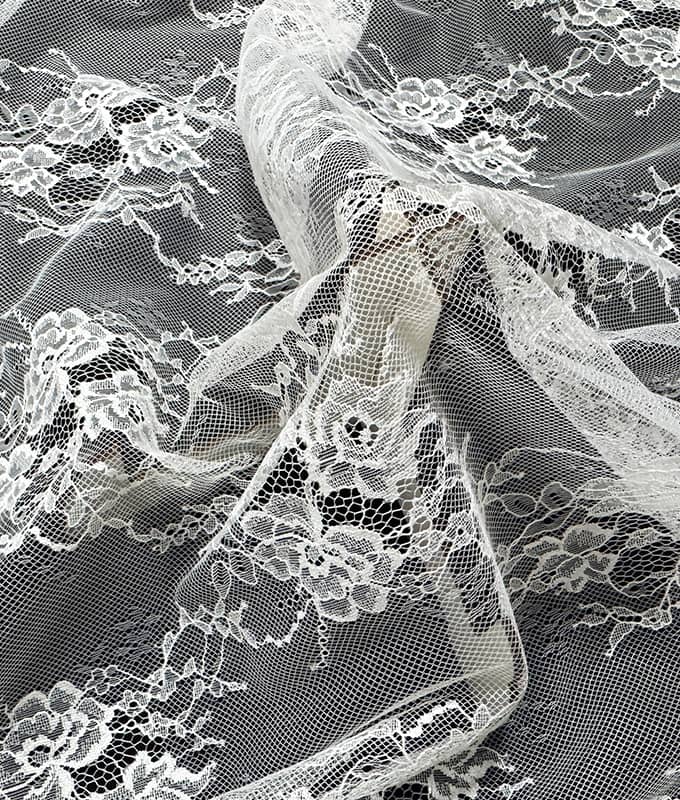
This warp-knit lace fabric arranges diagonal rose clusters guided by gentle, flowing vines, with interwoven branches creating a connected, orderly flo...
See Details -
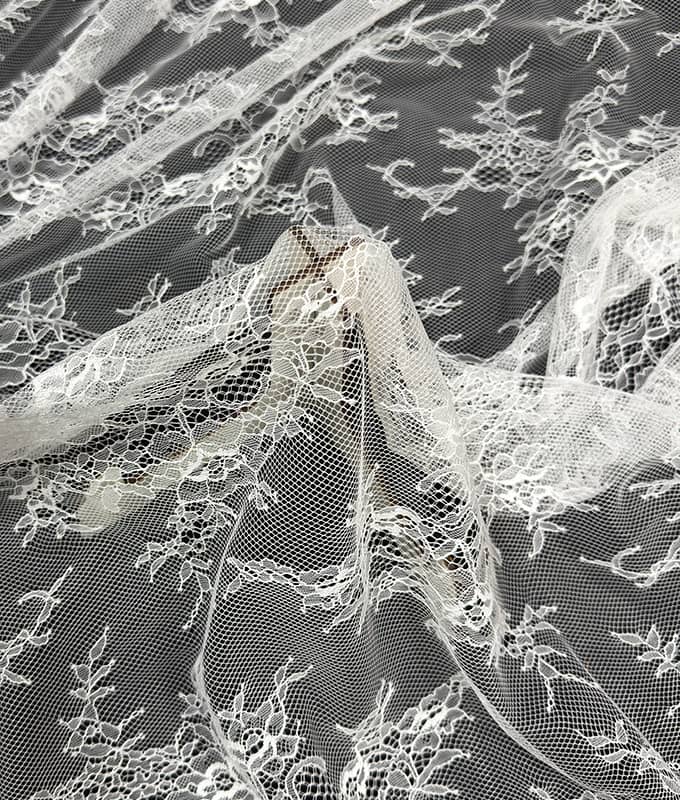
This warp-knit lace fabric features a bouquet motif that stretches and extends naturally along a diagonal line, with delicate branches and leaves wind...
See Details