English
  عربى
عربى  中文简体
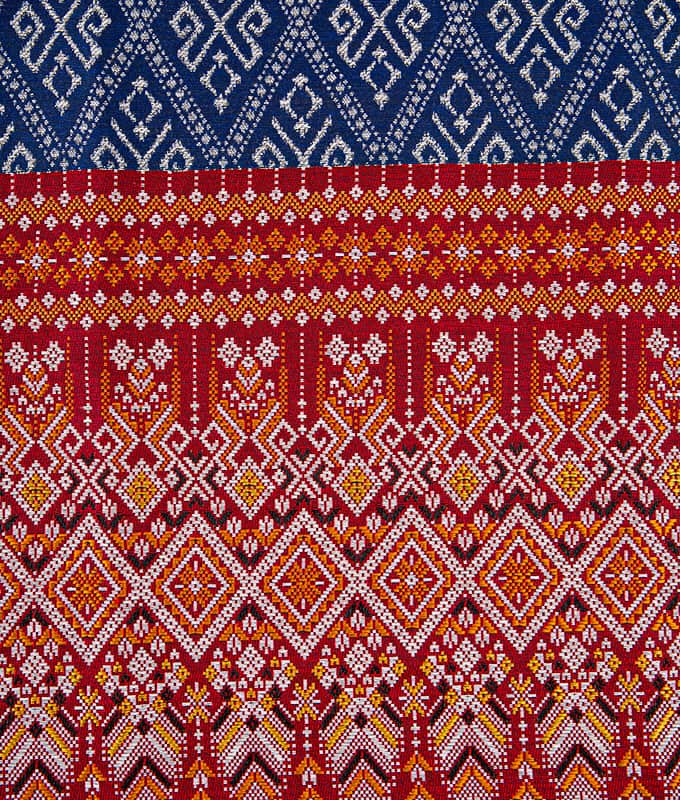
中文简体 Hand-Stitched Style Poly-Cotton Fabric for Sarong— a refined blend of style and practicality, crafted to give tube skirts a smooth texture and a well-...
See DetailsSarong Style: Origins, Fabric Types & How to Wear It
Industry News-Content
What Is Sarong Style? Origins and Global Reach
The sarong has been wrapping bodies for centuries — long before it became a beach resort staple. tracing the word back to Malay origins meaning "to cover" or "to sheath", the garment first appeared in written English records in 1834, though its use in Southeast Asia stretches back far earlier. Today, sarong style refers both to the traditional draped garment worn across Southeast Asia, South Asia, and the Pacific Islands, and to the broader aesthetic it has inspired in global resort wear and everyday fashion.
At its core, a sarong is a rectangular length of fabric — typically about 112–220 cm wide and up to 230 cm long — wrapped and secured around the lower body or torso without any cutting or sewing. Britannica describes it as the principal garment of the Malay Archipelago and Pacific Islands, made from silk, cotton, or synthetic fabric and worn by both men and women. What makes sarong style so enduring is precisely this simplicity: one piece of cloth, infinite configurations.
Over the past few decades, sarong aesthetics have traveled far beyond their geographic origins. Lightweight wrap skirts at resort hotels, printed pareos at European beach towns, and patterned tube skirts at ceremonial events in Laos and Thailand — all trace their design DNA back to the same foundational garment. For fabric manufacturers and garment sourcing teams, this means sarong-style fabrics now serve an unusually broad and active global market, spanning religious use, daily wear, ceremonial dress, and fashion retail simultaneously.
Regional Variations Across Southeast Asia
Sarong style is not a single look — it is a family of related traditions, each shaped by local textile history, religious practice, and climate. Understanding these regional distinctions is essential for anyone developing or sourcing sarong fabrics for specific export markets.
Indonesia is the richest source of sarong variation. The Indonesian sarong (kain sarung) typically features a distinct decorative panel called the kepala — a contrasting band of color or pattern running across one end of the fabric. Indonesian sarong traditions include batik (wax-resist dyeing), ikat (pre-dyed thread weaving), and songket (gold or silver thread brocade). Fabric weight and stiffness vary considerably: batik sarongs intended for ceremonial use tend to be heavier and more structured, while everyday Indonesian sarongs lean lightweight and breathable.
Thailand and Laos favor a garment called the pha sin or pha sarong — a tube skirt worn primarily by women, often featuring dense geometric jacquard weaves or lustrous silk-like finishes. Laotian sarong fabric frequently incorporates gold thread or brocade-effect jacquard that reflects the country's court textile heritage. Thai sarong fabrics used in temple contexts tend toward muted, formal tones, while resort and tourism markets favor vibrant prints. Our traditional Southeast Asian sarong fabrics are specifically developed to meet the distinct requirements of these markets.
Malaysia reserves its most prestigious sarong fabric — the songket, woven with gold and silver thread — for weddings and formal ceremonies. Everyday Malaysian sarongs tend to be plaid cotton or polyester-cotton blends, practical for the tropical climate. Across the Malay Peninsula and Borneo, sarong fabrics also play a significant role in Friday mosque wear for men, where checkered plaid patterns in cotton or poly-cotton blends dominate.
Myanmar (Burma) has its own sarong tradition called the longyi, worn by both men and women as a staple of everyday dress. Unlike the knotted wrap styles common elsewhere, the Burmese longyi is typically tucked and folded rather than tied, requiring fabrics with enough body and drape to hold their shape without slipping.
Fabrics That Make or Break a Sarong
Fabric selection shapes everything about a sarong — how it drapes, how it photographs, how it holds up through repeated hand washing in tropical heat, and how closely it reads as authentic to its intended market. Each fiber type brings a different performance profile.
100% cotton remains the benchmark for traditional sarong markets. It breathes exceptionally well in hot and humid climates, accepts dye reliably for rich colors, and has the soft hand feel associated with quality everyday wear. Cotton plaid constructions are particularly important in Islamic religious contexts across Malaysia, Indonesia, and the Philippines. For buyers prioritizing authenticity and wearability in equatorial markets, our 100% cotton plaid Southeast Asian sarong fabric addresses these needs directly.
Polyester jacquard has become the dominant fabric for premium-looking sarong styles at accessible price points. Modern water-jet jacquard looms can replicate the visual complexity of hand-woven brocade — including metallic luster, geometric density, and the raised texture of traditional songket — at a fraction of the cost and lead time. The result is a fabric that photographs beautifully, holds its structure across repeated use, and ships with minimal wrinkle risk. Our polyester jacquard Southeast Asian sarong fabric is engineered for exactly this positioning — the look and prestige of traditional weaves with the logistics and durability of modern synthetics.
Polyester-cotton blended fabrics occupy the practical middle ground. They offer better breathability than 100% polyester while significantly outperforming pure cotton on colorfastness, dimensional stability, and wash durability. For markets where sarongs are worn daily and laundered frequently, a poly-cotton blend extends the useful life of the garment considerably. Our polyester-cotton blended Southeast Asian sarong fabric covers this segment with both printed and structural pattern options.
For fashion and resort applications in Western markets, lighter-weight printed polyester and polyester-cotton clothing fabrics provide the fluid drape and vivid color saturation that beach cover-up and resort wear buyers require. Digital print technology has significantly expanded the design range available at reasonable MOQs, making it practical for smaller brands and seasonal collections to develop custom sarong prints.
Classic and Modern Ways to Wear a Sarong
The defining characteristic of sarong style is that the fabric itself determines very little — how it is worn determines everything. The same piece of cloth can function as a conservative waist-to-ankle skirt at a temple, a halter beach cover-up at a resort pool, a shoulder wrap during an evening dinner, or a formal tube dress at a wedding. This versatility has made sarong style unusually resilient to changing fashion seasons.
The classic waist wrap is the foundational style across Southeast Asia. The fabric is folded lengthwise, wrapped around the waist, and secured either by tucking, knotting, or rolling at the hip. In traditional contexts, the kepala panel of Indonesian sarongs is always positioned at the front when secured. In Thailand and Laos, the pha sin tube skirt version is stepped into rather than wrapped, and the overlap is tucked to the side.
Modern styling has dramatically expanded the range. Worn above the chest and knotted or tied at the back, a sarong becomes a strapless dress. Held horizontally behind the body and brought forward to tie at the nape of the neck, it becomes a halter top that covers only the bust — a style widely seen in beach resort contexts globally. Draped over one shoulder and knotted at the opposite hip, it reads as a one-shoulder resort dress. The same fabric, completely different silhouettes.
For men, sarong style traditionally means a clean waist wrap to ankle length, secured by tucking or rolling at the center front. In Indonesian and Malaysian male dress, plaid cotton sarongs are worn to Friday prayers alongside a traditional batik shirt, while lighter woven styles are worn at home for comfort. In Western beach contexts, men increasingly style sarongs as a casual wrap over board shorts or swim trunks.
Fabric weight and drape directly determine which styles are achievable. Stiff jacquard fabrics hold structured shapes better — tube skirts, formal wraps — while lightweight printed polyester or cotton flows into softer, more casual silhouettes. This is a critical consideration for buyers developing sarong fabrics for specific end uses.
What to Look for When Sourcing Sarong Fabric
Sourcing sarong fabric for commercial production requires matching fabric specifications to the specific market, end use, and price tier the buyer is targeting. A few factors consistently separate high-quality sarong fabrics from commodity alternatives.
Fabric weight (GSM) matters more for sarongs than for many other textile categories because the garment relies entirely on drape and wrap behavior rather than construction. Traditional Southeast Asian daily-wear sarongs typically run 90–130 GSM — light enough to breathe in tropical heat while heavy enough to hold their wrap without constant adjustment. Resort and fashion sarongs often go lighter, around 70–90 GSM, prioritizing fluid movement. Ceremonial and formal sarong fabrics incorporating jacquard or metallic threads may run 150+ GSM to support the structure of the pattern.
Colorfastness is a non-negotiable specification for markets where sarongs are laundered frequently. Ratings of 4 or above on the ISO wash fastness scale are standard for quality sarong fabric targeting Southeast Asian daily wear markets. Buyers should verify ratings for both wash fastness and perspiration fastness given the climate conditions in which these garments are used.
Pattern fidelity distinguishes premium jacquard from lower-tier alternatives. In jacquard sarong fabrics, thread count per centimeter, yarn twist, and loom tension directly determine how cleanly geometric and floral motifs render — and whether gold-thread or metallic-effect yarns maintain their luster after washing. For buyers importing into markets with strong traditional textile literacy (Indonesia, Laos, Thailand), pattern quality is a purchase driver, not just an aesthetic preference.
Width and selvedge consistency affect cutting efficiency in garment manufacturing. Most sarong fabrics are produced at 112–115 cm width, which yields efficient single-panel sarong cuts with minimal waste. Verifying selvedge stability — particularly in printed fabrics where registration drift can affect pattern placement — is especially important for printed sarong styles with border or kepala-style edge designs.
For buyers developing new sarong collections or replenishing established lines, working with a manufacturer that holds inventory across cotton, poly-cotton, and jacquard sarong constructions significantly reduces lead times. Explore our full range of traditional Southeast Asian sarong fabrics — including plaid cotton, polyester jacquard, and blended constructions — to find the specification that fits your market and production schedule.
Related products
-
-
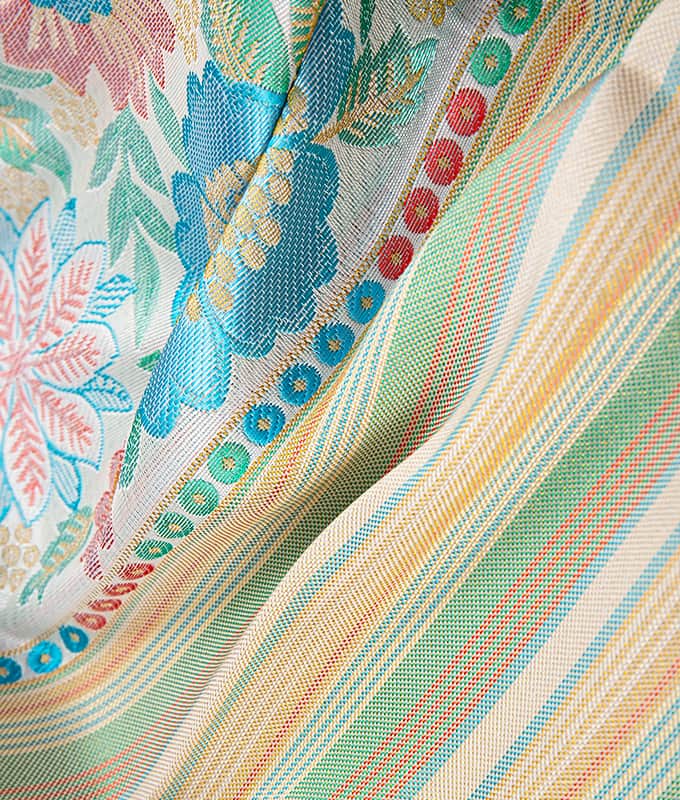
Sunflower Print Poly-Cotton Fabric for Sarong — a vibrant fabric inspired by sunflowers, radiating energy and brightness. Made with soft poly-cotton, ...
See Details -
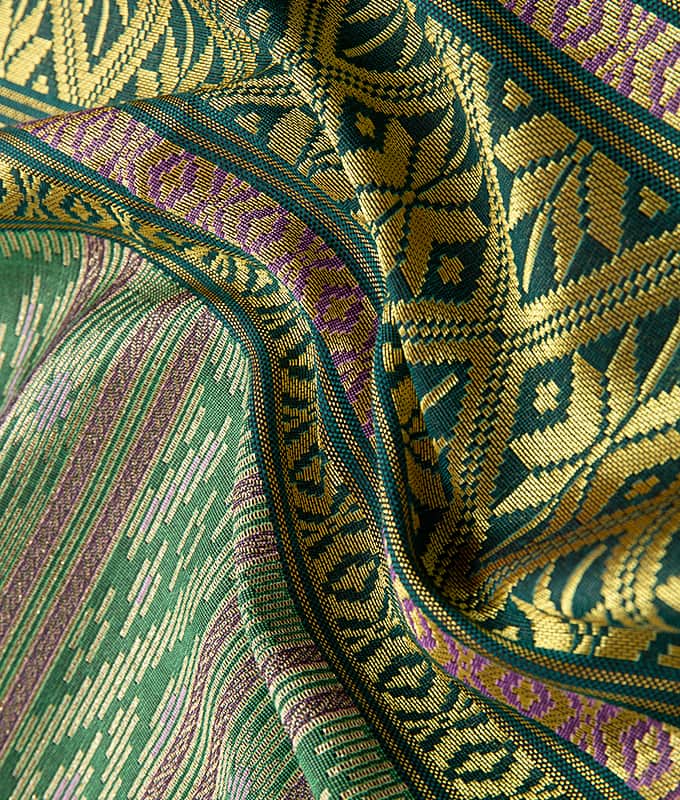
The Vertical Stripe Gold Thread Poly-Cotton Fabric for Sarong blends durability and comfort with a touch of elegance. Featuring vertically arranged go...
See Details -
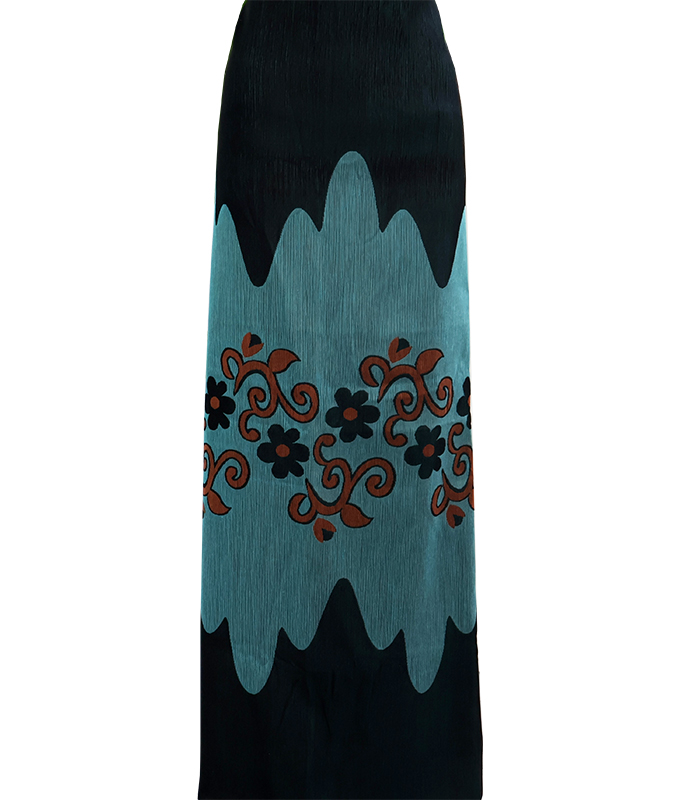
This ethnic-style jacquard sarong fabric features a wavy, sectioned color-block design. Ink black and lake blue-green blend naturally into each other,...
See Details -
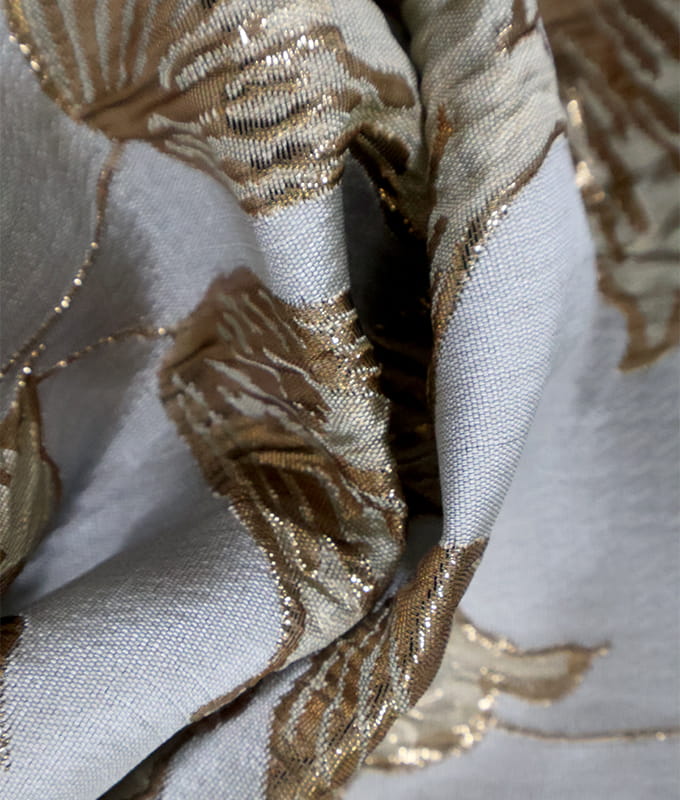
Duotone Tulip Gold-thread Jacquard Fabric is woven with a clearly layered, dimensional tulip leaf motif using jacquard construction, featuring a strik...
See Details -
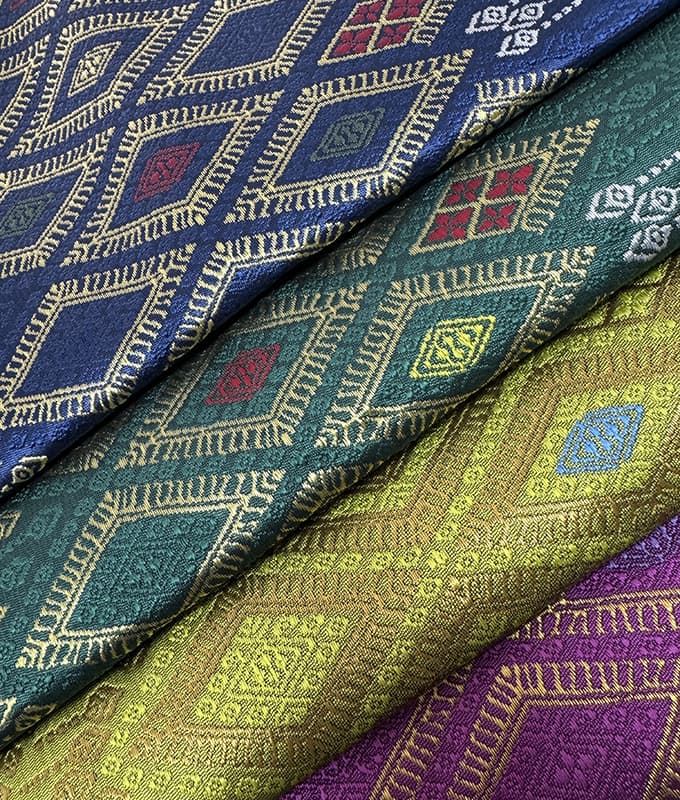
This Southeast Asian ethnic-style polyester jacquard fabric is made with a jacquard weaving technique. A classic diamond geometric pattern is paired w...
See Details