


 English
  عربى
عربى  中文简体
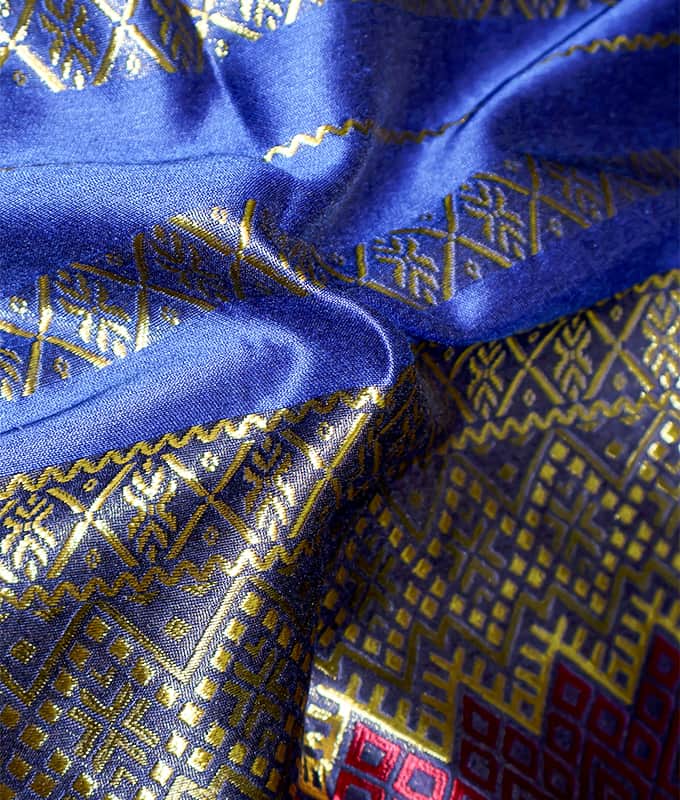
中文简体 100% Polyester Jacquard Pattern Colorful Southeast Asian Sarong Fabric – durable, vibrant, and easy to care for, designed to bring both beauty and pra...
See DetailsHow Southeast Asian Ethnic Apparel Brands Can Customize Fabric from China
Industry News-Content
Southeast Asia is home to some of the world's most visually rich textile traditions — from the intricate woven sarongs of Thailand and Laos to the bold printed wrap skirts of Indonesia and Malaysia. For ethnic apparel brands operating in this region, the challenge is not a shortage of inspiration. It is sourcing fabric that faithfully captures these traditions at a price point that makes a modern clothing business viable. China has emerged as the most capable answer to this challenge, offering a rare combination of advanced weaving technology, high-volume printing capacity, and deep familiarity with Southeast Asian textile aesthetics.
Why Chinese Fabric Suppliers Are the Right Fit for Ethnic Apparel
China's textile industry has been serving Southeast Asian markets for decades, and that history shows in the specialization on offer today. Manufacturers in provinces like Zhejiang, Jiangsu, and Guangdong have built entire product lines around traditional Southeast Asian garment fabrics — something that would be difficult to find in generic fabric sourcing markets.
Three advantages stand out for ethnic apparel brands specifically:
- Pattern precision. Traditional ethnic designs often rely on tight geometric repeats, gold-thread accents, and multi-color layering. Chinese jacquard and digital printing technology can reproduce these with a level of detail that hand-loomed alternatives cannot match at scale.
- Material flexibility. Whether a brand needs the breathability of cotton for everyday sarongs or the sheen of polyester for ceremonial pieces, Chinese mills offer both — and blended compositions that balance the two.
- Cost efficiency. Government-subsidized textile production keeps Chinese fabric prices competitive even for small-batch custom orders, allowing emerging ethnic apparel brands to access quality materials without the pricing pressure of luxury-tier suppliers.
Choosing the Right Fabric Type for Your Traditional Designs
Not all fabric constructions suit all traditional garments. Matching the right fabric type to the garment's purpose — ceremonial, everyday wear, or fashion-forward — is the first real decision a brand must make before approaching a supplier.
For traditional wrap garments like sarongs and tube skirts, the dominant options are jacquard weaves and printed blends. Southeast Asia traditional sarong fabric produced in China typically falls into three categories:
- Polyester jacquard sarong fabric — ideal for ceremonial and formal garments where a structured drape and surface texture are important. The woven-in pattern eliminates the risk of print fading over time.
- Polyester-cotton blended sarong fabric — a practical choice for everyday and resort-wear pieces. The blend delivers softness and breathability while retaining shape through repeated washing.
- 100% cotton plaid sarong fabric — suited for brands emphasizing natural materials and traditional craftsmanship narratives in their marketing.
For upper-body ethnic garments and tailored pieces, woven jacquard clothing fabric allows brands to embed complex motifs — floral, geometric, or symbolic — directly into the fabric structure rather than relying on surface printing.
The Customization Process: From Pattern to Bulk Order
Understanding the typical workflow prevents costly delays and miscommunication. The process for customizing ethnic fabric from a Chinese supplier generally follows four stages:
- Design submission. Provide your pattern files in vector format where possible (AI or EPS). For jacquard weaves, suppliers need a repeat diagram showing how the motif tiles. For printed fabrics, high-resolution flat files with clearly marked color codes (Pantone or CMYK) are standard.
- Sample production. Reputable suppliers will produce a strike-off (for printed fabric) or a loom sample (for jacquard) before committing to bulk production. Never skip this step. Colors on a screen look different from colors on fabric, and ethnic patterns lose their character when the color balance shifts even slightly.
- Sample approval. Review the sample against your original design for color accuracy, pattern repeat alignment, fabric hand-feel, and dimensional stability (does the fabric stretch or shrink after washing?). Request corrections in writing with annotated images to avoid repeated misunderstandings.
- Bulk production and quality control. Once the sample is approved, agree on inspection checkpoints during production — not just at the point of shipment. For custom ethnic fabrics with intricate patterns, mid-production checks catch weaving defects or print registration errors before they compound across thousands of meters.
Key Practical Tips to Avoid Common Mistakes
Most problems in cross-border fabric customization are preventable. Here are the most common pitfalls ethnic apparel brands encounter — and how to avoid them.
- Negotiate MOQ realistically. Minimum order quantities for custom-woven jacquard fabric typically start at 300–500 meters per colorway. If your initial run is smaller, discuss printed alternatives or consider sharing a colorway across two product lines to meet the threshold.
- Specify colorfastness standards upfront. Ethnic garments are often worn in hot, humid climates and washed frequently. Request fabric tested to a minimum Grade 4 colorfastness (ISO 105 standard) for both washing and perspiration, and ask to see test reports before approving bulk production.
- Clarify pattern ownership. If your design incorporates traditional motifs that are culturally significant — specific to a community or region — confirm in the supplier agreement that the design is exclusive to your brand and will not be sold to other buyers. Most reputable Chinese textile suppliers will accept this clause.
- Account for lead time in your production calendar. Custom fabric orders from China typically require 30–60 days from sample approval to delivery, plus transit time. Build this into your seasonal planning, especially for ceremonial collections tied to fixed cultural calendars.
- Use a bilingual tech pack. Providing a tech pack in both English and Chinese dramatically reduces back-and-forth. Even simple annotations — marking which part of a pattern is the "right side" or indicating the direction of the fabric grain — can prevent misproduction when translated clearly.
Customizing fabric from China is not simply a cost decision for Southeast Asian ethnic apparel brands — it is a capability decision. The depth of specialization available in the Chinese textile supply chain, particularly for traditional woven and printed formats, makes it possible for small and mid-sized brands to produce fabrics that genuinely honor their cultural heritage while building a commercially sustainable business.
Related products
-
-
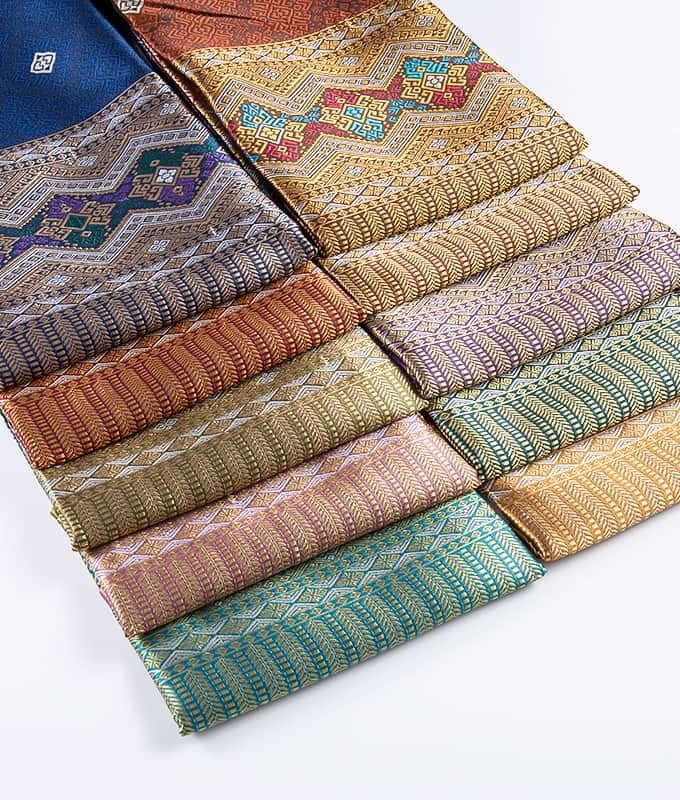
The Polyester Fabric for Traditional Southeast Asian Sarong Skirt bridges heritage and modernity. Rooted in cultural traditions, this fabric revitaliz...
See Details -
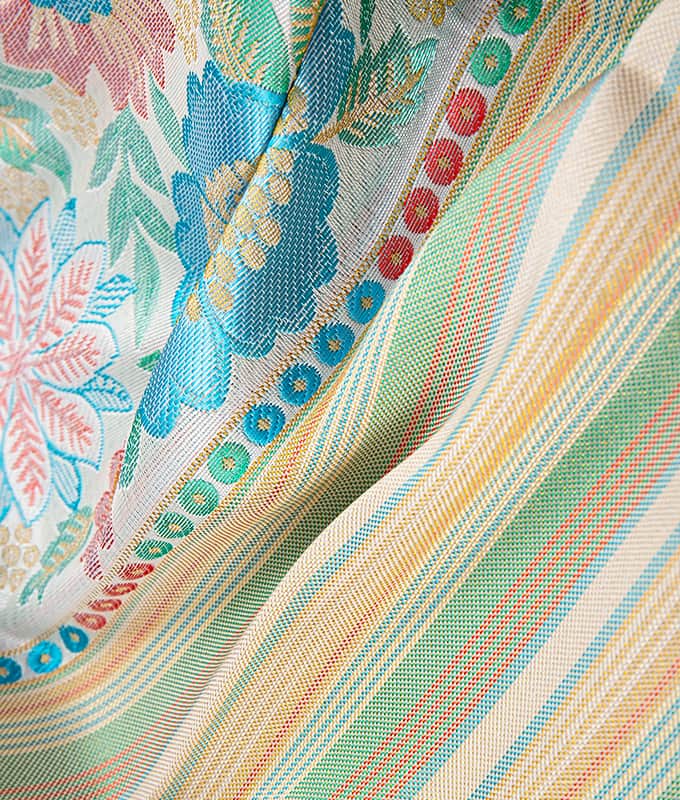
Sunflower Print Poly-Cotton Fabric for Sarong — a vibrant fabric inspired by sunflowers, radiating energy and brightness. Made with soft poly-cotton, ...
See Details -
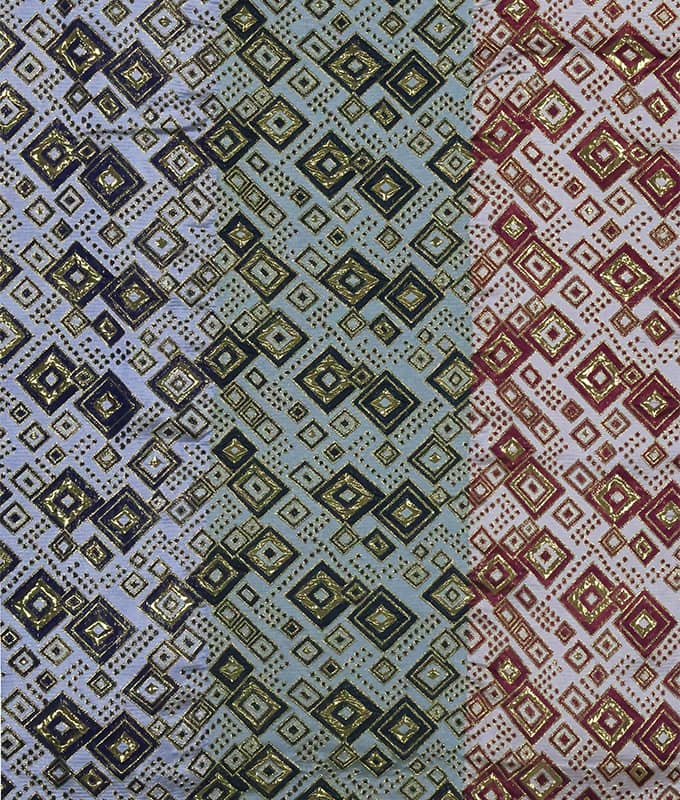
Vintage Trellis Gold-thread Jacquard Fabric is woven with a layered, geometric diamond motif using jacquard construction, featuring boxed outlines pai...
See Details -
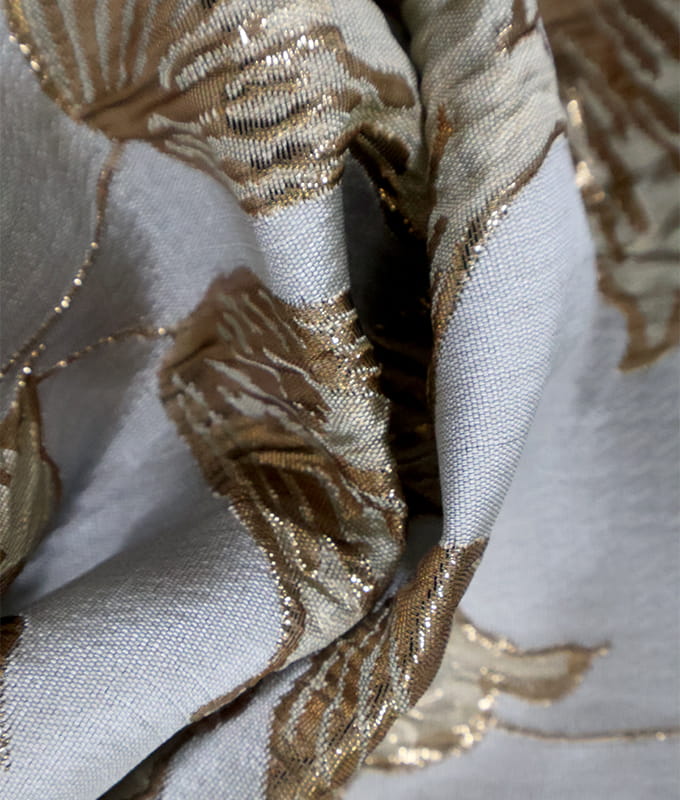
Duotone Tulip Gold-thread Jacquard Fabric is woven with a clearly layered, dimensional tulip leaf motif using jacquard construction, featuring a strik...
See Details -
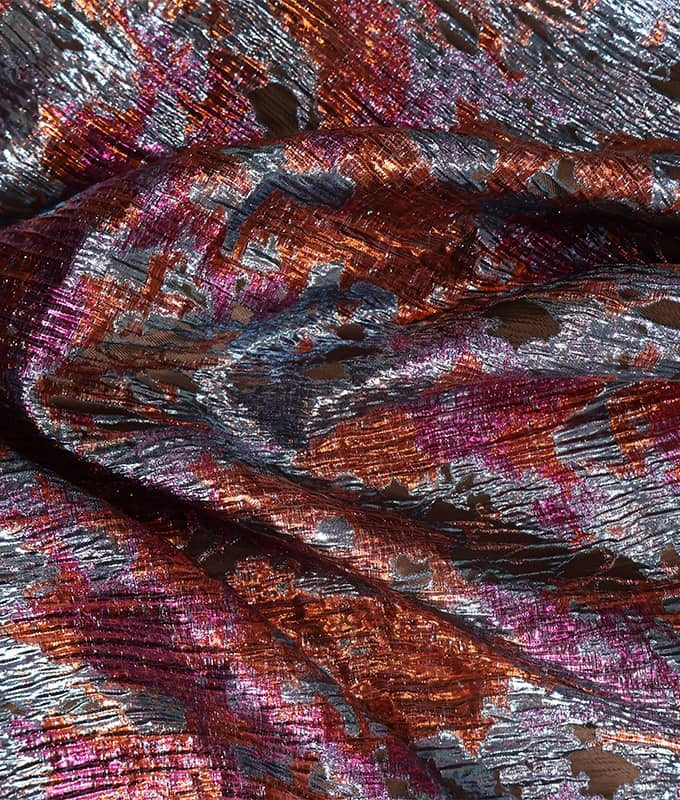
Smoldering Ember Gold-thread Jacquard Fabric is woven with an abstract, textural floral motif brought to life through jacquard construction, where met...
See Details

