


 English
  عربى
عربى  中文简体
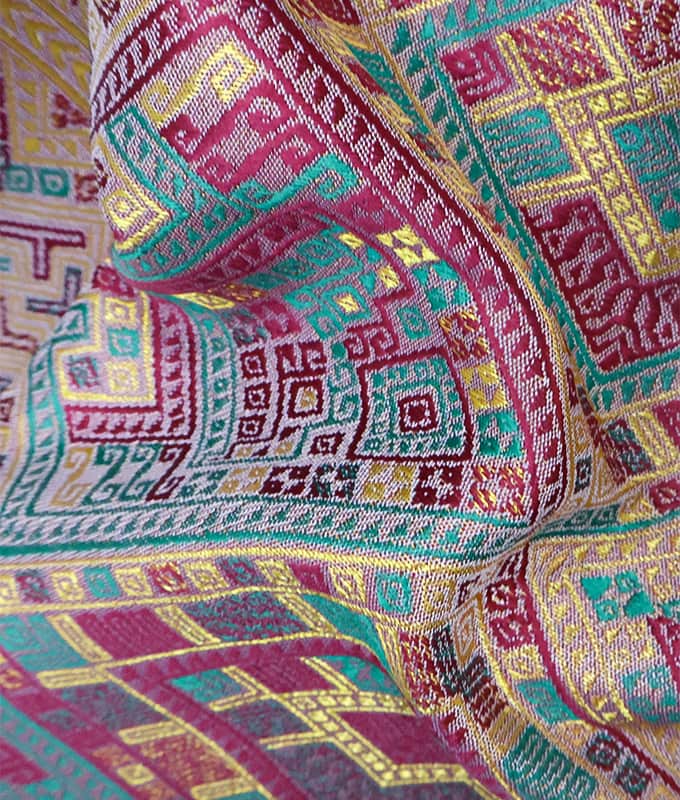
中文简体 Silk-like Polyester Jacquard Fabric for Thai Pha Sinh Sarong — combining the elegance of silk-like texture with high-precision jacquard craftsmanship,...
See DetailsHow to Source the Right Pha Sin Fabric for the Thai Market
Industry News-Content
The Pha Sin is far more than a garment — it is a living symbol of Thai femininity, cultural identity, and social occasion. Whether worn at temple visits, weddings, government offices, or provincial festivals, this traditional tube skirt remains a staple across both urban and rural Thailand. For fabric wholesalers and manufacturers looking to serve the Thai market, choosing the right Pha Sin fabric is not simply a matter of material selection. It is the foundation of product credibility, customer satisfaction, and long-term commercial success.
This guide walks you through the critical decisions involved in sourcing Pha Sin fabric — from understanding which materials the market actually accepts, to evaluating suppliers with the specifications and flexibility your business needs.
What Is Pha Sin and Why Fabric Choice Matters
Pha Sin (ผ้าซิ่น) is a traditional Thai wrap skirt worn almost exclusively by women. It consists of three joined panels — the waistband, the body, and the decorative hem border — and is typically sewn into a tube shape. The garment appears across all regions of Thailand but takes on different weaving traditions, patterns, and color palettes depending on whether it originates in the North, Northeast (Isaan), Central Plains, or South.
In practical terms, Pha Sin falls into two main market segments. Everyday Pha Sin is worn to work, school, temples, and local ceremonies, and demands fabrics that are affordable, breathable, and easy to care for. Ceremonial Pha Sin — used at weddings, royal commemorations, and formal events — commands a premium and relies on richer textures, intricate woven patterns, and a lustrous finish that signals prestige.
Failing to align your fabric selection with these two segments is the most common and costly sourcing mistake. A ceremonial-grade client who receives a plain cotton fabric, or a budget retailer priced out by authentic silk, will not reorder. Getting the fabric right from the start determines whether your Thai buyers come back.
Key Fabric Types Used for Pha Sin Production
Three fabric categories dominate Pha Sin manufacturing today. Each serves a distinct price tier and end-use scenario.
| Fabric Type | Typical Cost Tier | Key Characteristics | Best For |
|---|---|---|---|
| Authentic Handwoven Silk | Premium | Natural sheen, slight texture irregularity, rich color depth | Luxury ceremonial Pha Sin, heritage brands |
| Polyester Jacquard (Silk-like) | Mid-range | Consistent pattern, high luster, machine washable, durable | Formal and semi-formal ready-to-wear |
| Polyester-Cotton Blended | Entry to mid | Breathable, softer hand feel, printed or woven patterns | Everyday Pha Sin, school uniforms, volume orders |
Authentic handwoven silk, mainly produced in the Isaan provinces of Khon Kaen, Surin, and Sisaket, remains the gold standard for ceremonial use. However, it carries high price points, long lead times, limited scalability, and significant variation in quality between artisan batches. For most B2B buyers, it is not a viable primary sourcing option.
The most commercially significant option for wholesale sourcing is silk-like polyester jacquard fabric for Thai Pha Sin. This category replicates the visual richness of traditional woven silk — including intricate geometric and floral motifs — while offering consistent quality, stable pricing, and manageable MOQs. Thai garment manufacturers and retailers widely accept polyester jacquard for formal Pha Sin because the end consumer prioritizes visual appearance over fiber content in this price tier.
For the high-volume everyday segment, polyester cotton blended sarong fabric is the preferred choice. The blended composition improves breathability in Thailand's tropical climate while maintaining affordability. Printed versions with traditional motifs perform particularly well for school and workplace uniforms.
Understanding Thai Market Preferences
Thai buyers are discerning about pattern, color, and finish in ways that differ meaningfully from other Southeast Asian markets. Understanding these preferences gives you a sourcing advantage when selecting designs and communicating with suppliers.
Pattern preferences follow regional traditions. Northern Thai Pha Sin typically features horizontal band patterns with geometric motifs, often in muted jewel tones. Isaan-style Pha Sin is recognized for mudmee (ikat) resist-dye patterns with bold color contrasts, primarily in deep reds, indigos, and gold. Central Thai formal Pha Sin favors brocade-style woven patterns with gold or silver thread accents. When sourcing for a specific regional market or distributor, matching pattern conventions to regional identity is essential for product acceptance.
Explore the full range of available styles in our Southeast Asia traditional sarong fabric collection to identify designs suited to different Thai regional markets.
Color considerations are particularly important in Thailand, where day-of-the-week color traditions remain culturally active. Yellow, pink, gold, and deep purple are consistently strong performers. Avoid proposing fabric colorways that lack cultural resonance — what sells in Malaysia or Indonesia may not translate to Thailand without modification.
Luster and hand feel are the two tactile qualities Thai buyers assess most quickly at trade fairs and wholesale showrooms. A fabric that looks visually rich but feels stiff or synthetic to the touch will be rejected despite its appearance. Request drape and hand-feel samples before committing to bulk production.
What to Look for When Evaluating a Fabric Supplier
Not every textile supplier who lists "Thai sarong fabric" or "Pha Sin fabric" in their catalog is equipped to serve the Thai market with the consistency and flexibility the trade requires. Evaluate potential suppliers against these key criteria before placing any substantial order.
- Pattern customization capability: Can the supplier modify existing jacquard patterns or develop new motifs to match regional Thai design standards? Suppliers with in-house design teams are significantly more valuable for buyers serving specific Thai regional distributors.
- MOQ flexibility: Smaller Thai garment manufacturers and boutique retailers typically require lower minimum order quantities, especially when testing a new design. A supplier offering tiered MOQs (e.g., 500 meters for standard designs, 1,000+ for custom) gives you greater market flexibility. See our range of traditional Thai sarong polyester jacquard fabric options with scalable order options.
- Colorfastness standards: Thailand's climate — high humidity, intense sunlight, frequent washing — demands fabrics with strong colorfastness ratings. Request ISO 105-C06 wash fastness and ISO 105-B02 light fastness test certificates from any prospective supplier.
- Sample lead time: A reliable supplier should be able to provide physical samples within 7–14 days. Longer sample timelines are a red flag for production capacity issues.
- Yarn and fiber documentation: For polyester jacquard and blended fabrics, request fiber composition certificates. Inaccurate labeling creates compliance risk when selling into Thai retail channels that require accurate product tags.
Common Sourcing Mistakes and How to Avoid Them
Buyers new to the Pha Sin fabric market repeatedly encounter the same avoidable problems. Recognizing these in advance can save significant cost and time.
Prioritizing price over pattern accuracy. The cheapest fabric that vaguely resembles a Thai motif will not sell in a market where buyers have been wearing Pha Sin since childhood. Thai consumers and retailers can immediately identify patterns that are culturally off — overly simplified, incorrectly proportioned, or using non-traditional color combinations. Invest in accurate design from the start rather than correcting it after a failed season.
Skipping colorfastness verification. A fabric that looks vibrant in the warehouse will lose credibility quickly if colors bleed after the first wash. In a market where many Pha Sin garments are hand-washed or machine-washed frequently, poor colorfastness generates returns and destroys buyer trust. Always request lab test reports before signing off on bulk production.
Ordering in single large batches without market testing. The Thai retail garment market moves seasonally, with demand peaks around Songkran (April), national holidays, and Buddhist calendar events. Placing a single large order without testing design acceptance in your target channel is high-risk. Structure your initial sourcing as a smaller trial order followed by a replenishment order once sell-through is confirmed.
How to Place Your First Pha Sin Fabric Order
A structured approach to your first order reduces risk and establishes a productive long-term supplier relationship. Follow these four steps.
- Request samples by fabric type and design: Specify the three main categories — polyester jacquard, polyester-cotton blend, and any specialty weave — and request one to two design options per category. Evaluate luster, hand feel, pattern clarity, and drape in person.
- Confirm technical specifications in writing: Before approving any sample, document fabric weight (gsm), fiber composition, width, colorfastness ratings, and pattern repeat dimensions. These specs become your quality benchmark for the full order.
- Place a trial order at minimum viable quantity: Introduce the fabric to two or three Thai retailer or garment manufacturer partners. Collect feedback on pattern acceptance, hand feel, and price positioning before scaling.
- Negotiate replenishment terms upfront: Agree on lead times, pricing stability, and re-order MOQs before your first order ships. Suppliers who lock in favorable replenishment terms early demonstrate confidence in their product quality and production capacity.
Sourcing Pha Sin fabric for the Thai market rewards buyers who take a methodical, market-informed approach. The right fabric — one that aligns with Thai cultural expectations, meets quality benchmarks, and fits the economics of your target channel — is the single most important factor in building a sustainable textile business in this market.
Related products
-
-
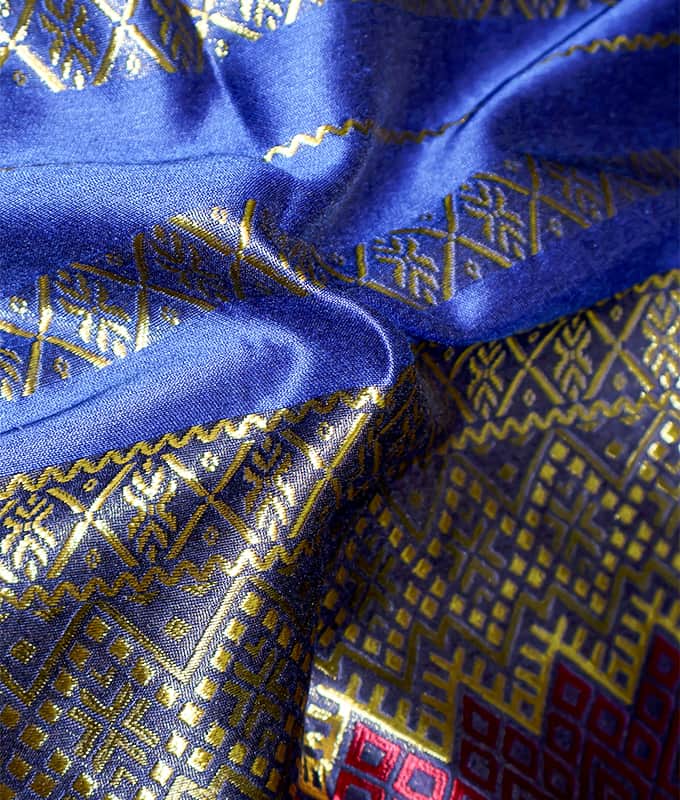
100% Polyester Jacquard Pattern Colorful Southeast Asian Sarong Fabric – durable, vibrant, and easy to care for, designed to bring both beauty and pra...
See Details -
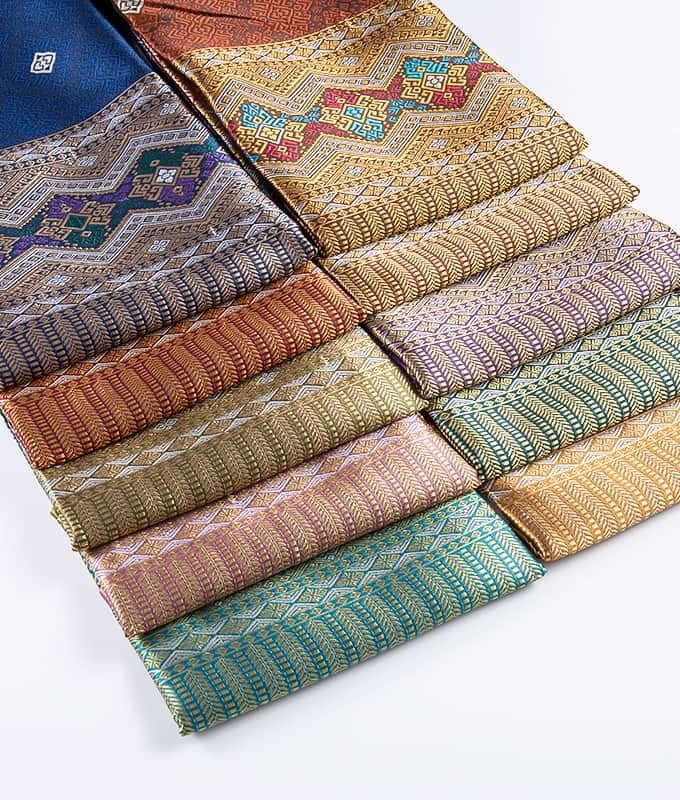
The Polyester Fabric for Traditional Southeast Asian Sarong Skirt bridges heritage and modernity. Rooted in cultural traditions, this fabric revitaliz...
See Details -
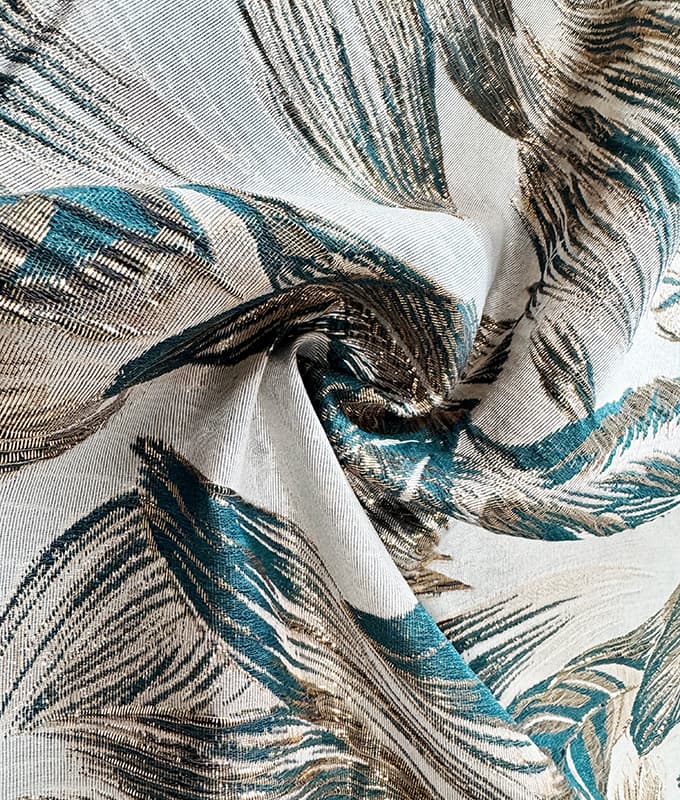
Feathered Foliage Gold-thread Jacquard Fabric showcases oversized, feather-like leaf motifs woven directly into the cloth through jacquard constructio...
See Details -
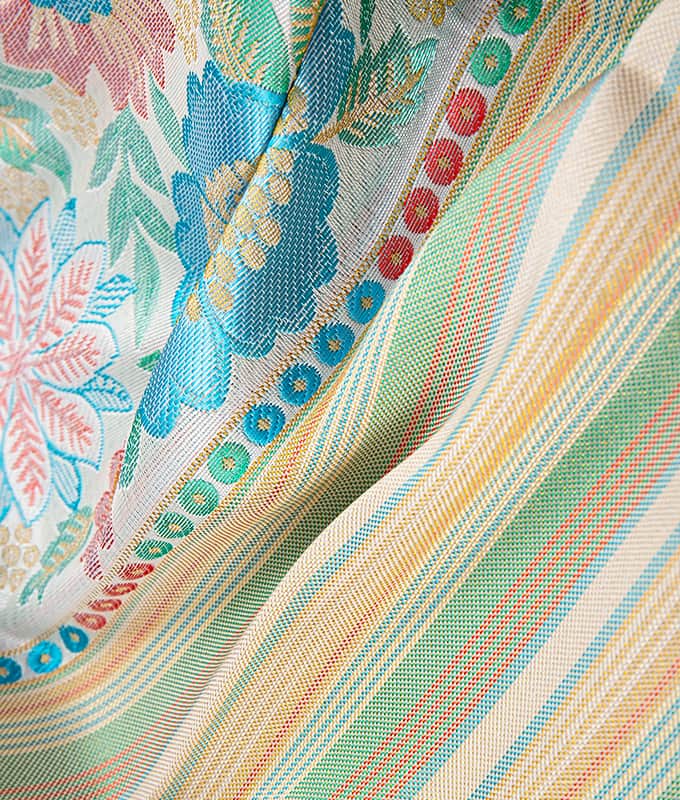
Sunflower Print Poly-Cotton Fabric for Sarong — a vibrant fabric inspired by sunflowers, radiating energy and brightness. Made with soft poly-cotton, ...
See Details -
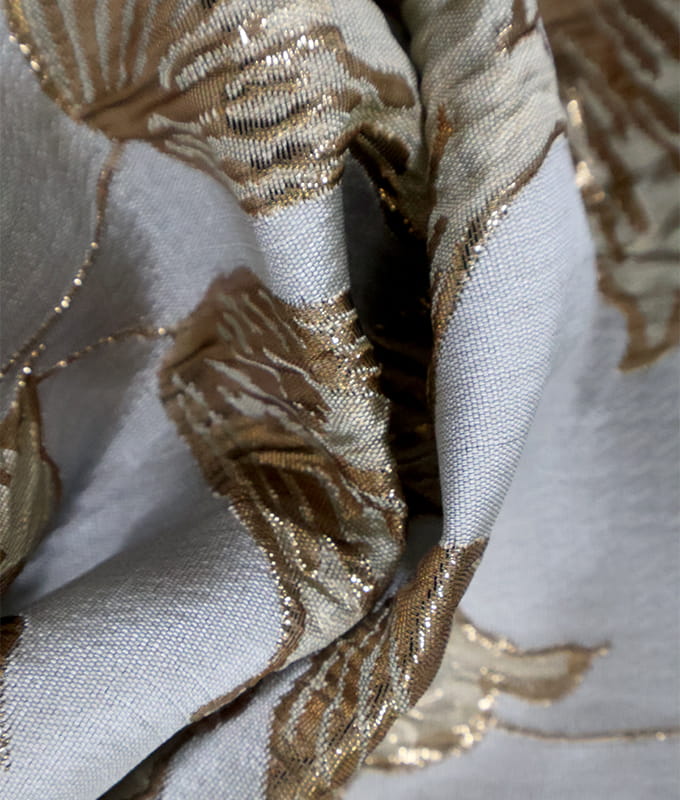
Duotone Tulip Gold-thread Jacquard Fabric is woven with a clearly layered, dimensional tulip leaf motif using jacquard construction, featuring a strik...
See Details

