English
 عربى
 中文简体
100% Polyester Jacquard Pattern Colorful Southeast Asian Sarong Fabric – durable, vibrant, and easy to care for, designed to bring both beauty and pra...
See DetailsJacquard Density and Pattern Clarity: A Buyer's Guide to Reading Weave Quality
Industry News-Content
- 1 What density actually measures in a jacquard weave
- 2 Why pattern clarity is a separate craft
- 3 The repeat scale question buyers should ask early
- 4 Reading clarity on the loom and in the finished piece
- 5 When a softer hand matters: density, drape, and the handstitched look
- 6 3D texture, luster, and the limits of clarity
- 7 A practical sourcing checklist for buyers
- 8 Final thought: clarity is a conversation, not a number
Jacquard density and pattern clarity are two phrases that travel together in almost every fabric meeting, yet they describe different things. Density is a measure of how closely the warp and weft yarns are packed into the cloth. Pattern clarity is what the eye sees: whether a motif keeps its edge, whether the repeat reads cleanly across the piece, and whether the ground and figure stay distinct after finishing. In our own weaving work at Zhengyan Textile, we have learned that a dense cloth is not automatically a clear cloth. A looser sett can sometimes show a bold motif beautifully, while an over-packed weave can swallow fine detail if the yarns are not chosen with care.
What density actually measures in a jacquard weave
In practical weaving terms, density is usually expressed as ends per inch in the warp and picks per inch in the weft. Those numbers tell you how tightly the cloth is built, but they do not tell you the whole story. A high pick count with a fine, low-twist yarn may produce a soft, compact surface that still holds a crisp motif. The same pick count with a thicker or hairier yarn can crowd the pattern, blur the edges, and make the cloth feel stiff. Reed space, yarn count, harness capacity, and float length all sit around the density number and change what it means.
This is why we treat density as a relationship rather than a trophy. The useful question is not “Is this fabric dense?” but “Is this density right for this yarn, this repeat, and this end use?” A sarong that needs to drape softly may not want the same sett as a structured jacket panel. A fine floral motif may need a closer sett than a large geometric block. The table below gives a working view of how density profiles tend to behave, though every cloth still has to be judged as a whole.
| Density profile | Typical effect on pattern clarity | Best suited to |
|---|---|---|
| Open sett with coarse yarns | Bold, soft-edged motifs; fine lines may break up | Traditional looks, loose drape, large repeats |
| Medium sett with balanced yarns | Reliable clarity for most medium repeats; good hand | Sarongs, headscarves, garment panels |
| High sett with fine yarns | Crisp small details and clean edges; less room for error | Fine motifs, dress fabrics, tailored pieces |
| Very high sett with hairy or thick yarns | Crowded surface; motif can look muddy or stiff | Heavy texture, not fine patterning |
Why pattern clarity is a separate craft
Pattern clarity depends on contrast, edge definition, and repeat consistency. Contrast comes from color difference and from the way light hits the yarn surface. A matte ground with a lustrous figure can read sharply even at a moderate density, while two yarns of similar tone may blur together no matter how tightly they are woven. Edge definition comes from yarn count, twist, and float length. Fine yarns can make a small motif look precise; long floats can make a bold motif stand out, but they also need enough space in the sett to lie flat without snagging. Repeat consistency comes from loom control, warp tension, and finishing stability. If the cloth shrinks unevenly, a motif that looked perfect in greige may lose its shape after washing or pressing.
We often ask for a greige sample and a finished sample side by side. Greige shows the structure clearly, while the finished piece shows what the customer will actually feel and see. Finishing can raise fibers, soften edges, add shine, or flatten texture. A light calendering may improve luster but reduce the three-dimensional feel of a jacquard. A wash or heat treatment may shrink the cloth and tighten the weave, sometimes improving clarity and sometimes distorting it. The right answer depends on the final garment or accessory, not on the density number alone.
The repeat scale question buyers should ask early
Before comparing density figures, ask for the repeat size. A two-centimeter flower and a twelve-centimeter flower are not the same job, even if the density number is identical. Small repeats can be woven with shorter floats and tighter control, which usually supports clean edges. Large motifs need more harness movements, longer floats, and more careful yarn selection. They also use more pattern area, so any irregularity in warp tension or weft insertion becomes more visible. If the motif is large and the yarn is coarse, adding density may simply pack the cloth without improving the outline.
For buyers, the practical move is to send the artwork or a clear photo with a physical size reference. Ask the mill what repeat it can hold, what yarn count it recommends, and whether the sample will be woven in the final density or only in a approximate greige. A supplier who can explain the relationship between repeat, yarn, and sett is usually a supplier who can protect the motif during production.
Reading clarity on the loom and in the finished piece
Clarity is easier to judge when you look at the cloth under raking light rather than straight on. Raking light shows the surface texture, the float structure, and any weak edges in the motif. It also reveals whether the ground is balanced or whether the pattern is being carried by color contrast alone. A silky polyester jacquard for Thai Pha Sinh sarong, for instance, depends on controlled luster and a clean ground as much as on the sett; the sheen can flatter a motif, but it can also expose every irregular pick.
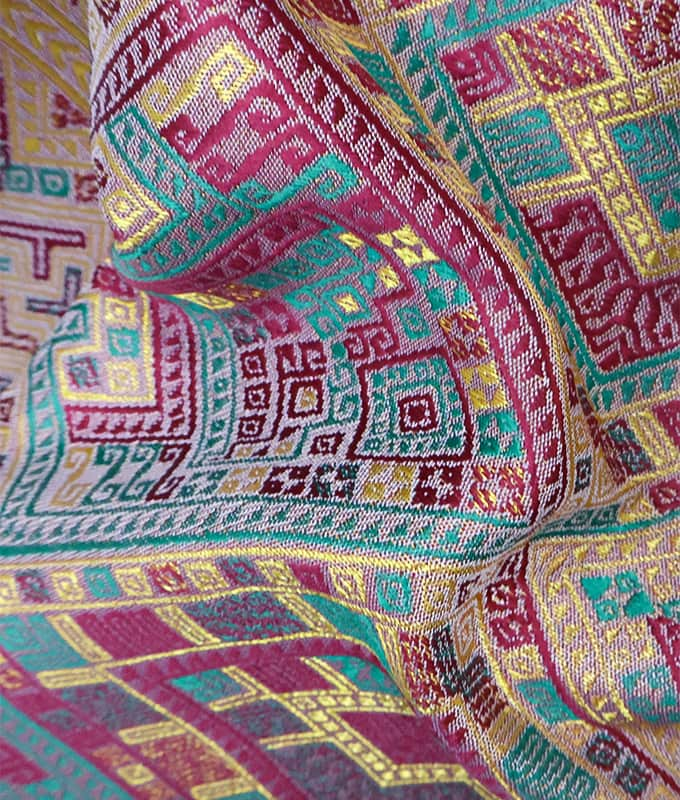 Silk-Like Polyester Jacquard for Thai Pha Sinh SarongA customizable 100% polyester jacquard with silk-like luster and fluid drape, suited to Thai Pha Sinh sarongs where clean ground and motif clarity matter.View Product →
When we check a jacquard quality, we like to compare the face and the back, measure the repeat in several places, and look for warp streaks or weft bars that interrupt the pattern. A few simple checks go a long way:
- View the fabric from arm’s length and from close up; a motif should read at both distances.
- Turn the cloth slightly and check whether the edges of the motif stay smooth under changing light.
- Measure the repeat across the width and along the length to confirm consistency.
- Compare greige and finished samples to see how shrinkage and finishing affect the outline.
- Ask about the yarn lot and dye method if color contrast is doing much of the work.
When a softer hand matters: density, drape, and the handstitched look
Not every fabric should be pushed toward maximum density. Sarongs, scarves, and traditional wraps often need movement and a soft hand. If the sett is too tight, the cloth can become boardy and lose the fluid drape that makes the garment comfortable. In these cases, clarity comes from choosing the right yarn, balancing the pick count, and controlling finishing rather than simply adding more ends and picks. A handstitched-style polycotton sarong fabric is a good reminder of this balance: the look may suggest handwork, but the cloth still has to be stable enough to hold the motif and soft enough to wear.
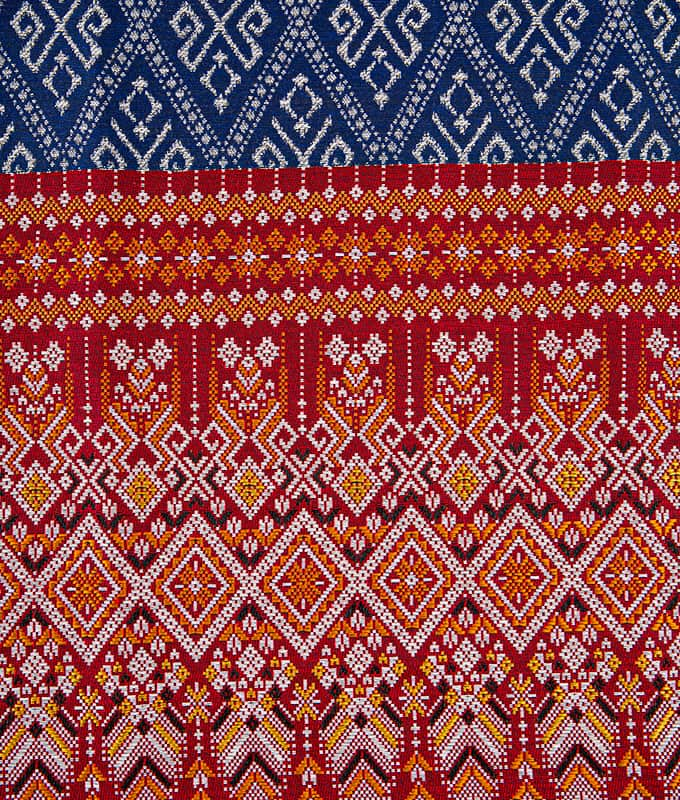 Hand-Stitched Style Poly-Cotton Sarong FabricA customizable 65% polyester/35% cotton sarong fabric with smooth hand and shape retention, balancing soft drape with enough stability to hold the motif.View Product →
For a soft-drape fabric, we might adjust the weft density and the finishing route instead of tightening the whole construction. The goal is to keep the motif readable at normal wearing distance while preserving the fall of the cloth. Buyers should say clearly whether the fabric will be judged on a table, on a garment, or in a finished retail display, because each setting changes how much density is useful and how much becomes unnecessary stiffness.
3D texture, luster, and the limits of clarity
Texture and clarity compete for attention. A raised surface, a metallic thread, or a strong luster can make a jacquard feel rich, but those same effects can obscure fine lines. If the design depends on a delicate outline, a highly textured ground may not be the best host. If the design is broad and sculptural, texture can become the main event and the motif can be simpler. In an S-shaped 3D textured polyester jacquard for sarong, the raised surface is part of the pattern language; the motif has to be planned around that texture rather than fighting it.
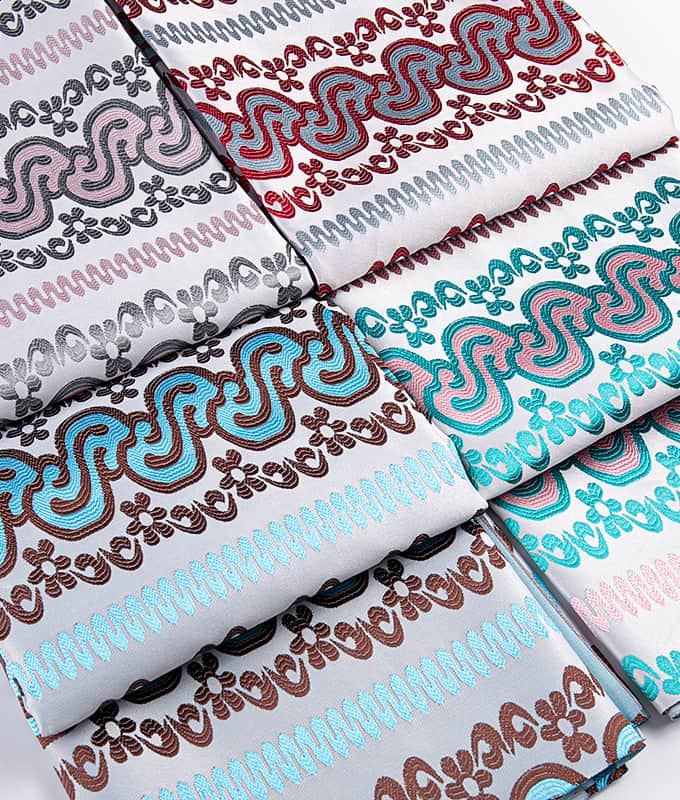 S-Shaped 3D Textured Polyester Jacquard for SarongA 100% polyester jacquard with raised S-shaped texture and silk-like sheen, for sarongs and tube skirts where the motif is planned around surface relief.View Product →
This is also where sampling matters. A small swatch can show whether the texture supports the motif or muddies it. We prefer to weave a short run in the final construction and finish it the way the order will be finished, because a 3D effect that looks crisp in greige may soften dramatically after washing. The buyer can then decide whether to simplify the motif, adjust the density, or accept a softer, more atmospheric pattern edge.
A practical sourcing checklist for buyers
When you are comparing jacquard qualities, keep the conversation focused on the cloth’s job rather than on a single density figure. A short checklist can save weeks of back-and-forth:
- Define the end use: garment, sarong, headscarf, home textile, or display piece.
- Ask for the repeat size in centimeters and confirm it against your artwork.
- Request the yarn count, ends per inch, and picks per inch for both greige and finished fabric.
- Ask how the sample will be finished and whether shrinkage has been allowed for.
- Check the motif under raking light, on the face and the back, at close range and at arm’s length.
- Test a sewn sample if the fabric will be cut, gathered, or worn against the skin.
If you are unsure which construction suits your market, send us the motif and the end use; our team can suggest a starting point and explain the trade-offs in plain language. We would rather help you choose a sensible density than promise a number that does not serve the design.
Final thought: clarity is a conversation, not a number
Jacquard density and pattern clarity work best when they are discussed together. Density gives the cloth its body and support, but clarity comes from the whole system: yarn, repeat, loom control, color contrast, and finishing. A buyer who asks about all of these will usually get a better sample than one who only asks for a higher pick count. Since 2006, we have seen many beautiful motifs succeed or fail on small decisions like yarn twist and finishing temperature. The right cloth is not the densest one on the table; it is the one whose pattern stays legible while the fabric still does what the wearer needs it to do.
Related products
-
-
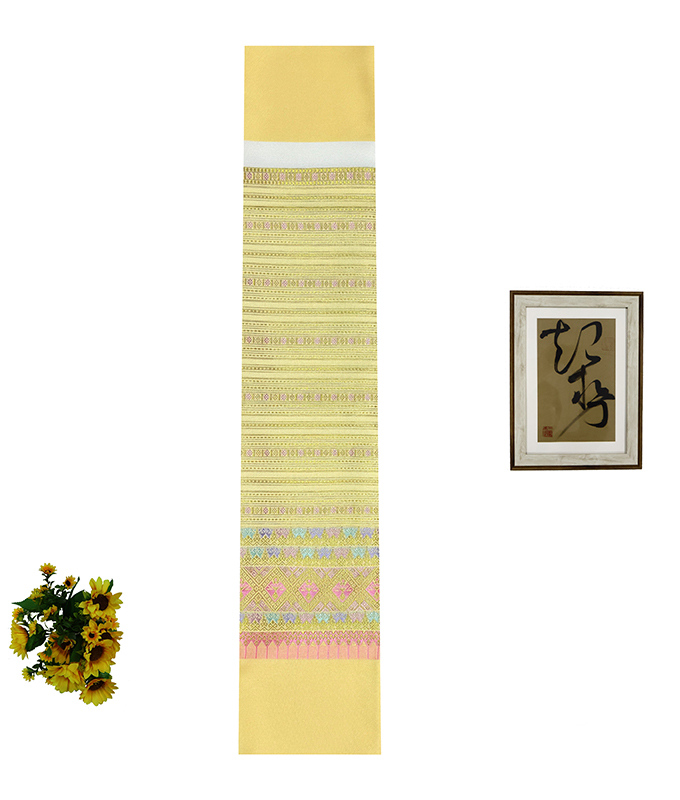
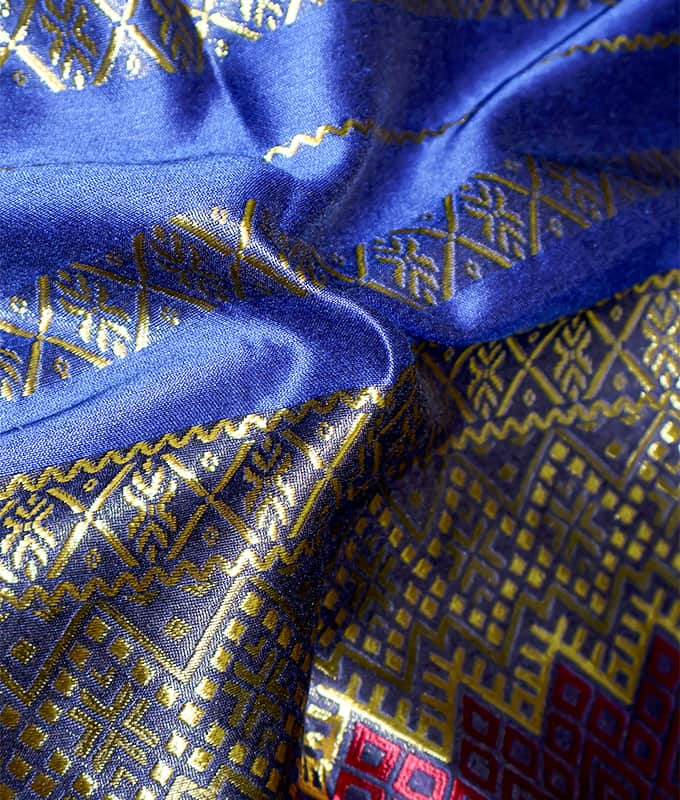
This traditional Southeast Asian jacquard sarong fabric uses a sectioned structure. The two ends are solid-color blocks, the main middle section is ar...
See Details -
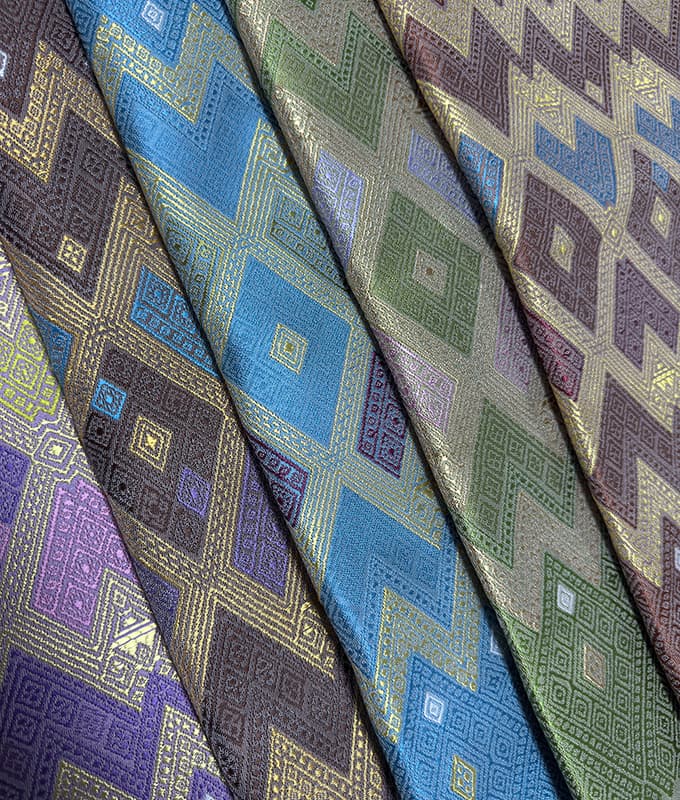
This Southeast Asian ethnic-style polyester jacquard fabric is made with a jacquard weaving technique. The staggered zigzag and diamond patterns carry...
See Details -
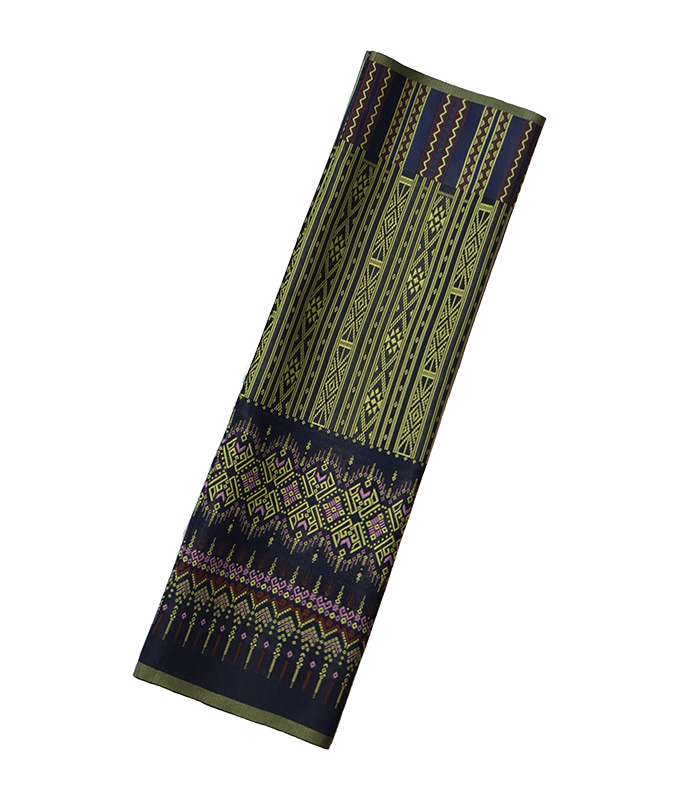
This Southeast Asian ethnic-style jacquard sarong fabric uses a deep ground color paired with olive-green and purple-toned geometric patterns. The col...
See Details -
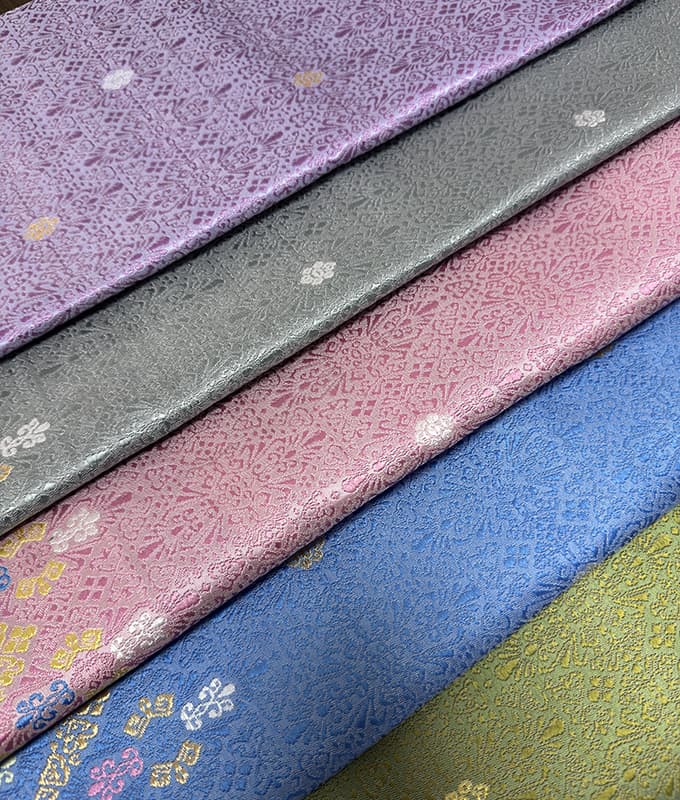
This Southeast Asian-style polyester jacquard fabric is made with a jacquard weaving technique and blends traditional ethnic geometric patterns into a...
See Details -
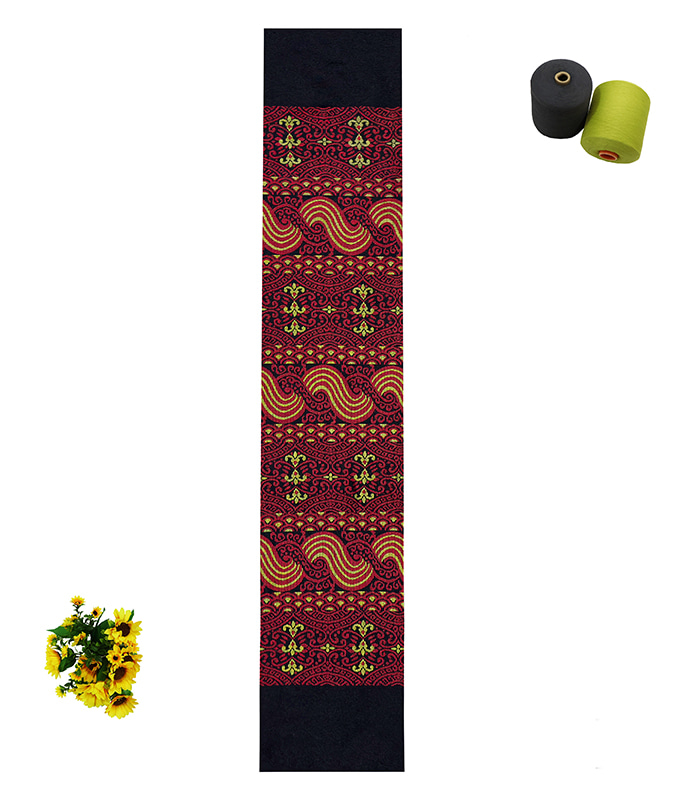
This Southeast Asian ethnic-style jacquard sarong fabric uses a sectioned structure. The top and bottom ends are solid-color blocks, while the main mi...
See Details