English
 عربى
 中文简体
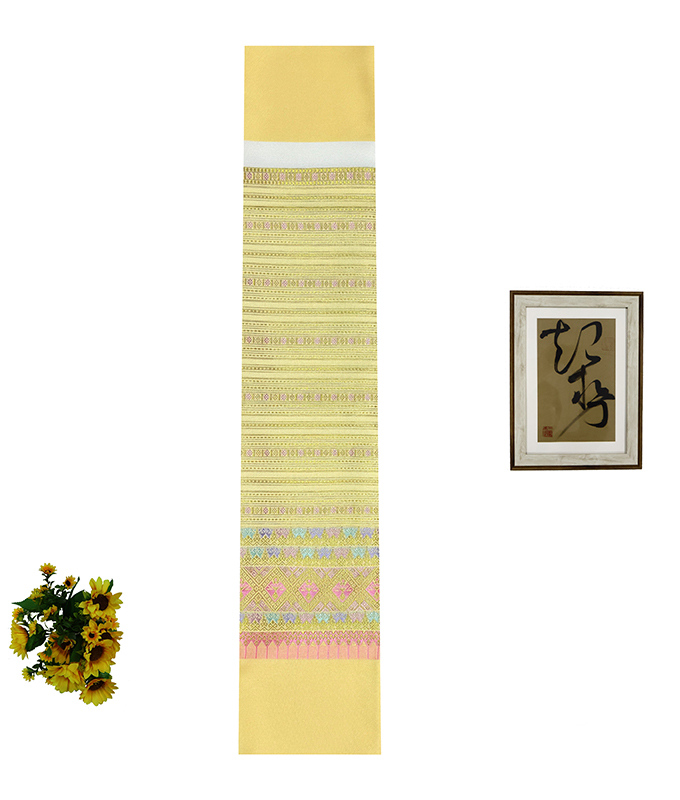
Hand-Stitched Style Poly-Cotton Fabric for Sarong— a refined blend of style and practicality, crafted to give tube skirts a smooth texture and a well-...
See DetailsHow Sarong Patterns Signal Identity: Motifs, Colors, and Cultural Meaning
Industry News-Content
A sarong looks like a simple length of cloth—until you stand close. A wide gold border, a small check, a soft ikat blur, or a dense floral jacquard can point to a region, a ceremony, a family workshop, or a personal mood. Across Southeast Asia, where sarongs are woven, printed, tied, and worn by many communities, patterns are never only decoration. They are one of the quiet ways people say who they are and where they belong. In that sense, sarong patterns signal identity—but they do it in conversation with the wearer, not as a fixed label.
A Wrap That Speaks Before You Do
Identity in a sarong is layered. The same cloth can speak of ethnic heritage, regional origin, religious practice, life stage, or simply the occasion—prayer, a wedding, a day at the office. The message depends on who wears it, how it is wrapped, and what it is paired with. A patterned sarong in a city market may be everyday fashion; the same motif at a village ceremony may carry family history.
Read patterns as clues, not passwords. That is especially true today, when weavers, printers, and wearers constantly adapt older designs to new tastes. A motif that once marked a single village can become a national symbol, a fashion print, or a family heirloom. The identity is still there, but it is moving.
Motifs That Mark Place and Lineage
Motifs are the most visible signal. Songket with supplementary gold thread often marks celebration and prestige in Malay and Sumatran traditions. Ikat, where threads are resist-dyed before weaving, can identify a village through its feathered diamonds or hooks. Batik's parang, kawung, and floral repeats carry court histories and family associations in Java, while modern prints bring them into daily dress.
In Thailand and Laos, the pha sin and sinh use woven borders and body patterns to frame the wearer. In Myanmar, longyi checks and waves are read through color, scale, and fabric quality as much as motif. Even a plain plaid can be expressive: in many Muslim communities across Southeast Asia, a checked sarong is familiar everyday wear for prayer, home, and travel. None of these signs is frozen. Weavers rename patterns, mills rescale them, and wearers mix them with sneakers or headscarves. Identity is being updated, not erased.
 100% Cotton Plaid Southeast Asia Sarong FabricA breathable 100% cotton plaid for everyday prayer, home, and travel wear; compare its plaid scale and border treatment when wrapped.View Product →
Borders, Layout, and the Grammar of Prestige
Look at the edge first. In many sarong traditions, the border carries more work than the field: extra weft, metallic thread, a contrast stripe, or a hand-stitched look. A wide, complex border often signals ceremony and expense; a narrow or missing border can suggest everyday cloth or a more minimal, modern taste. Placement matters too. A central panel, side panels, and a hem band create a composition that changes when the cloth is wrapped, pleated, or folded. That is why a sample flat on a table can look very different on a body. Good buyers study the repeat in relation to the selvedge and the hem, not just the motif alone.
The table below is a starting point for reading those signals, not a dictionary.
| Pattern family | Common identity signal | What to look for |
|---|---|---|
| Songket or supplementary-weft motif | Ceremonial prestige and regional weaving heritage | Metallic weft, float length, weight, neat reverse |
| Batik-style repeat | Court, family, or regional affiliation; now daily fashion | Hand stamp versus print, motif scale, dye penetration |
| Ikat or resist-dyed motif | Village or lineage association through pattern | Soft feathered edges, alignment, warp definition |
| Plaid or check | Everyday Muslim wear, community, unisex utility | Color balance, yarn count, shrinkage, hand feel |
| Jacquard floral or geometric | Modern ceremony, fashion, pan-regional taste | Repeat clarity, texture, drape, seat comfort |
| Border-dominant layout | Status, ceremony, and workshop skill | Weft density, finishing, colorfastness |
Color as a Public Signal
Color is faster to read than motif, and easier to misread. Gold and yellow suggest ceremony and courtly prestige in parts of Southeast Asia. Red often reads as festive or auspicious, while white can signal purity, mourning, or formal prayer dress depending on the community. Black may be elegant, practical, or solemn. Indigo and morinda red hint at natural dye traditions, though modern dyes can reproduce them closely.
What matters is the combination: a green ground with a gold border tells a different story from the same green with a white stripe. Ask who made the choice, and for what occasion. A color that looks ceremonial in one setting may be ordinary in another.
Reading Identity Without Oversimplifying
Visitors sometimes treat sarong patterns as a costume chart: this motif means this ethnic group, that color means that status. Real life is messier. A young woman in Bangkok may wear a pha sin because of family, because it is a festival day, or because it is fashionable. A man in Jakarta may choose a plaid sarong for prayer and a printed one for sleep. A pattern can be inherited, borrowed, marketed, or revived.
There is also a question of power. Some motifs were historically associated with courts or ritual specialists, and printing them cheaply can flatten their meaning. The respectful approach is to ask, credit, and choose with care. Heritage is not free raw material.
From Motif to Market: Designing with Respect
For designers and buyers, the practical task is translation. Identify the source community or region, understand the occasion, and adapt structure without claiming to reproduce a sacred object. If you are making ceremonial wear for a Thai or Lao client, a fluid jacquard with a clear woven border will usually read more convincingly than a flat print. If you are making resort wear, a larger, lighter motif may suit the drape and the price point. If you are making prayer wear, opacity, breathability, and a secure wrap matter more than a dramatic pattern.
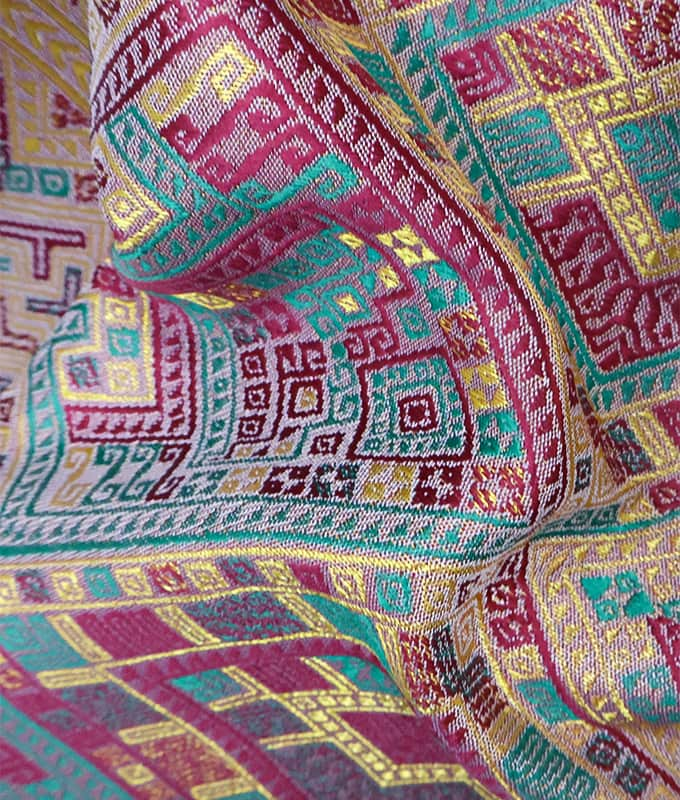
Geometric jacquards are useful when you want a pattern that reads from a distance without copying a specific ritual motif. A diamond repeat can echo traditional weaving while leaving room for a client's own color story.
 Diamond Pattern Polyester Jacquard Sarong FabricA soft, subdued-sheen polyester jacquard with sectioned diamond motifs, useful for custom sarongs and ethnic formalwear where pattern reads from a distance.View Product →
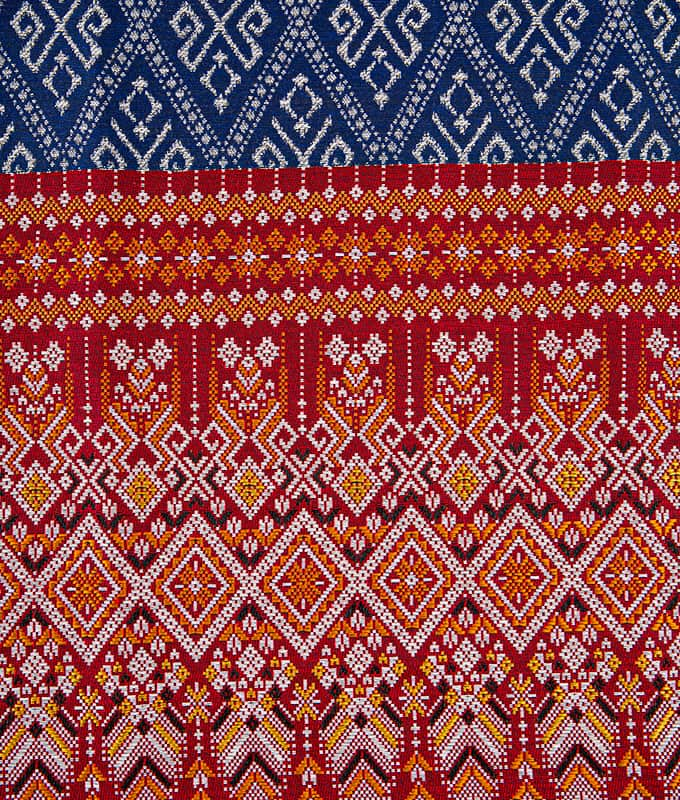
For a Thai pha sin look, a silky polyester jacquard with a woven border can give the right sheen without the care of silk.
 Custom Silk-Like Polyester Jacquard for Thai Pha Sinh SarongA silk-like, wrinkle-resistant polyester jacquard with natural drape and breathability, customizable for Thai Pha Sinh sarongs and humid-climate wear.View Product →
Our team at Huzhou Zhengyan Textile has worked with sarong, keffiyeh, and scarf fabrics since 2006. We are a fabric maker, not a cultural authority. Our role is to listen to the story a client wants to tell, then match the weave, weight, and finish to it. You can read more about our background on the about page and see how we work on our factory page.
What to Ask Before You Buy
Whether you are sourcing one sample or a full order, a few questions will save time:
- Which community or region is this pattern associated with, and how specific is the reference?
- Is the motif everyday, ceremonial, or restricted? If restricted, do we have permission or a respectful interpretation?
- Is the effect woven, printed, or embossed? Each ages differently.
- Will the border survive cutting, sewing, and washing?
- How does the fabric drape when wrapped, sat on, and folded?
A good supplier should answer plainly, show real samples, and admit when a design is a modern interpretation rather than a heritage copy.
Patterns are one of the most generous parts of material culture. They travel, change, and still carry memory. A sarong does not just label a person; it gives them something to move in. When we read those patterns carefully and make them honestly, we help keep the language alive—not as a museum label, but as everyday cloth.
Related products
-
-
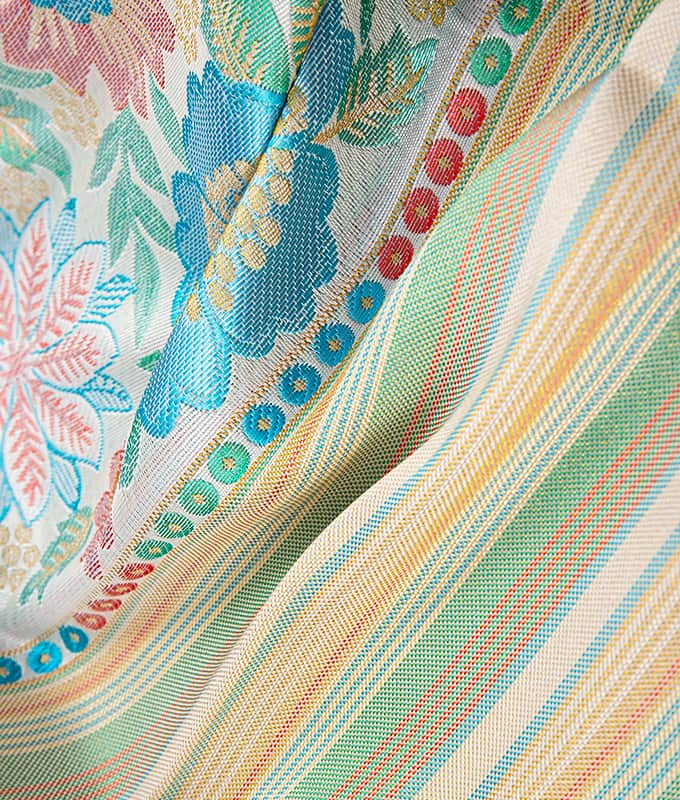
Sunflower Print Poly-Cotton Fabric for Sarong — a vibrant fabric inspired by sunflowers, radiating energy and brightness. Made with soft poly-cotton, ...
See Details -
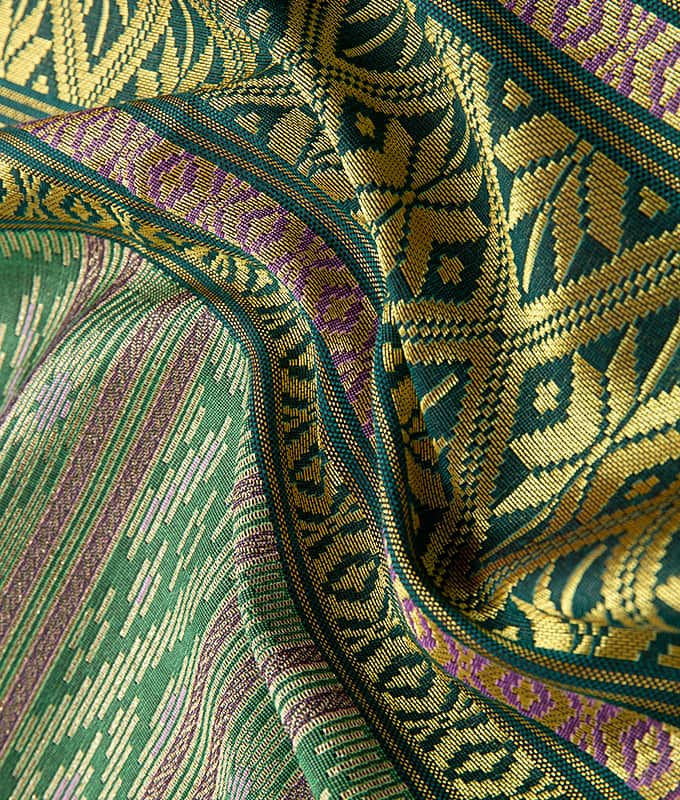
The Vertical Stripe Gold Thread Poly-Cotton Fabric for Sarong blends durability and comfort with a touch of elegance. Featuring vertically arranged go...
See Details -
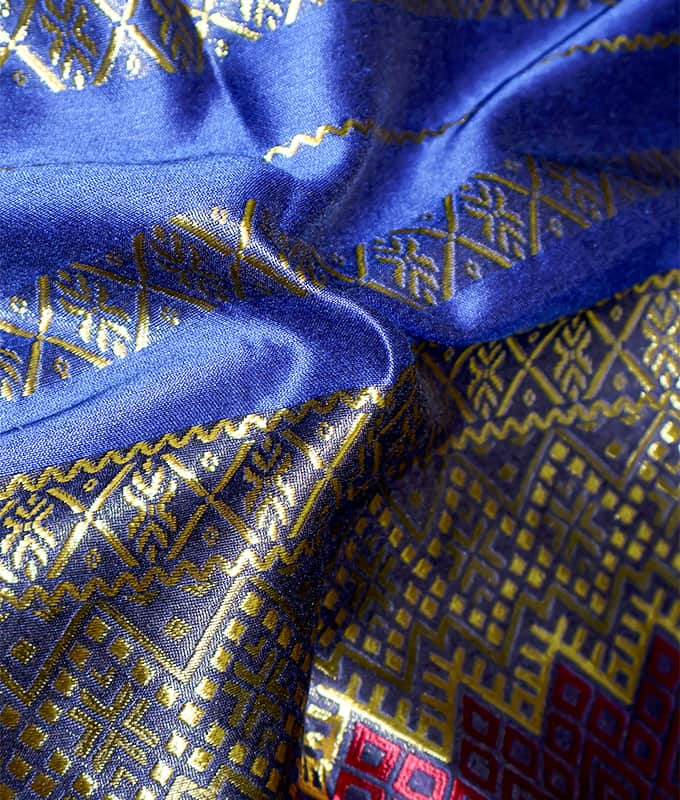
100% Polyester Jacquard Pattern Colorful Southeast Asian Sarong Fabric – durable, vibrant, and easy to care for, designed to bring both beauty and pra...
See Details -
Silk-like Polyester Jacquard Fabric for Thai Pha Sinh Sarong — combining the elegance of silk-like texture with high-precision jacquard craftsmanship,...
See Details -
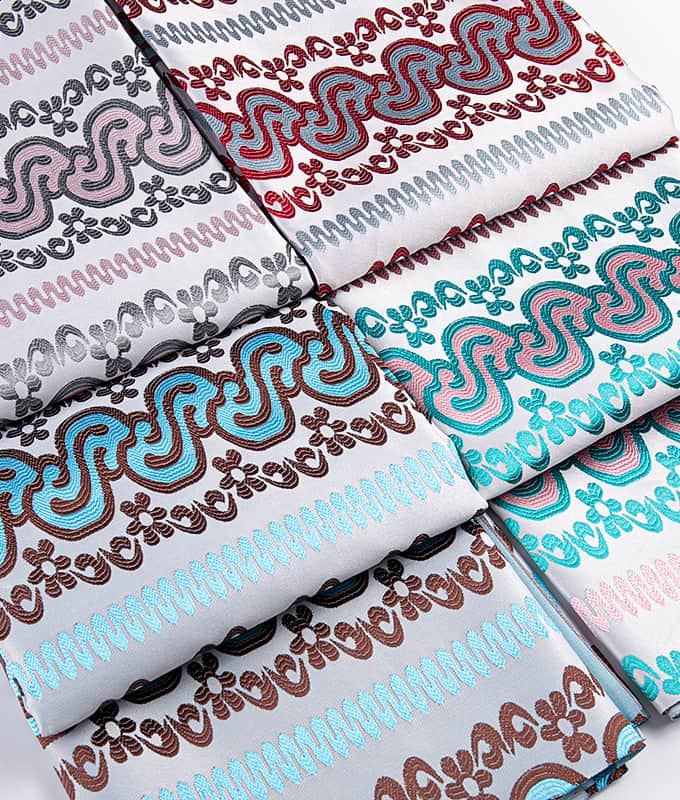
The S-Shaped 3D Textured Polyester Jacquard Fabric for Sarong combines elegance with durability. Crafted with advanced electronic jacquard technology,...
See Details