English
 عربى
 中文简体
Sunflower Print Poly-Cotton Fabric for Sarong — a vibrant fabric inspired by sunflowers, radiating energy and brightness. Made with soft poly-cotton, ...
See DetailsHidden Meanings in Sarong Borders: Motifs, Colors, and Culture Explained
Industry News-Content
A sarong looks like a simple length of cloth: a tube, a fold, a tie. Then you notice the border. On a Malaysian kain, a Thai pha sin, a Lao sinh, or a Myanmar longyi, the decorated edge often does more than finish the cloth. It frames the body, strengthens a seam, and carries cues about region, occasion, status, and the hand that made it. Those cues are what people usually mean by hidden meanings in sarong borders. They are rarely a secret code. They are a visual language, spoken differently from one community to the next.
A Border Is a Frame, a Signature, and a Small Archive
Weavers often treat the border as the part that tells you where you are. It marks the hem, the waist, or the central panel. On Malay and Indonesian sarongs, the head panel and its surrounding borders can create a distinct rhythm across the cloth. On Thai and Lao women’s skirts, the hem border may carry dense supplementary weft, while the body remains quieter. On Myanmar longyi, contrasting bands and wave-like patterns can signal a particular weaving tradition or market style.
The border also acts as a signature. A family workshop may repeat a certain vine, diamond, or gold stripe for generations. A regional producer may use a color sequence that local buyers recognize immediately. None of this is universal. A motif that suggests protection in one village may be simply fashionable in another town, especially when the cloth is made for export or tourism.
- Direction: borders help the eye find the top, bottom, and center of a wrap.
- Identity: pattern families often cluster around regions, ethnic groups, and weaving centers.
- Skill: metallic thread, dense patterning, and hand-finished edges all require time.
- Memory: repeated motifs can preserve family or community stories, even when the original meaning fades.
If you want to go deeper into construction and buying points, our guide to border designs in traditional textiles explains the technical side.
Protection, Ceremony, and Social Signals
Protection is both physical and symbolic. A woven border reinforces a cut edge so it survives washing, folding, and daily wear. In many Southeast Asian traditions, cloth is also part of rites of passage, festivals, and formal visits. A gold border may be reserved for a wedding in one community and worn as everyday fashion in another. A wider border can signal status because it uses more thread, more loom time, and more careful finishing.
Ceremonial sarongs often pair a quiet body with a busy border. That contrast is deliberate. The body is the ground, the border is the announcement. It tells viewers that the cloth was chosen for a reason, even if they cannot name the motif.
Reading Common Border Motifs
The table below is a practical starting point, not a dictionary. Meanings change with region, maker, and use. Treat each association as a question to ask, not a fact to impose.
| Motif family | Common visual form | Where you may see it | Possible associations | Buyer note |
|---|---|---|---|---|
| Geometric lattice | Diamonds, lozenges, stepped squares | Malay, Javanese, Thai-Lao, and Myanmar textiles | Order, protection, rank, cosmic balance | Check repeat alignment and border width |
| Vine and floral | Scrolls, leaves, stylized blooms | Thai, Lao, Malay, and Indonesian sarongs | Growth, fertility, garden imagery, celebration | Confirm whether the motif is woven or printed |
| Checkered or plaid | Squares, gingham, crossed bands | Filipino patadyong, Malay sarong, cotton everyday cloth | Rural identity, simplicity, clan or market colors | Check grain, shrinkage, and colorfastness |
| Gold thread and metallic bands | Gold stripes, metallic weft, dense borders | Thai pha sin, Lao sinh, ceremonial Malay cloth | Celebration, status, wealth, festivity | Test metallic yarn, hand feel, and wash care |
| Wave and scroll | Running scrolls, waves, cloud lines | Myanmar, Thai, Lao, and coastal Malay styles | Water, journey, continuity, movement | Do not confuse woven curves with printed zigzags |
Color, Gold, and Material Meaning
Color is the easiest place to over-read. Red is auspicious in many communities, but it can also be simply festive. Black may suggest age, status, or mourning depending on the setting. Indigo speaks of hand-dye traditions, yet modern dyeing can copy the shade without the same process. Gold is not only a color; it is a material statement. Gold thread adds cost, ceremony, and light.
Material changes meaning too. A polyester jacquard can echo the look of a silk supplementary-weft border at a lower cost, but it does not carry the same ritual weight. A cotton plaid border may be everyday cloth in one place and a marker of rural identity in another. For buyers, the useful question is not “What does this motif secretly mean?” but “Who wore this cloth, when, and with what other garments?”
A Practical Checklist for Respectful Reading
- Ask who made the cloth and where it was woven.
- Separate woven borders from printed imitations by checking the reverse.
- Look for wear, repairs, and hand finishing, which reveal use and age.
- Ask what occasion the cloth was made for, rather than guessing from color alone.
- Record local names for motifs when sellers or wearers offer them.
- Describe, do not decree: say “associated with celebration” instead of “symbolizes wealth.”
This approach protects you from false claims and respects the people who keep these patterns alive. It also makes product development sharper, because you know which details matter to a specific market.
From Meaning to Making
At Huzhou Zhengyan Textile, we have worked with jacquard, polycotton, and cotton sarong fabrics since 2006. Our team in Huzhou often starts a new sarong design from the border, because the edge sets the loom plan, the color balance, and the hand feel. You can read more about our textile background and how we work with Southeast Asian and Middle Eastern markets.
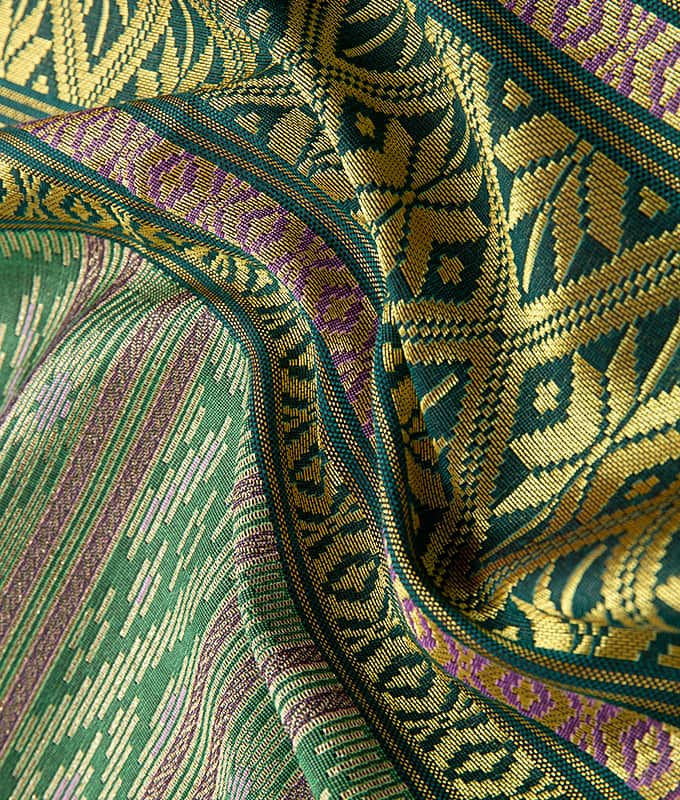 Custom Gold-Stripe Poly-Cotton Sarong FabricJacquard poly-cotton sarong fabric with vertical gold stripes, customizable colors, sizes, and patterns; suited to border-led sarong and tube-skirt designs.View Product →
A vertical gold-thread border is a good example. It can look ceremonial in one colorway and quietly festive in another. The same construction can be adapted for a wedding shop, a fabric wholesaler, or a resort wear label, provided the border repeat and width suit the final garment.
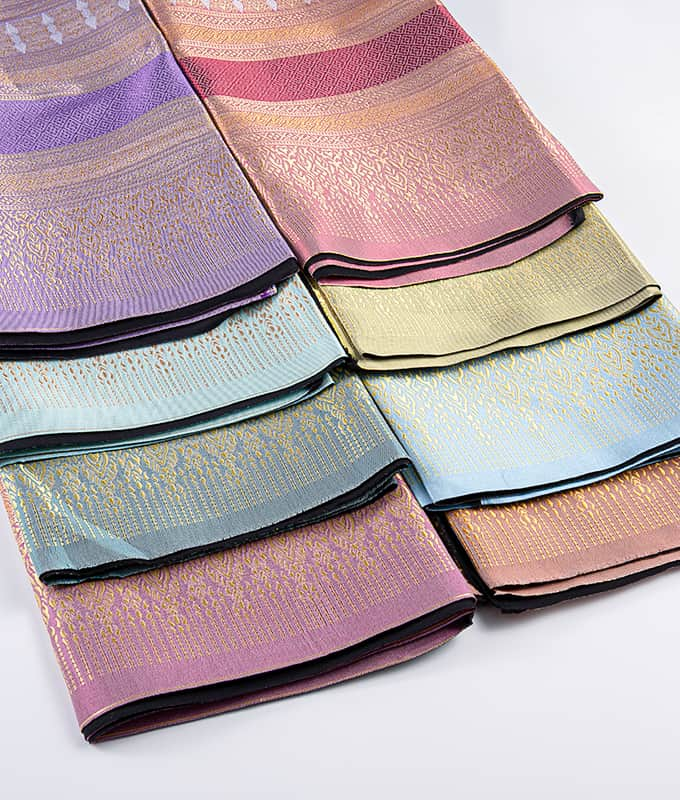 Traditional Thai Polyester Jacquard Sarong Fabric100% polyester jacquard for Thai-style sarongs and tube skirts, customizable in colors, sizes, and patterns, with wrinkle resistance and durability.View Product →
For Thai-style sarongs, jacquard borders can carry floral and geometric detail without the cost of silk. For buyers who want a hand-finished look, our handstitched-style polycotton sarong fabric offers another route. We keep a professional lab for development checks, support small batches, and produce to meet European environmental standards.
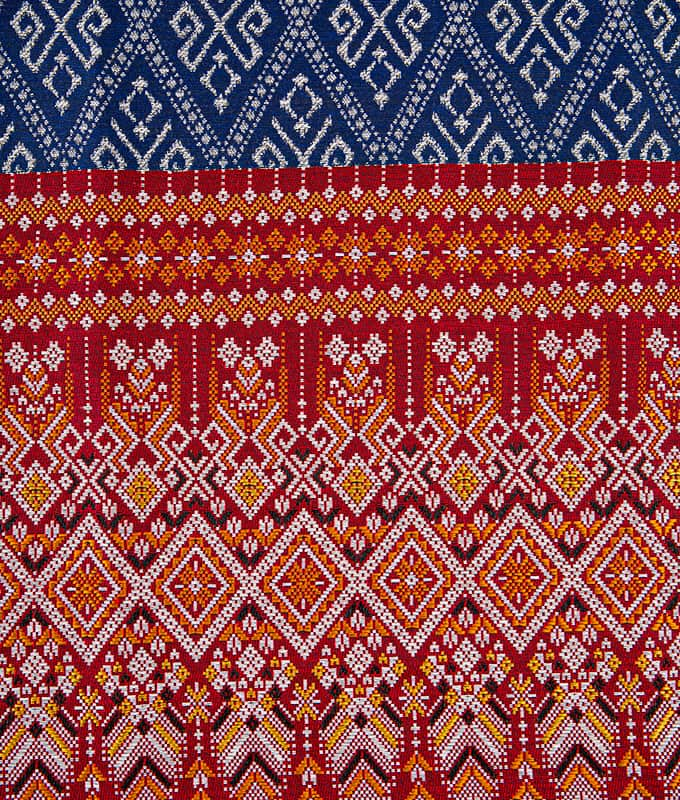 Hand-Stitched Style Poly-Cotton Sarong FabricPoly-cotton sarong fabric with a hand-stitched look, smooth surface, and shape retention; customizable colors, sizes, and patterns for traditional sarong and tube-skirt use.View Product →
The most successful designs are not the ones that pretend to decode a culture. They are the ones that ask better questions, then translate the answers into cloth that feels right for the wearer.
A sarong border is a meeting point between craft and meaning. It protects the edge, frames the body, and signals belonging. It can be ceremonial, commercial, or both. The next time you see a patterned edge, look closely at the reverse, ask about the maker, and listen for the local name. The border is not the secret. The border is the invitation.
Related products
-
-
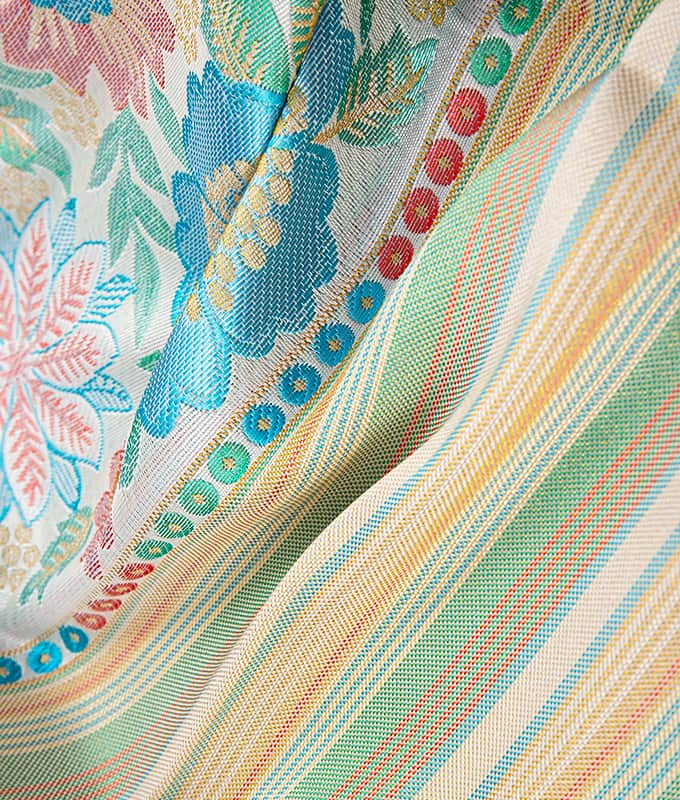
Hand-Stitched Style Poly-Cotton Fabric for Sarong— a refined blend of style and practicality, crafted to give tube skirts a smooth texture and a well-...
See Details -
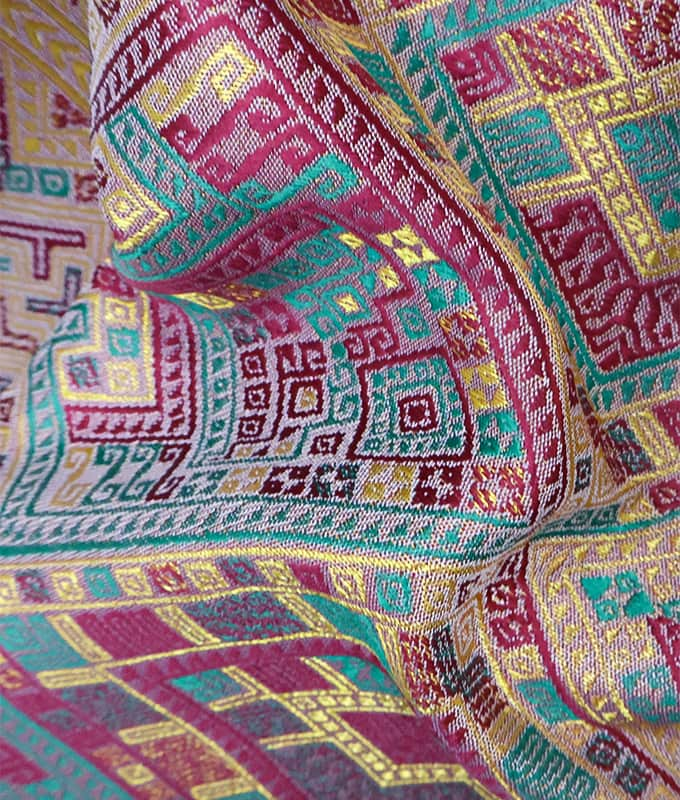
Silk-like Polyester Jacquard Fabric for Thai Pha Sinh Sarong — combining the elegance of silk-like texture with high-precision jacquard craftsmanship,...
See Details -
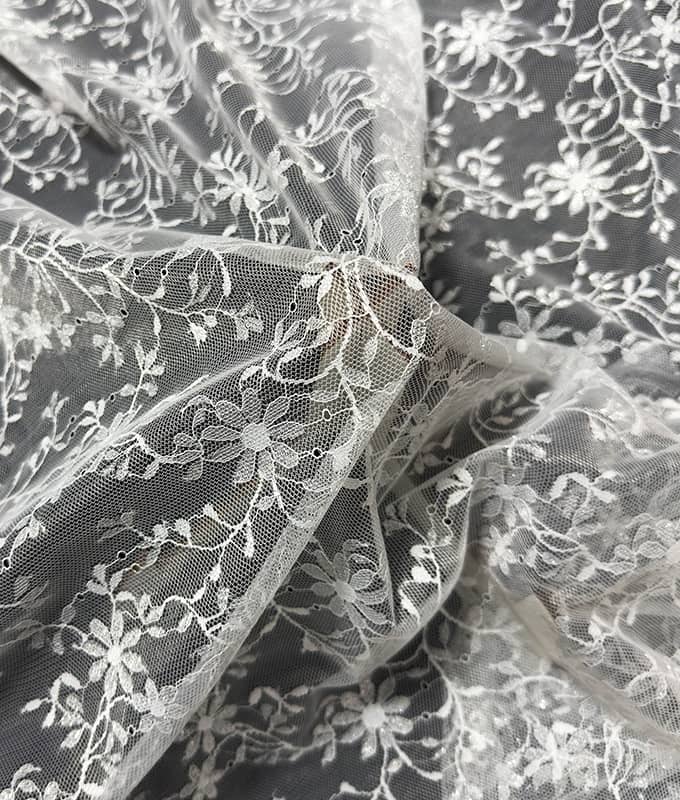
This warp-knit lace fabric links tiny, multi-petaled florets together with slender, flowing vines, with branches naturally interweaving and extending....
See Details -
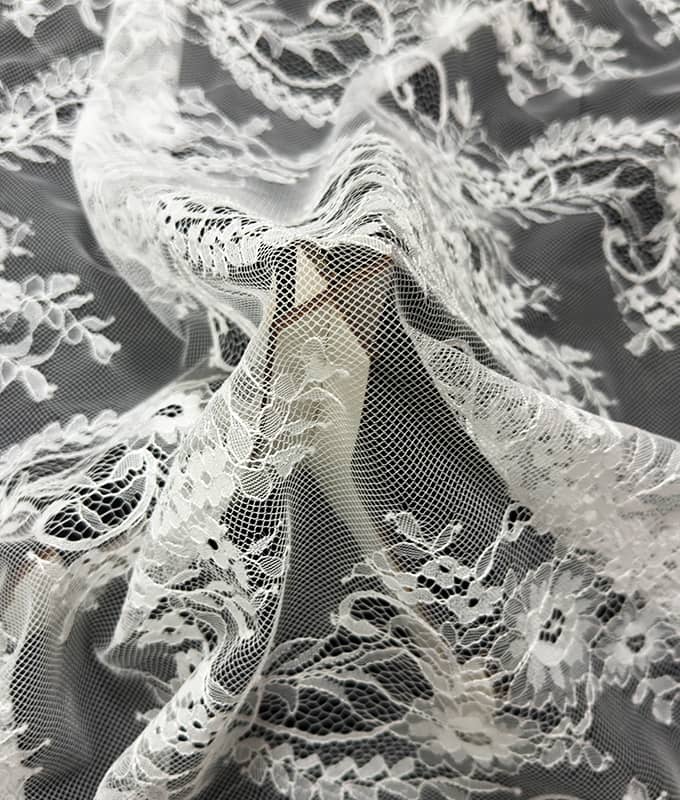
This warp-knit lace fabric is structured around smooth, flowing wave-shaped vines, with tiny florets arranged in an orderly curve along the lines, cre...
See Details -
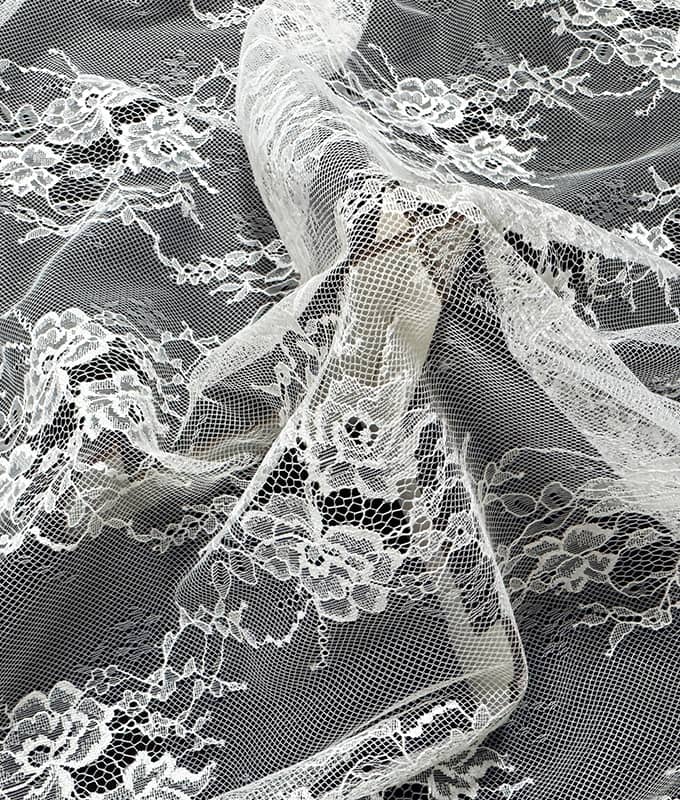
This warp-knit lace fabric arranges diagonal rose clusters guided by gentle, flowing vines, with interwoven branches creating a connected, orderly flo...
See Details