English
 عربى
 中文简体
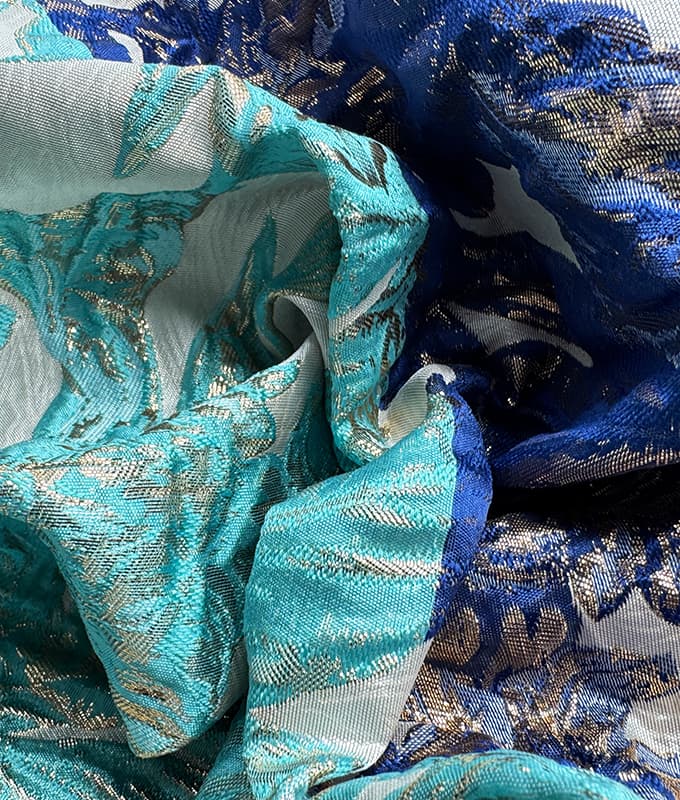
Azure Tide Gold-thread Jacquard Fabric showcases layered, dimensional leaf motifs brought to life through jacquard weaving, with turquoise and deep sa...
See DetailsHeritage Motifs Adapted for Mass Production: A Practical Guide for Mills
Industry News-Content
Heritage motifs carry a particular kind of weight. A houndstooth border, a lotus repeat, a woven diamond grid — these are rarely decoration added at the end of a design process. They are the design process, passed down by weavers who solved problems we are still solving today.
That is also why they are difficult to put into production. A motif built on a handloom at a metre a day does not automatically survive a two-hundred-metre order, a fixed delivery date, or a price target set by a retail buyer. The real work of adapting heritage motifs for mass production sits in that gap, and in our experience it is mostly a design problem rather than a manufacturing one.
This is how we approach it at the mill — not as a rulebook, but as the sequence of decisions that has worked for us and for the buyers we work with.
What Adaptation Actually Means
Adaptation is not copying. A copy takes the surface of a pattern; an adaptation takes its logic and rebuilds it within new constraints. Those constraints are almost always three: what the equipment can physically do, what the order can economically carry, and what the person wearing the cloth will recognise as authentic.
Before anything is drawn, we try to answer three questions. Which parts of this motif make it recognisable at all — the silhouette, the border, the proportion, the colour rhythm? Which parts exist only because of the technique that made them, such as a hand-tied weft or a resist-dyed edge? And which parts can move, scale or simplify without the motif losing its meaning?
When those answers are clear, the production conversation becomes much shorter. When they are not, buyers and mills tend to argue about colour chips for three weeks and discover the real problem at the sample stage.
Reading a Motif the Way a Mill Does
We usually pull a heritage pattern apart into four layers: the grid, the repeat, the colour hierarchy, and the ground.
The grid is the geometry underneath — most woven motifs sit on a diamond, a hexagon or a staggered lattice, and that lattice determines how the pattern will behave across a loom width. The repeat is how often the motif returns; handloom weavers vary it by eye and by mood, while production needs a single number. The colour hierarchy is which shade carries the outline and which one fills — losing that order is what makes an adapted pattern look flat even when the drawing is accurate. The ground is the structure beneath: plain weave, twill, satin, or a jacquard base that lets the motif float.
We wrote a longer piece on how woven patterns carry cultural meaning and how mills translate them, which goes deeper into the symbolism side of this work.
| Motif element | What changes in production | What must stay intact |
|---|---|---|
| Repeat unit | Redrawn to fit loom width and jacquard capacity | Visual rhythm and symmetry |
| Colour count | Reduced to four to six yarn colours per ground | The contrast that defines the motif edge |
| Fine curves | Converted to the weave grid, sometimes stepped | Recognisable silhouette at arm's length |
| Metallic accents | Replaced by metallic weft instead of hand-laid thread | Placement along borders and edges |
| Scale | Adjusted to cut panels and garment pieces | Proportion relative to the wearer |
Three Production Routes and What Each One Does to a Motif
Jacquard weaving
A jacquard loom is the closest modern relative a heritage motif has. Because the pattern is woven into the cloth rather than laid on top of it, the motif keeps a physical presence — you can feel the floats, and light catches the raised areas. The trade-off is resolution: hooks per centimetre set a hard ceiling on detail, and very fine curved lines often become stepped. Many of our customers decide that stepping is acceptable, or even desirable, because it reads as handwork rather than as a printing error.
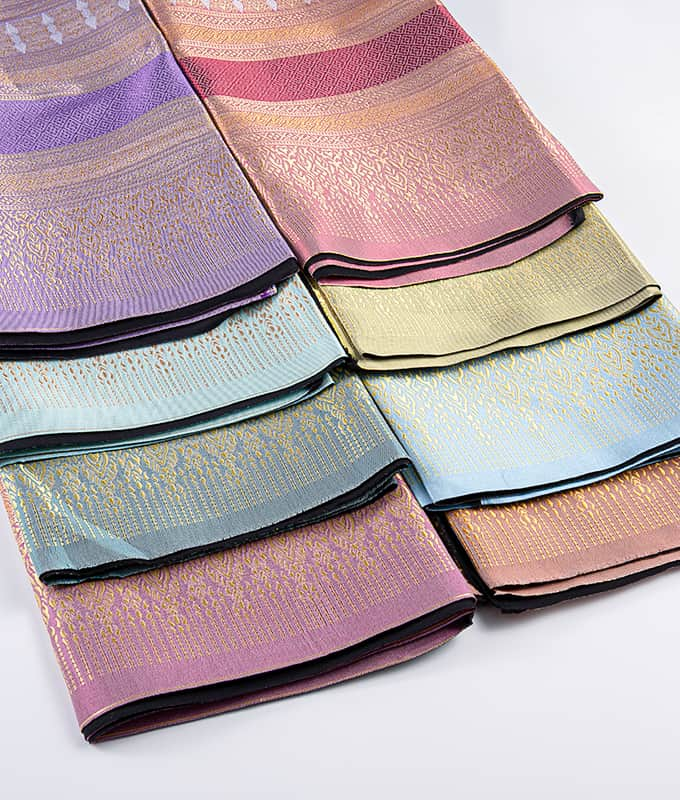 Traditional Thai Sarong Polyester Jacquard FabricThis 100% polyester jacquard suits traditional Thai sarongs and tube skirts, with woven motifs and customizable colors, sizes, and patterns for production planning.View Product →
Printing
Printing removes almost all colour limits, which makes it the natural route for large-scale florals and multi-colour ceremonial designs. What it cannot do is texture. A printed motif sits on the surface, and once the print paste is cured the cloth feels different from a woven ground. Registration drift also becomes visible on tight geometric repeats, so we usually steer fine borders and small-scale lattices towards weaving instead.
Dobby, plaid and stripe structures
Some of the oldest heritage motifs are not pictorial at all — they are checks, stripes and borders. These are the easiest to adapt and the easiest to get wrong, because the whole design lives in proportion and colour sequence. A plaid that shifts by a few millimetres can stop looking like the original without anyone being able to say why.
Colour Is Where Most Adaptations Succeed or Fail
Traditional palettes were built from what a region could grow, gather or trade: indigo, madder, turmeric, iron-rich muds. Reproducing them exactly is rarely possible and often unnecessary. What matters is the relationship between colours — which one recedes, which one advances, where the contrast sits.
We normally work with four to six yarn colours on a ground, and we ask buyers to prioritise: if only one colour can be exact, which one should it be? Metallic accents deserve special mention. Gold in a heritage textile was often a hand-laid thread or a supplementary weft, and in production it becomes a metallic yarn running through the weave. The shine is different, and the placement matters far more than the shade.
A good example of a tight palette that still reads unmistakably traditional is our
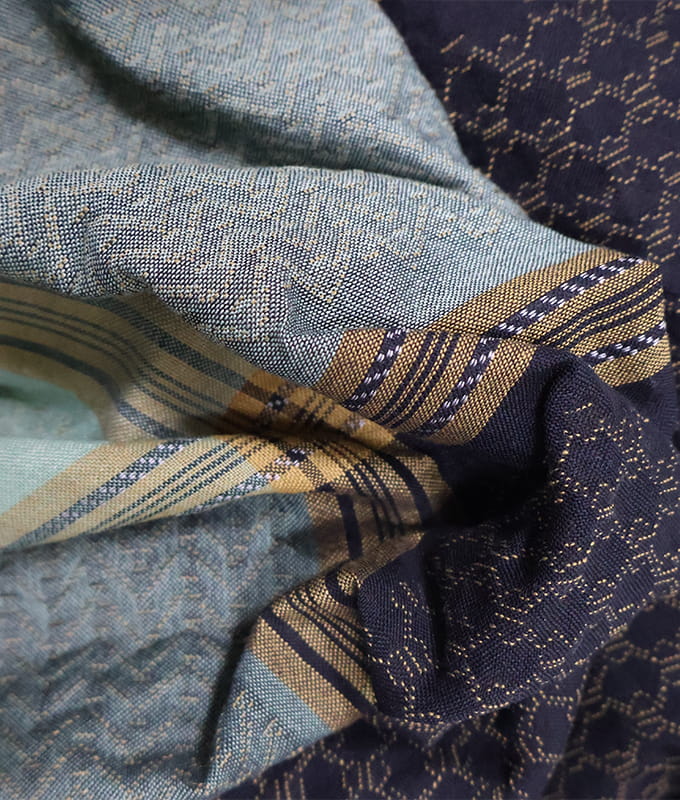 Sage Green and Navy Houndstooth Keffiyeh with Gold Plaid BorderIts dual-pattern cotton panel pairs sage houndstooth with navy honeycomb and a gold plaid border; hand-knotted fringe completes a distinctive traditional scarf.View Product →
— houndstooth and plaid border built from a small number of colours, where the discipline of the palette is what carries the identity.
Choosing the Base Cloth
The fibre decision is quieter than the motif decision, but it shapes how the pattern will be read in use — drape, sheen, weight and how the cloth ages.
- 100% cotton — matte, breathable, softens with washing. Best when the motif should feel understated and the cloth will be worn against skin in heat.
- 100% polyester — holds colour sharply, resists creasing, and takes metallic effects well. Often the practical choice for ceremonial fabrics that need to look crisp and photograph well.
- Poly-cotton blends — the middle path. A 65/35 blend behaves closer to cotton in hand feel while keeping much of polyester's strength and colour retention.
- Textured and slub yarns — a small amount of irregularity in the yarn reproduces the visual noise of handwoven cloth, which is often what makes an adapted motif feel older than it is.
From Sample to Bulk: The Approval Loop
Most problems in heritage adaptation are caught — or missed — in this sequence. Ours usually runs as follows.
- Motif brief: reference images, the intended end garment, and the elements the buyer considers non-negotiable.
- Redraw and grid mapping, so the motif is rebuilt on the loom's actual capability rather than on a screen.
- Colour card submission, using yarn samples rather than digital swatches.
- First strike-off or sample panel, evaluated in daylight and at real viewing distance rather than under a desk lamp.
- Correction round: scale, colour order, or structure, usually one or two passes.
- Bulk approval against the signed sample, with a retained reference piece kept by both sides.
Step four is where buyers are most often surprised. A motif that looks correct on a monitor can read completely differently at three metres, which is roughly the distance at which a sarong or a headscarf is actually seen.
Mistakes We See Most Often
- Treating the motif as an image rather than as a structure, which leads to impossible weave requests.
- Reducing colour without deciding which contrast is essential to the design.
- Scaling a motif up for a wider panel and losing its proportion to the human body.
- Skipping the physical sample because the digital render looked convincing.
- Adapting for cost before adapting for identity — the savings are real, but so is the loss of recognition.
Where We Fit In
We have been weaving in Huzhou since 2006, working mainly on jacquard, printed and traditional sarong fabrics alongside keffiyeh and gauze scarves. Adapting heritage motifs is the part of the job we enjoy most, partly because it keeps us in conversation with weavers and buyers at the same time, and partly because it is never finished — every order teaches us something about which details people actually notice.
If you have a motif you are trying to bring into production and are not sure which route it should take, the easiest starting point is a conversation. You can read more about our mill and how we work, or send us a reference and let us tell you honestly what will survive the loom and what will not.
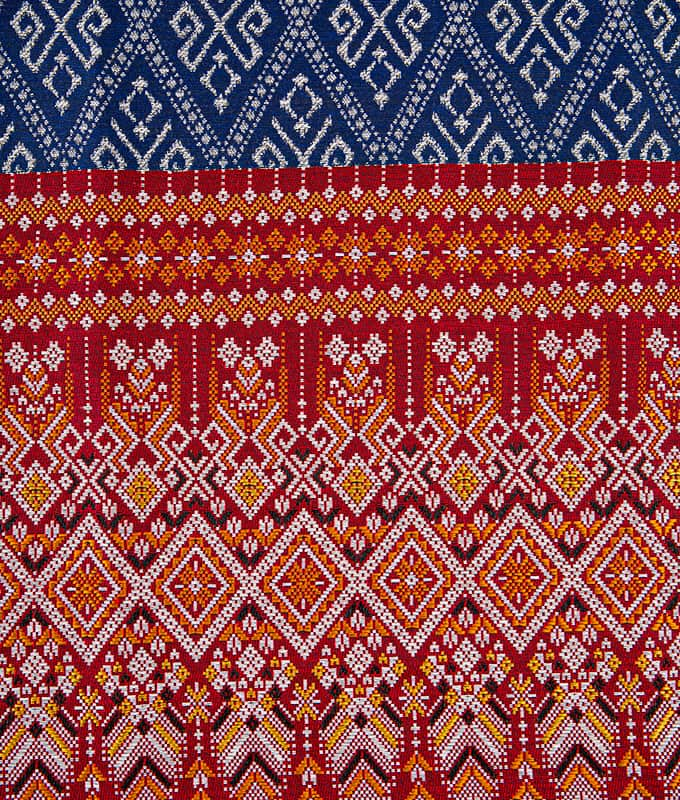 Custom Hand-Stitched Style Poly-Cotton Sarong FabricA 65% polyester, 35% cotton sarong fabric with hand-stitched style, smooth structure, and customization, suited to traditional tube skirts.View Product →
Some patterns, such as hand-stitched style borders, adapt surprisingly well because the handwork was already a visual effect rather than a structural necessity — a useful reminder that knowing which parts of a motif are load-bearing is the whole skill.
Related products
-
-
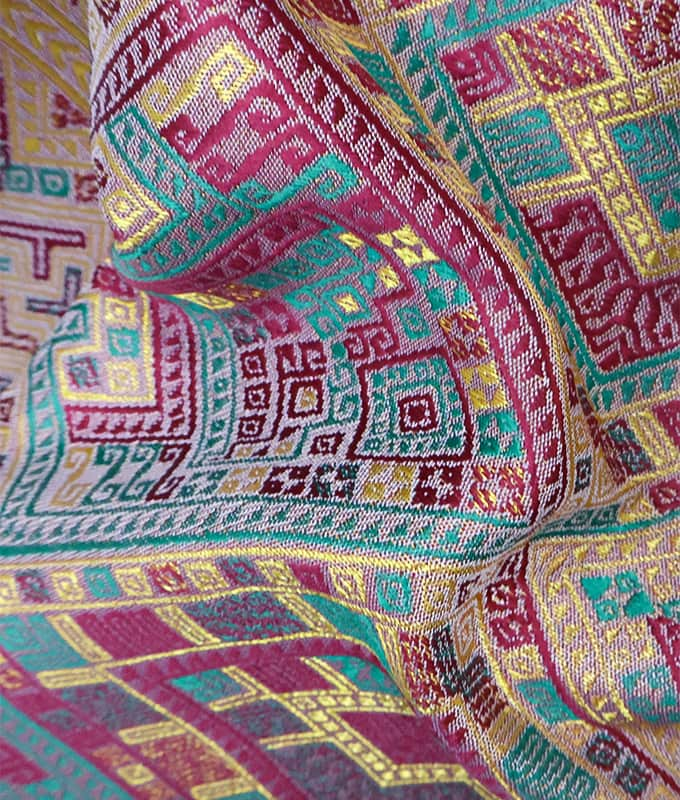
Silk-like Polyester Jacquard Fabric for Thai Pha Sinh Sarong — combining the elegance of silk-like texture with high-precision jacquard craftsmanship,...
See Details -
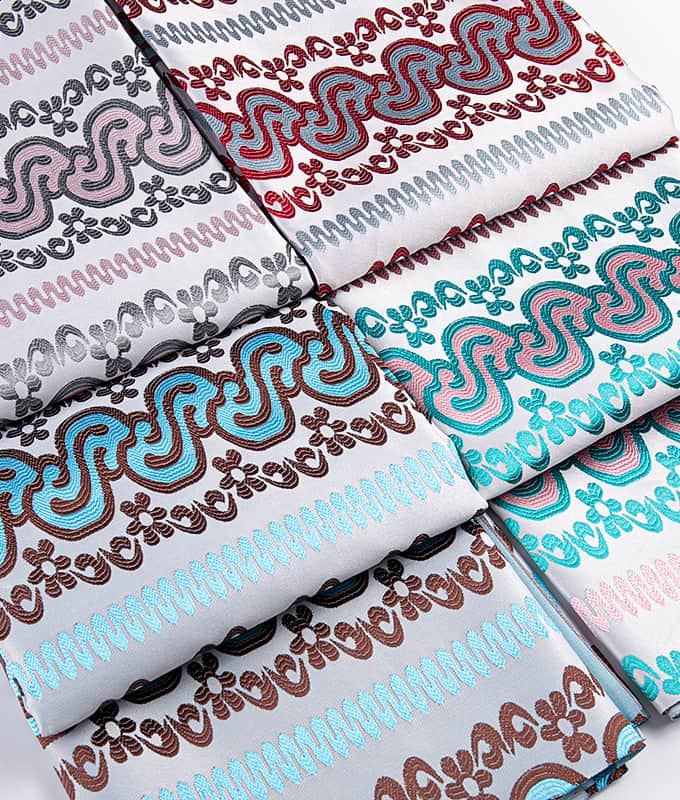
The S-Shaped 3D Textured Polyester Jacquard Fabric for Sarong combines elegance with durability. Crafted with advanced electronic jacquard technology,...
See Details -
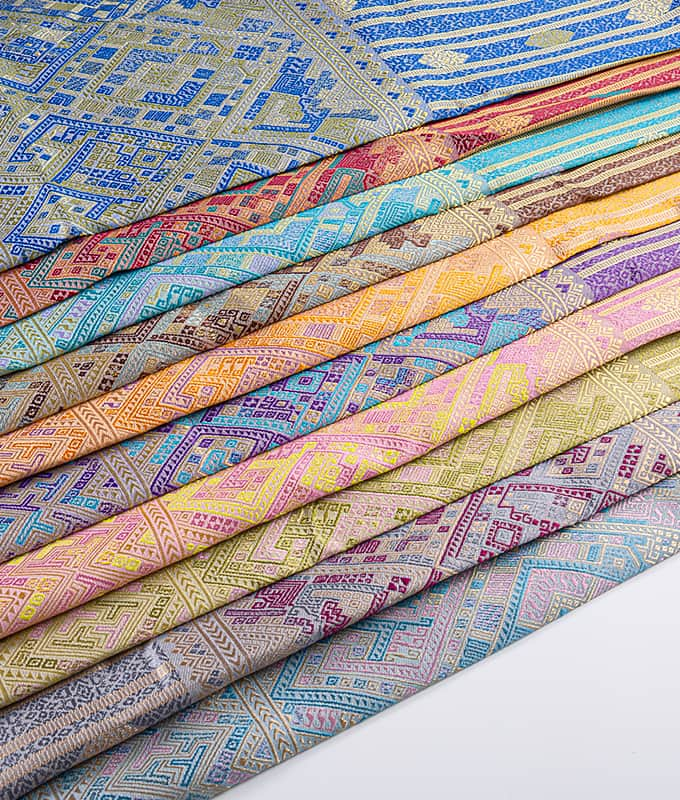
Hollow Polyester Jacquard Fabric for Laotian Traditional Sarong — a perfect fusion of Lao cultural heritage and modern fiber innovation. With symbolic...
See Details -
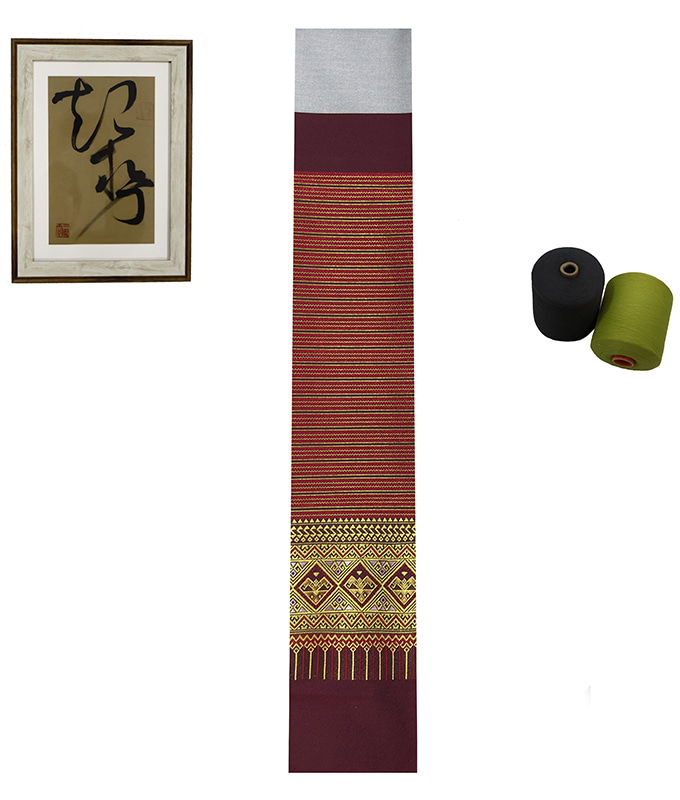
This Southeast Asian jacquard sarong fabric uses a sectioned design. The upper section is arranged with neat horizontal stripes, while the lower secti...
See Details -
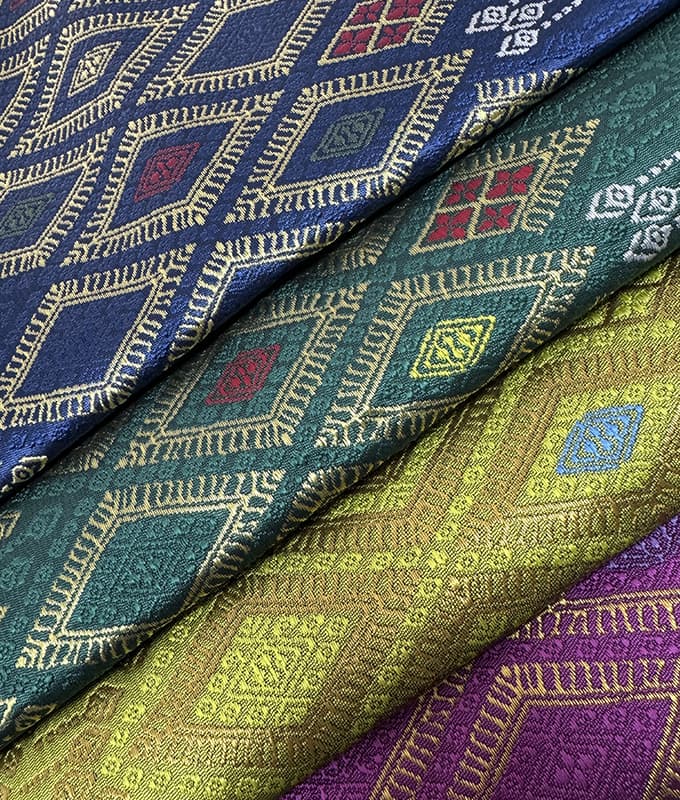
This Southeast Asian ethnic-style polyester jacquard fabric is made with a jacquard weaving technique. A classic diamond geometric pattern is paired w...
See Details