


 English
  عربى
عربى  中文简体
中文简体 100% Polyester Jacquard Pattern Colorful Southeast Asian Sarong Fabric – durable, vibrant, and easy to care for, designed to bring both beauty and pra...
See DetailsColor Symbolism in Southeast Asian Textiles: A Guide for Fabric Buyers
Industry News-Content
- 1 Why Color Carried So Much Weight in Traditional Cloth
- 2 The Core Triad: Red, Black, and White
- 3 Indigo, Blue, and Green: The Cool Colors With Weight
- 4 Gold, Yellow, and the Language of Status
- 5 The Same Palette Reads Differently Across Borders
- 6 Where Keffiyeh Color Logic Fits In
- 7 Turning Color Meaning Into a Workable Specification
- 8 A Few Notes From Our Own Mill Floor
Southeast Asian textiles read a little like sentences: the weave carries the grammar, the motif carries the vocabulary, and color carries the tone. Long before anyone identifies a single motif, the palette has already told the viewer whether a cloth belongs to a wedding, a funeral, a harvest, or a palace.
At Huzhou Zhengyan Textile, we have been weaving sarong, sinh, and head-scarf fabrics for buyers across Southeast Asia and the Middle East since 2006. Color is almost always the hardest line in a specification to get right, and it is the one buyers ask us about most often. What follows is a practical look at color symbolism in Southeast Asian textiles, written from the loom side of the table.
Why Color Carried So Much Weight in Traditional Cloth
For centuries, almost every color in the region came from something a weaver could grow, gather, or trade for. Indigo was fermented from leaves and dipped repeatedly. Reds came from morinda root bark, sappan wood, or lac. Yellows were boiled from turmeric and jackfruit heartwood, and the deepest blacks often came from iron-rich mud.
That labor shaped meaning. Because a deep, even indigo or a clear red required repeated dye baths, color became an easy way to read wealth, rank, and ritual role. In some communities the density of a shade signalled how senior its wearer was. In others, certain hues were reserved for ceremonial use and never appeared on everyday clothing.
Trade shaped regional palettes as well. Port towns absorbed imported dyestuffs and brighter ranges, while inland weaving villages stayed closer to indigo and undyed cotton. Researchers studying the region broadly agree that the most important color classification across Island Southeast Asia is a triad: red, black or very dark indigo, and white.
The Core Triad: Red, Black, and White
These three color families appear again and again, from Lampung ceremonial cloth to Borneo ritual weaving to the simplest daily sarong. Their meanings are not fixed, but the patterns of use are consistent enough to be useful at the sourcing stage.
| Color family | Common symbolic readings | Where it still shows up |
|---|---|---|
| Red and warm reds | Life force, courage, blood, celebration, protection | Wedding sarongs, festival cloth, songket accents |
| Black and deep indigo | Ancestors, dignity, protection, restraint, mourning | Formal and daily sarongs, men's mantles, shrouds |
| White and natural cotton | Purity, the spirit world, the divine; also mourning | Temple offerings, ritual cloth, simple wraps |
Indigo, Blue, and Green: The Cool Colors With Weight
Indigo is the quiet backbone of Island Southeast Asian cloth. Sumba hinggi mantles, Borneo pua kumbu, and Lampung palepai banners all lean on deep blues that read almost black in low light. This is a color of ancestry and continuity rather than celebration, which is exactly why it suits formal and ceremonial pieces.
Blue also became the counterweight to brown in batik, where indigo paired with soga brown is one of the most recognizable combinations in the region. Green sits nearby but carries a different charge: fertility, growth, and in much of maritime Southeast Asia, an association with Islamic tradition. Green with gold is a standard pairing in Malay and Indonesian formal wear.
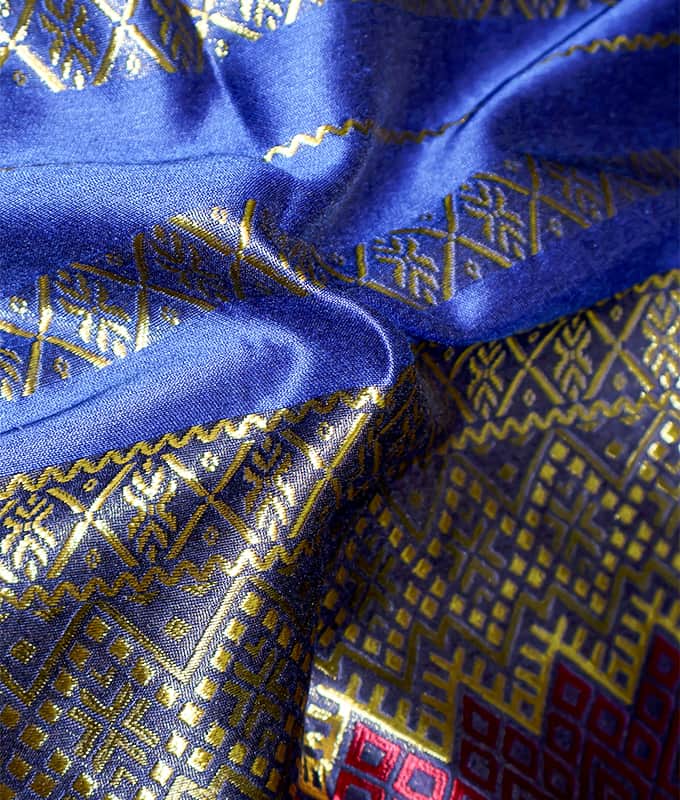 100% Polyester Jacquard Pattern Colorful Southeast Asian Sarong Fabric100% Polyester Jacquard Pattern Colorful Southeast Asian Sarong Fabric – durable, vibrant, and easy to care for, designed to bring both beauty and practicality to your...View Product →
Cool colors are also where consistency gets difficult. Indigo shades shift quickly between dye lots, and a buyer comparing a screen image to a finished roll is usually comparing two different things. That is why we photograph every batch in daylight before it ships.
Gold, Yellow, and the Language of Status
If indigo is ancestry, gold is authority. Gold thread appears in Malay and Indonesian songket, Thai and Lao ceremonial cloth, Cambodian sampot hol, and the supplementary-weft textiles woven for royal courts across the region. In many traditions gold is not decoration but an indication that a cloth belongs to a formal, sacred, or high-status occasion.
Yellow carries a related meaning. It is associated with royalty in Thailand and Malaysia, with Buddhist practice throughout mainland Southeast Asia, and with auspiciousness in Chinese-influenced communities. In production terms, gold and yellow usually arrive in one of three forms: real metallic thread, metallic-look polyester yarn, or a printed imitation. Each behaves differently on the loom, in the wash, and in the price sheet.
The Same Palette Reads Differently Across Borders
Color symbolism in Southeast Asian textiles is regional rather than national, and neighboring countries often read the same hue in different ways. A short orientation:
- Thailand and Laos: the pha sin and sinh rely on gold, deep reds, greens, and purples, with specific combinations tied to festivals and family traditions.
- Myanmar: longyi and acheik patterns favor pastel pinks, lilacs, and greens alongside traditional deep reds and blacks.
- Indonesia and Malaysia: batik leans on indigo and soga brown, songket leans on gold, and green with gold dominates Islamic formal wear.
- Philippines: piña and jusi fabrics emphasize cream and ecru, while inabel weaving uses strong red and indigo stripes.
- Cambodia: sampot hol and silk weaving favor rich reds, golds, and greens for ceremonial dress.
If your line spans several markets, it is often smarter to build one base fabric in two or three colorways than to force a single palette across every destination. You can read more about how these traditions differ technically in our comparison of jacquard, batik, and ikat constructions.
Where Keffiyeh Color Logic Fits In
Middle Eastern headwear is a separate tradition with its own color grammar, but the sourcing questions overlap enough that we handle both. In the keffiyeh and shemagh family, the base color and the check pattern carry the message: red and white is often read as energetic and daytime-appropriate, black and white as formal or reserved, and green as a marker of tradition and identity. Contrast borders and metallic accents add another layer.
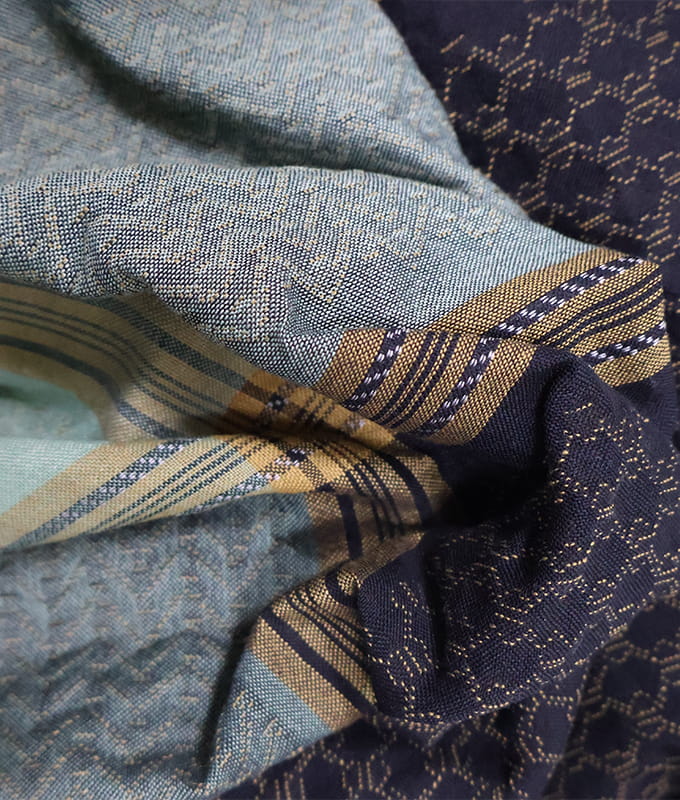 Sage Green & Navy Houndstooth Keffiyeh with Gold Plaid BorderThis oversized Arabic-style scarf combines two distinct woven patterns in a single panel, offering a contemporary twist on the traditional keffiyeh silhouette. One hal...View Product →
Because these headscarves are worn close to the face and washed often, colorfastness matters more than it does on a decorative panel. Cotton holds a matte, traditional look, while polyester keeps the print crisp and the hand light. Most of our keffiyeh orders specify the base shade and border first and the check scale second.
Turning Color Meaning Into a Workable Specification
Symbolism is only useful if it survives the production process. A short sequence that keeps most orders on track:
- Name the market and the occasion. A festival sarong and a daily-wear sarong rarely share the same palette.
- Decide whether the color story should be authentic or aspirational. Traditional combinations sell well in heritage markets, while simplified palettes sell better in fashion channels.
- Fix the base shade before the motif. Changing the ground color after artwork approval is the most expensive revision in fabric development.
- Test the gold. Metallic yarns and metallic prints age differently, especially under repeated washing and sunlight.
- Confirm colorfastness and compliance. Buyers supplying European or North American markets should request test reports alongside the color standards.
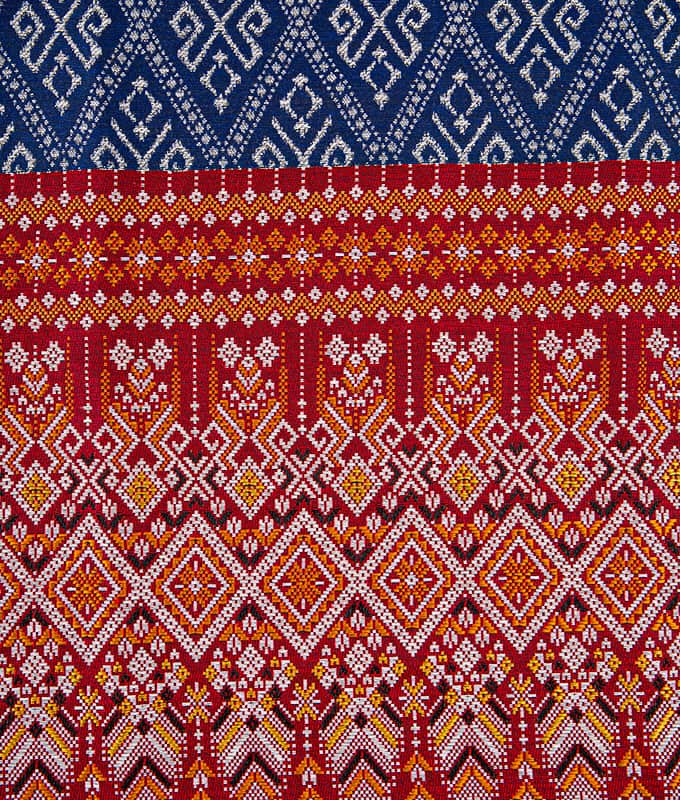 Hand-Stitched Style Poly-Cotton Sarong FabricHand-Stitched Style Poly-Cotton Fabric for Sarong— a refined blend of style and practicality, crafted to give tube skirts a smooth texture and a well-structured silhou...View Product →
Small-batch runs are the practical way to test a palette, and we regularly weave short orders so buyers can put a colorway in front of retailers before committing to a full production quantity.
A Few Notes From Our Own Mill Floor
Our product range grew out of exactly this kind of color conversation. Our main line is Southeast Asian traditional sarong fabric, and within it the printed, cotton plaid, and polyester jacquard options each hold color differently. Jacquard gives us the most control over gold-thread placement, printing gives us the fastest route to a wide palette, and plaid gives us the cleanest, most repeatable geometry.
We work in cotton, polyester, and blends on the same floor, so a buyer can compare hand, drape, and depth of shade side by side. Our laboratory supports development work and color verification, and all our products are made to meet European environmental standards. With 80 people and a dedicated sales team, we take on small-batch and custom work that larger mills often decline, shipping from Huzhou through the Shanghai and Hangzhou air corridors.
Color in this region was never only aesthetic. It recorded who someone was, what occasion they were marking, and which community they belonged to. Getting the shade right is not a detail at the end of a purchase order; it is the part that makes the cloth mean something.
Related products
-

-
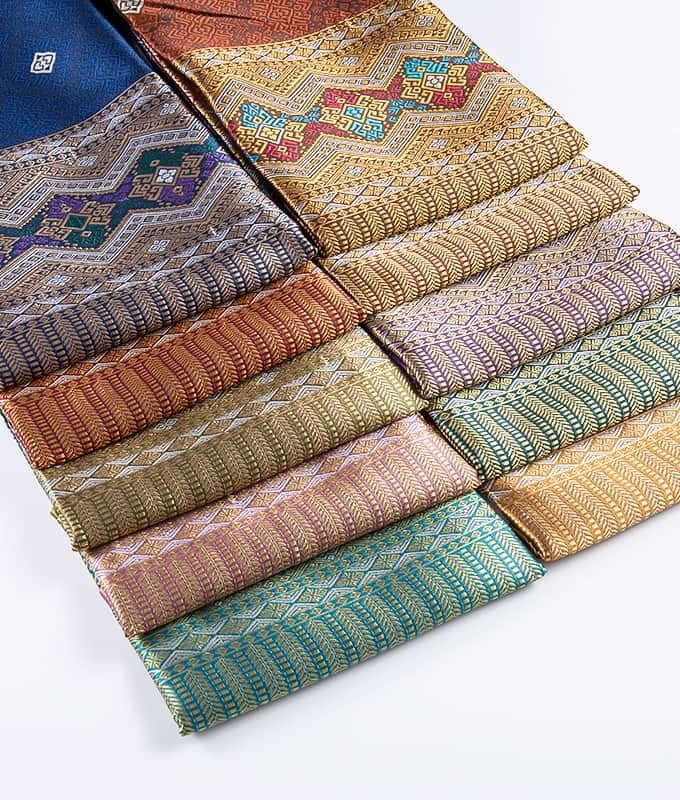
The Polyester Fabric for Traditional Southeast Asian Sarong Skirt bridges heritage and modernity. Rooted in cultural traditions, this fabric revitaliz...
See Details -
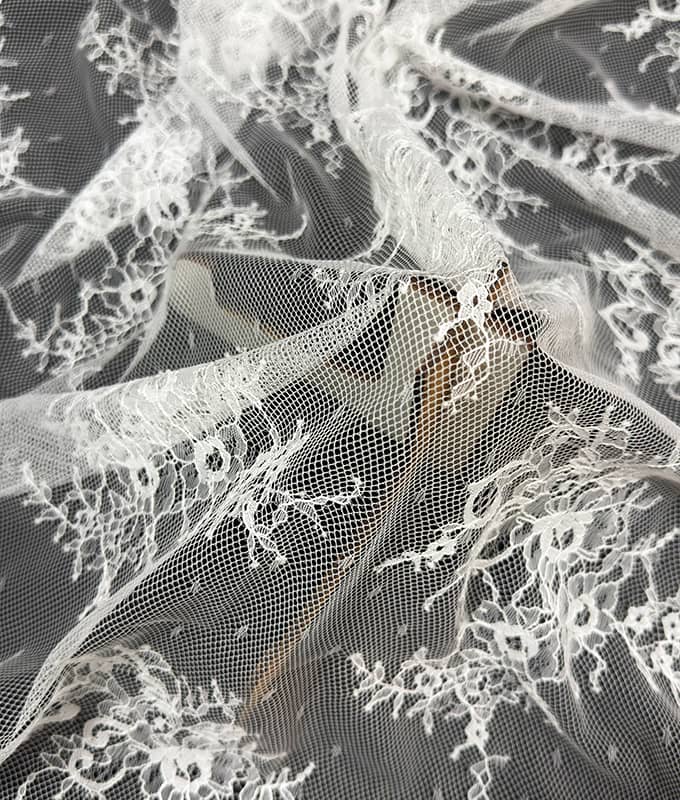
This warp-knit lace fabric features light, graceful flower clusters as its main motif, with branches extending naturally outward and scattered across ...
See Details -
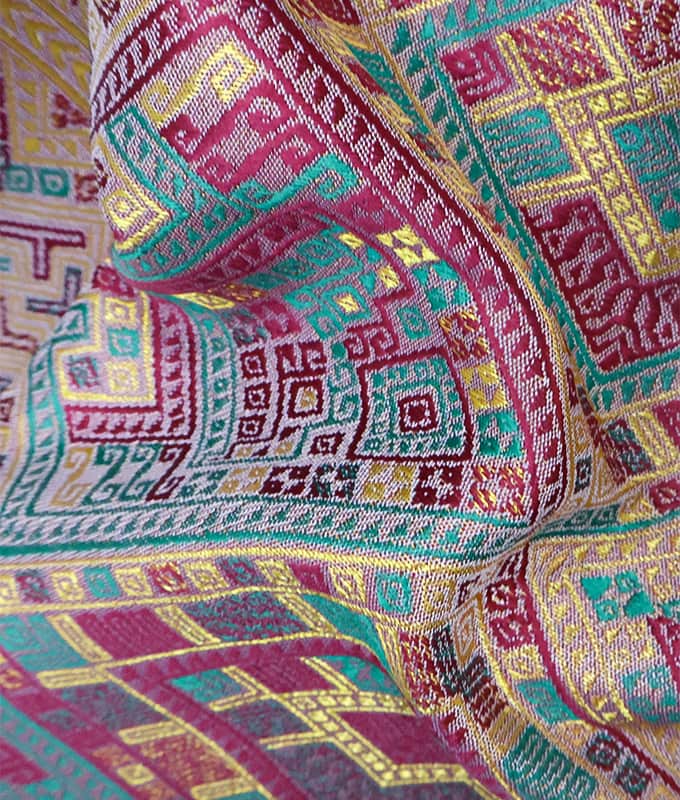
Silk-like Polyester Jacquard Fabric for Thai Pha Sinh Sarong — combining the elegance of silk-like texture with high-precision jacquard craftsmanship,...
See Details -
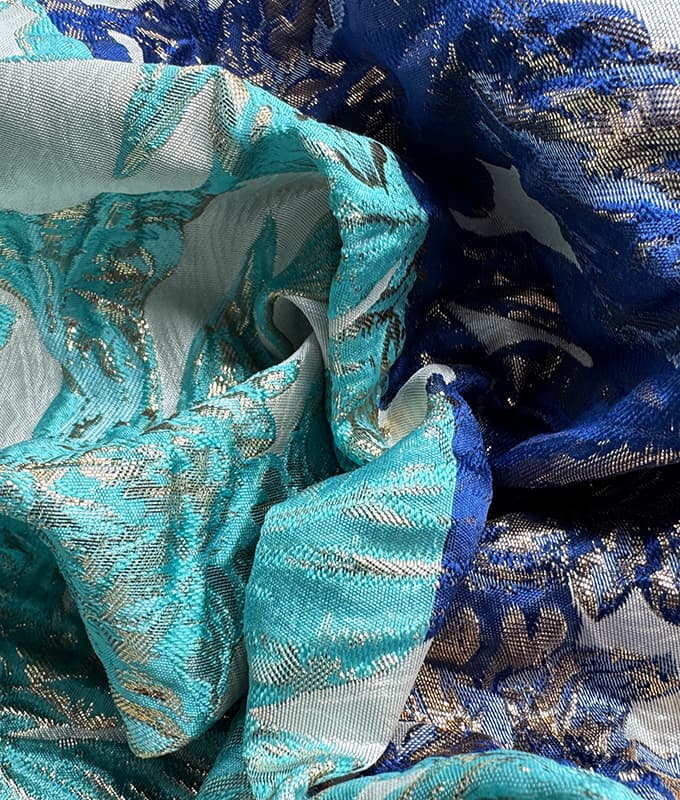
Azure Tide Gold-thread Jacquard Fabric showcases layered, dimensional leaf motifs brought to life through jacquard weaving, with turquoise and deep sa...
See Details -
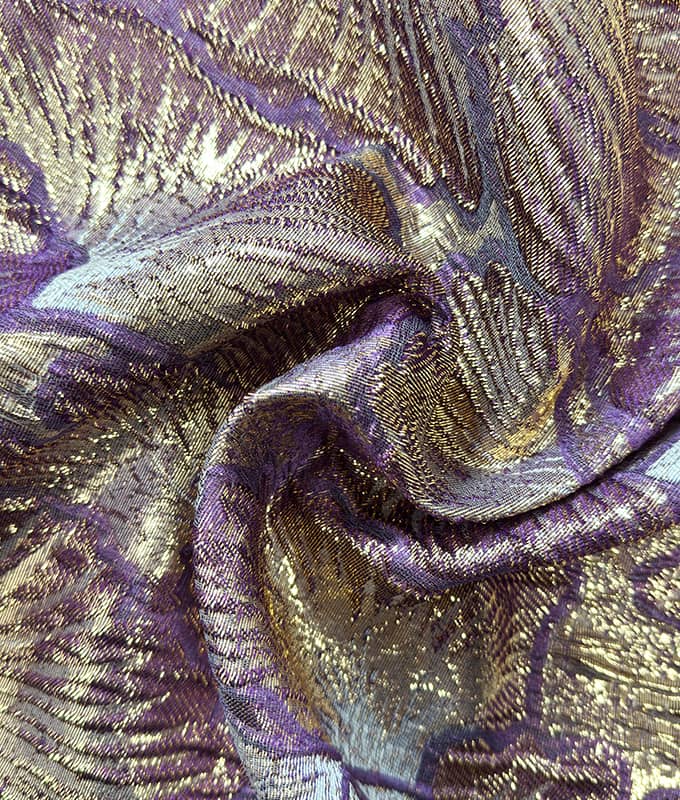
Gilded Ginkgo Gold-thread Jacquard Fabric is woven with a dimensional ginkgo leaf motif, brought to life through jacquard construction that renders ea...
See Details

