


 English
  عربى
عربى  中文简体
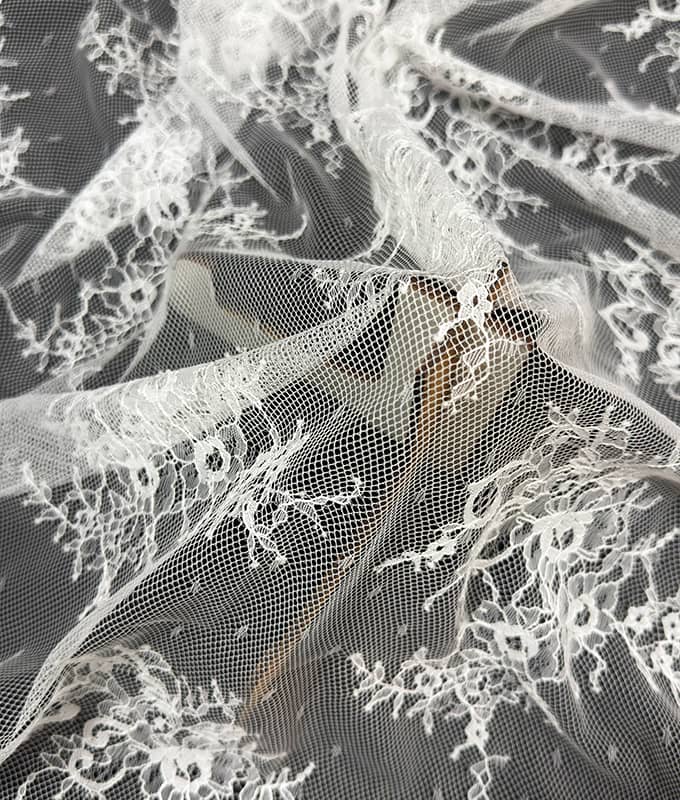
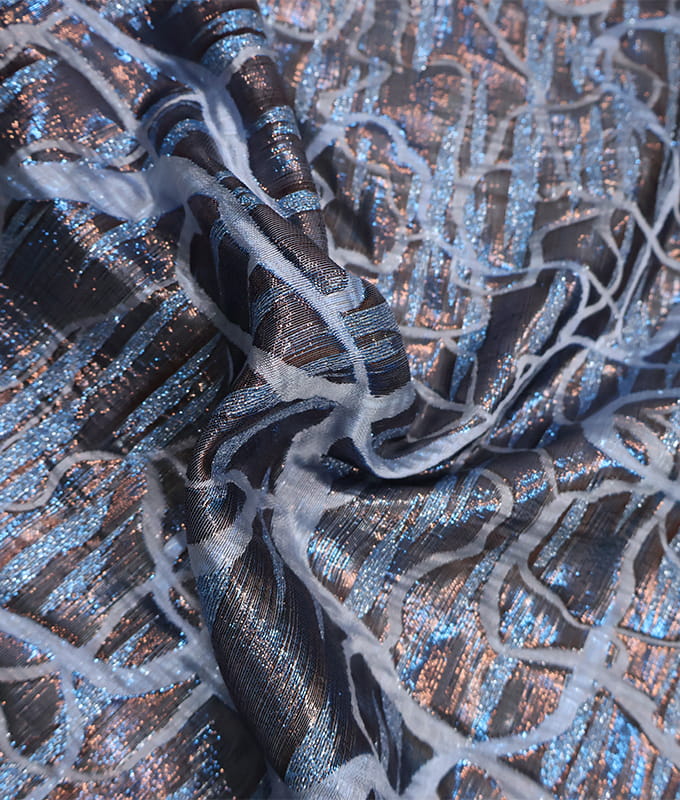
中文简体 This warp-knit lace fabric features light, graceful flower clusters as its main motif, with branches extending naturally outward and scattered across ...
See DetailsCeremonial Textiles and Everyday Fabrics: A Practical Buyer's Sourcing Guide
Industry News-Content
- 1 Two Lives of One Cloth: Ceremonial and Everyday
- 2 A Side-by-Side Comparison for Buyers
- 3 Fibers: Cotton, Polyester, and the Blend in Between
- 4 Weave and Finish: Where Ceremony Shows Up in the Cloth
- 5 Regional Context: Sarong, Pha Sin, and Keffiyeh
- 6 Everyday Fabrics: Comfort, Care, and Repeat Orders
- 7 A Practical Sourcing Checklist
- 8 Bringing Both Ranges Under One Roof
Every textile mill learns the same lesson sooner or later: the cloth that carries a family through a wedding ceremony and the cloth that survives a hundred ordinary washdays come off the same looms, from the same yarn store, handled by the same skilled hands. Ceremonial textiles and everyday fabrics are not opposites. They are two destinations on a single production road, and the buyers who understand where that road forks tend to negotiate better prices, avoid costly surprises, and enjoy more repeatable quality across seasons.
Huzhou Zhengyan Textile Co., Ltd. has been working along that road since 2006 from Linghu Town in Huzhou, Zhejiang, an integrated fashion fabric manufacturer and seller serving ethnic and specialty apparel markets. With 80 employees, an in-house laboratory, and a sales team that regularly exhibits at domestic and international trade fairs, the company has built its reputation on jacquard weaving, printing, and small-batch customization for customers across Southeast Asia and the Middle East.
Two Lives of One Cloth: Ceremonial and Everyday
The first thing to understand is that "ceremonial" describes a role, not a fiber. A cloth becomes ceremonial because a community reserves it for weddings, funerals, initiatory rites, festivals, or formal religious observance. In Sulawesi, tampan cloths were used in rites of passage and as wrappings for ritual gift exchanges. In West Africa, handwoven aso-oke marks traditional weddings. The fabric itself may be cotton or silk-like polyester; what elevates it is the motif, the density of the weave, the metallic accent, and the fact that it is worn rarely and kept carefully.
What Makes a Textile Ceremonial
Ceremonial fabrics are read before they are touched. Pattern placement, border width, and color combination carry meaning, so consistency and depth of color matter more than cost per meter. Buyers in this segment tend to accept a slightly higher price and a narrower shade card in exchange for visual impact and a structured hand that holds a pleat, a fold, or a head wrap without collapsing.
What Makes a Textile Everyday
Everyday fabrics answer a different set of questions. Will it wash well? Will the color hold after a season of sunlight? Does it breathe in humid heat? Can the mill repeat the exact same construction six months from now? Daily wear, work dress, lightweight scarves, and home textiles reward durability, stable specifications, and predictable lead times far more than they reward dramatic ornament.
A Side-by-Side Comparison for Buyers
Most sourcing mistakes happen when a buyer applies ceremonial expectations to a daily-wear order, or the reverse. The table below sets the two segments against each other using the criteria that actually drive specification sheets.
| Consideration | Ceremonial Textiles | Everyday Fabrics |
|---|---|---|
| Primary purpose | Rites of passage, weddings, festivals, formal observance | Daily dress, workwear, accessories, home use |
| Visual priority | Motif meaning, metallic thread, saturated color | Even dyeing, clean repeat, restrained pattern |
| Hand feel | Structured, weighty, textured surface | Soft, breathable, easy to drape |
| Typical fiber | Cotton, silk-like polyester, dense jacquard | Polyester, poly-cotton blends, cotton gauze |
| Order profile | Smaller runs, seasonal, design-led | Larger repeat orders, stable specifications |
| Care expectation | Careful handling, occasional wear | Frequent washing, colorfastness, pill resistance |
Read the table as a set of trade-offs rather than rules. A daily-wear sarong can be upgraded with a jacquard border, and a ceremonial piece can be cut from a well-printed polyester that resists fading in tropical sunlight.
Fibers: Cotton, Polyester, and the Blend in Between
At Zhengyan, three fiber families cover nearly every brief that arrives from a buyer.
- Cotton delivers breathability, a matte surface, and excellent dye uptake. It is the natural choice for traditional plaid sarongs, cotton keffiyeh, and cotton gauze scarves where comfort against the skin is the deciding factor.
- Polyester brings luster, dimensional stability, and the crispness that jacquard patterns need to register clearly. It also holds up to repeated washing, which is why so many everyday garments and traditional-inspired styles use it.
- Poly-cotton blends split the difference. A 65/35 or 50/50 construction can keep the softness and moisture behavior of cotton while gaining the strength and color retention of polyester.
All products from the mill are stated to meet European environmental standards, a point worth confirming in writing when your own market imposes restricted substance requirements on imported textiles.
Weave and Finish: Where Ceremony Shows Up in the Cloth
Construction is where a fabric earns its place. Jacquard weaving allows a motif to be built into the structure of the cloth rather than printed on top of it, which is why it dominates ceremonial and festival dress. The same category also supports finishes that imitate handwork: simulated hand-stitched effects, S-shaped 3D surface texture, hollow-out patterning, and vertical gold thread accents that catch light as the wearer moves.
Printed fabric plays the opposite role. It is faster to develop, easier to scale into large repeat orders, and well suited to everyday apparel and accessories. Neither approach is superior; the question is whether your customer is buying a garment for an occasion or for a routine.
Regional Context: Sarong, Pha Sin, and Keffiyeh
The sarong is the clearest example of a textile that lives in both worlds. Across Indonesia, Malaysia, Thailand, Laos, and Myanmar, tube skirts are worn daily at home and at work, then reappear in finer cloth at weddings and temple ceremonies. Thailand's Pha Sin and Laos' traditional tube skirts carry specific proportions and border treatments, so an accurate reference to sarong fabric types, uses, and buying tips is often the fastest way to align a design team before sampling begins.
For ceremonial tube skirts, a silky jacquard with a fluid drape and a defined border is usually the safest specification. It photographs well, folds cleanly at the waist, and reads as formal without requiring embellishment that would raise the unit cost.
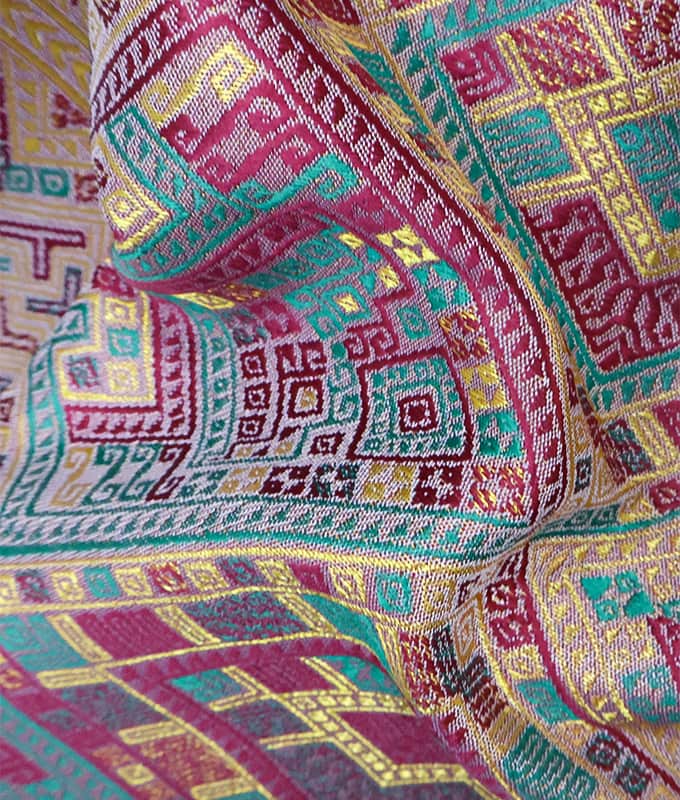 Silk-like Polyester Jacquard Fabric for Thai Pha Sinh SarongSilk-like Polyester Jacquard Fabric for Thai Pha Sinh Sarong — combining the elegance of silk-like texture with high-precision jacquard craftsmanship, designed to crea...View Product →
The keffiyeh follows a similar logic in the Arab world, where color and pattern carry cultural meaning and the same cloth serves daily wear and formal occasions. Cotton versions are chosen for heat and skin comfort; polyester versions are chosen for durability and crisp pattern definition. A cotton keffiyeh with a houndstooth body and a gold plaid border shows how a single yardage can satisfy both a ceremonial and an everyday buyer.
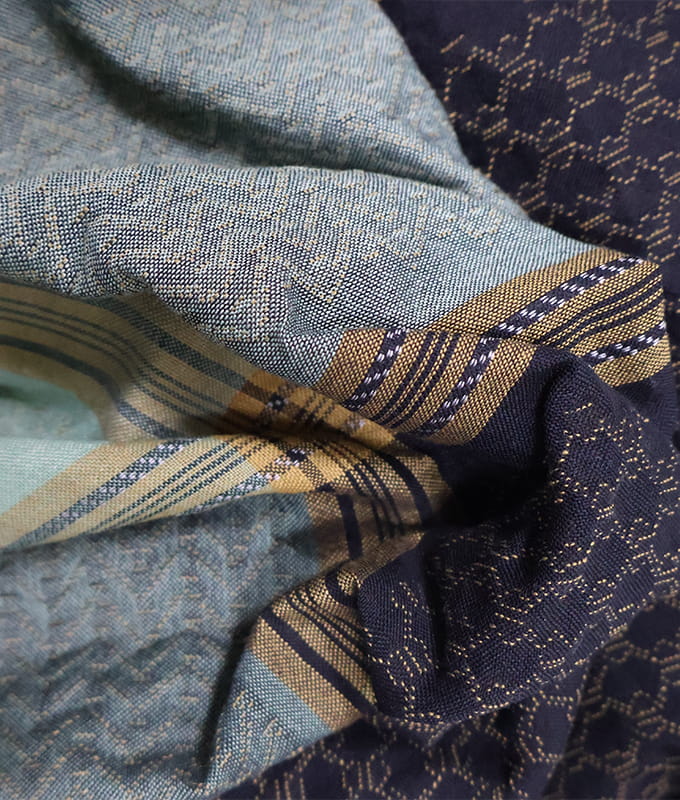 Sage Green & Navy Houndstooth Keffiyeh with Gold Plaid BorderThis oversized Arabic-style scarf combines two distinct woven patterns in a single panel, offering a contemporary twist on the traditional keffiyeh silhouette. One hal...View Product →
Everyday Fabrics: Comfort, Care, and Repeat Orders
Everyday ranges are won or lost after the first delivery. A buyer who reorders the same hand-stitched style poly-cotton sarong fabric, the same sunflower print, or the same gauze scarf construction expects the second shipment to match the first in shade, width, and weight. That is a production discipline question, not a design question, and it is the reason mills with their own laboratory and inspection routines are worth the extra conversation.
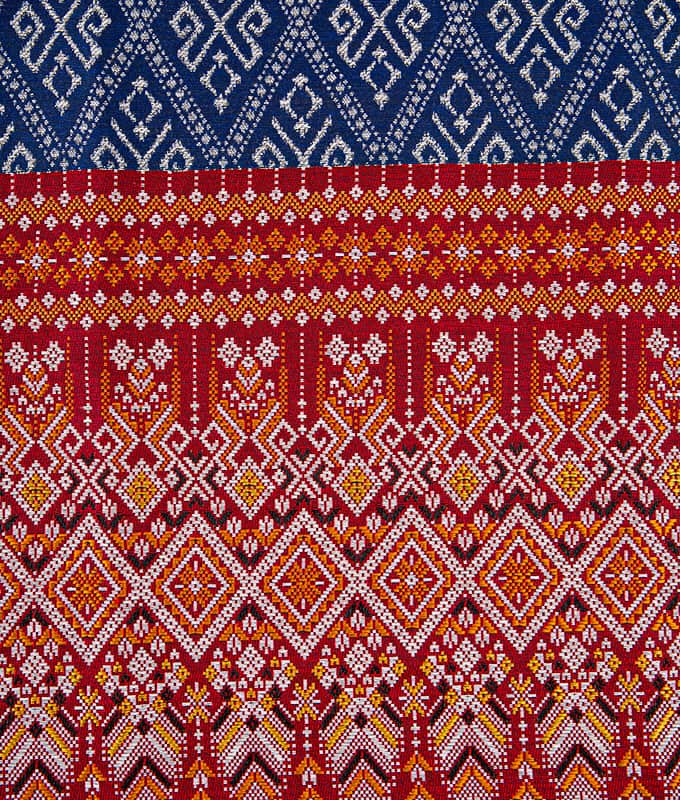 Hand-Stitched Style Poly-Cotton Sarong FabricHand-Stitched Style Poly-Cotton Fabric for Sarong— a refined blend of style and practicality, crafted to give tube skirts a smooth texture and a well-structured silhou...View Product →
Beyond sarongs, the everyday category extends to printed apparel cloth for garment factories, lightweight gauze scarves in cotton and polyester, and home textile items such as curtains, window screens, and roller blinds. Each of these shares a simple requirement: predictable performance at a price that supports a healthy retail margin.
A Practical Sourcing Checklist
When a single purchase order has to cover both ceremonial and daily-use items, work through these steps in order.
- Name the occasion and the frequency of wear, then write the fabric specification from that answer rather than from a competitor's sample.
- Fix the fiber blend before discussing pattern, because blend ratios change drape, cost, and care instructions.
- Confirm whether the motif must be woven or can be printed, since this decision drives tooling, minimum order quantity, and lead time.
- Request a lab dip and a physical swatch for every colorway, and keep an approved reference sample on file for reorders.
- Verify compliance documentation, including environmental standards, before the goods leave the mill.
Bringing Both Ranges Under One Roof
Buyers who need both ceremonial statement cloth and dependable daily fabric often assume they must split the order between two suppliers. Working with one mill usually produces a better outcome: shared color standards, one set of shipping documents, and a single point of contact when a design needs adjusting. Zhengyan's product range covers this ground directly, from woven jacquard clothing fabric and printed poly-cotton apparel cloth to Southeast Asian traditional sarong fabric, keffiyeh, gauze scarves, and home textiles.
Logistics support the same approach. The mill sits about 100 kilometers from Shanghai Pudong International Airport and roughly the same distance from Hangzhou Xiaoshan International Airport, with the Huzhou exit of the Shenjiahu Expressway about 20 kilometers away. Small-batch production and pattern customization are both available, which suits independent designers and specialty brands as well as larger importers. The company communicates in Chinese, English, and Arabic, a practical advantage for buyers in the Middle East and Southeast Asia.
Ceremonial textiles and everyday fabrics ask different questions of the same loom, but they do not require different partners. Whether you are developing a festival collection that must carry cultural weight or building a steady program of wearable, washable cloth, the sensible first step is the same: define the occasion, fix the fiber, and choose a mill that can hold both standards at once. Sharing your target market, reference images, and quantity range is usually enough to receive a realistic quotation and a sampling plan within days.
Related products
-
-
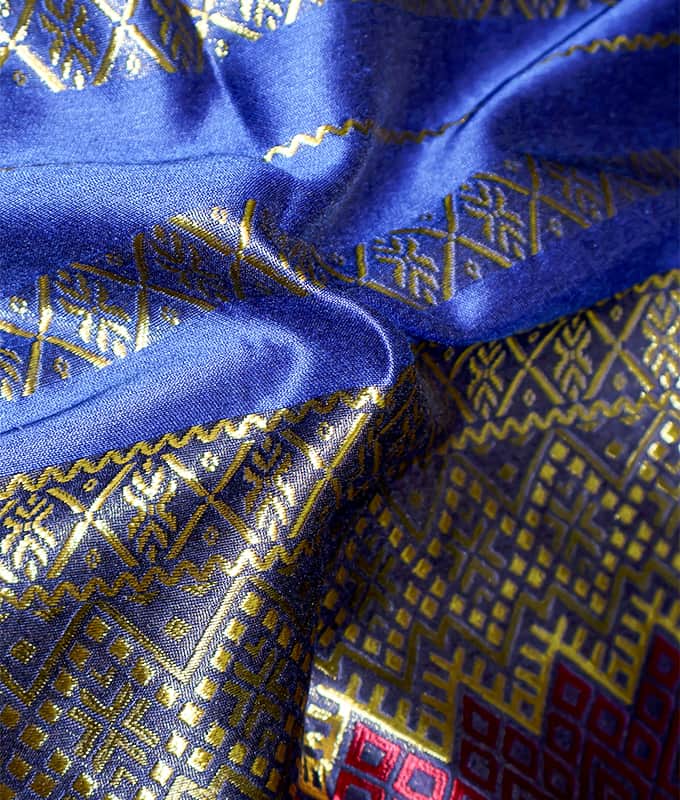
100% Polyester Jacquard Pattern Colorful Southeast Asian Sarong Fabric – durable, vibrant, and easy to care for, designed to bring both beauty and pra...
See Details -
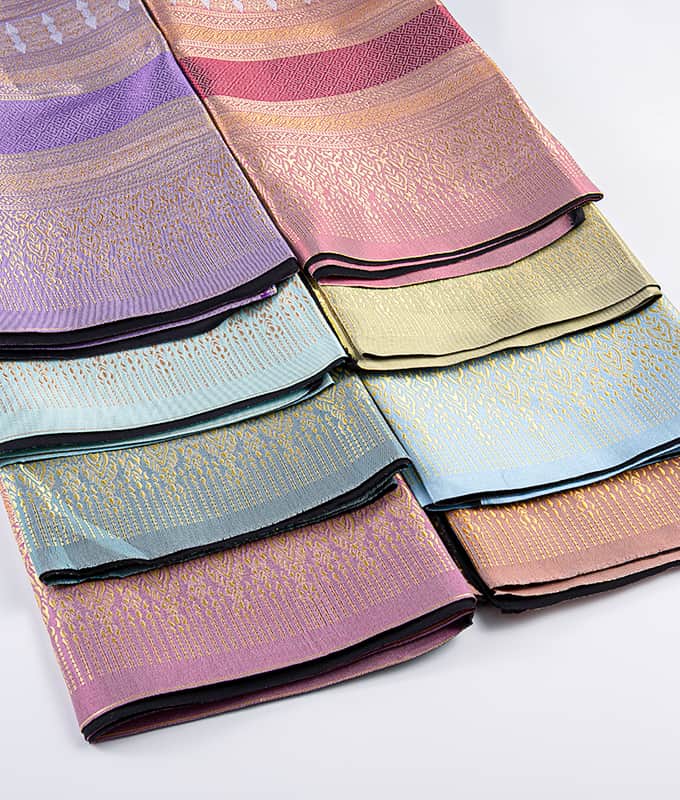
The Polyester Fabric for Popular Traditional Thai Sarong is crafted from carefully selected polyester filaments, with strict quality control from the ...
See Details -
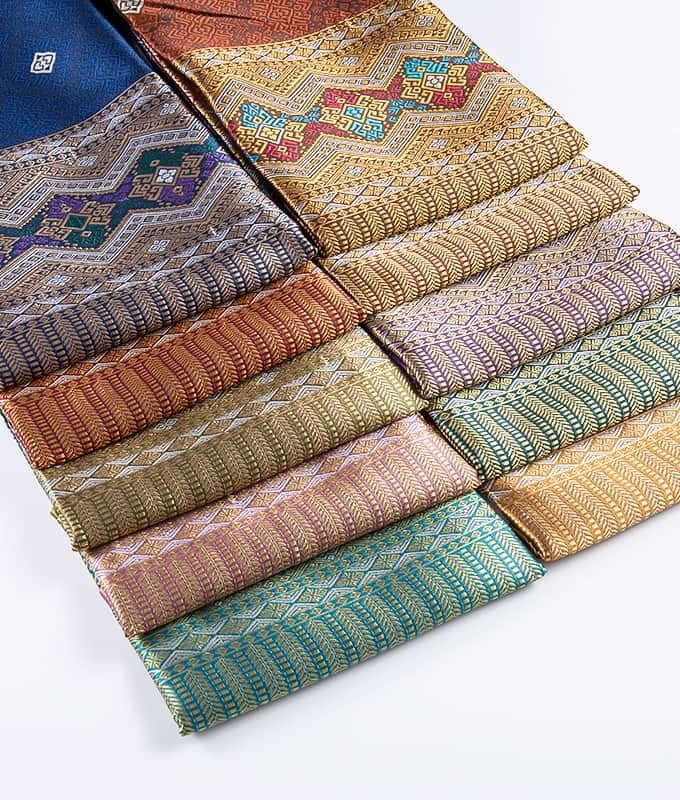
The Polyester Fabric for Traditional Southeast Asian Sarong Skirt bridges heritage and modernity. Rooted in cultural traditions, this fabric revitaliz...
See Details -
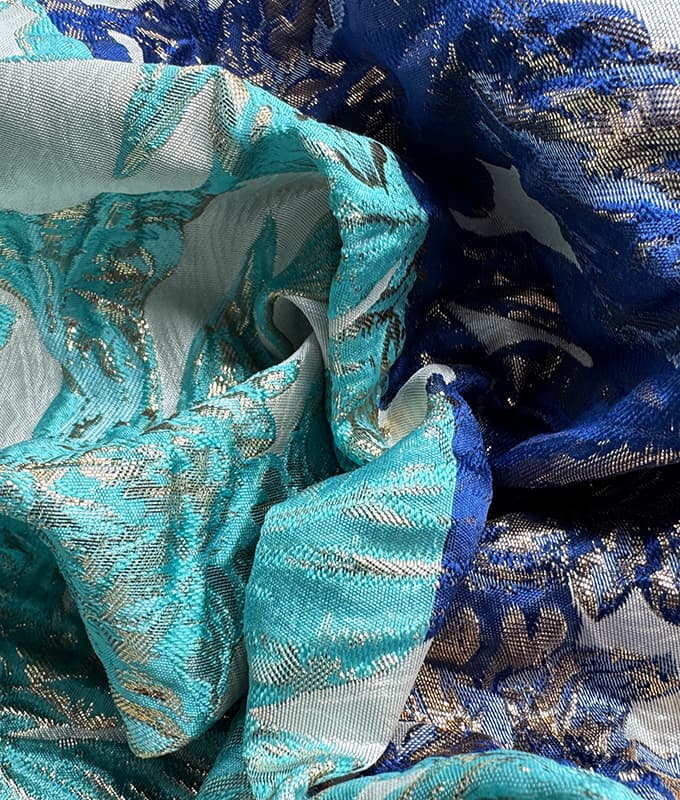
Azure Tide Gold-thread Jacquard Fabric showcases layered, dimensional leaf motifs brought to life through jacquard weaving, with turquoise and deep sa...
See Details -
Electric Verdigris Gold-thread Jacquard Fabric is woven with an abstract, flowing linear texture using jacquard construction, where shimmering blue an...
See Details

