English
  عربى
عربى  中文简体
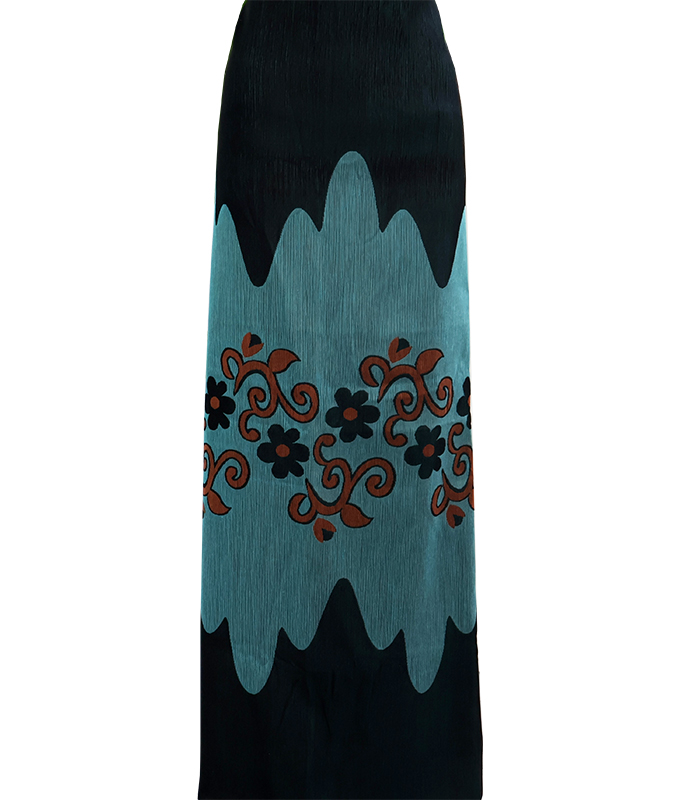
中文简体 This ethnic-style jacquard sarong fabric features a wavy, sectioned color-block design. Ink black and lake blue-green blend naturally into each other,...
See DetailsEthnic Textile Patterns for Wholesalers: A Practical Sourcing Guide for Buyers
Industry News-Content
Ethnic textile patterns are never only decoration. In wholesale trade they are a specification that ties fiber choice, weaving method, finishing route, cultural fit, and retail price together. A motif that looks perfect in a catalog photo can still fail in bulk if the repeat drifts, the dye lot shifts between shipments, or the hand feel does not match what the end market expects.
This guide covers the pattern families that move most consistently through wholesale channels, how they behave on cotton, polyester, and blended bases, and which checks are worth running before a container is booked. Huzhou Zhengyan Textile Co., Ltd. has manufactured and sold fashion fabric from Linghu Town, Huzhou, Zhejiang since 2006, with a core focus on high-end Dai ethnic fabric, so the questions below come straight from supplier-side conversations with buyers across Southeast Asia and the Middle East.
Write the Pattern Brief Before the First Swatch
Pattern sourcing runs faster when the brief is written down. Buyers who answer five questions up front usually receive usable swatches on the first attempt, while vague requests loop through several rounds of sampling and still miss the target.
- End market and occasion. Festive wear, daily dress, religious use, and home textiles each point to a different motif scale, weight, and level of sheen.
- Fiber direction. Cotton, polyester, and polycotton blends behave differently under the same pattern, and the gap widens after washing.
- Construction. Jacquard, print, yarn-dyed check, gold-thread stripe, and imitation hand-stitched finishes each reproduce a motif in a different way.
- Color and repeat. How large the motif should read, how it lines up at the seam, and which palette belongs to the selling season.
- Order profile. First-order quantity, replenishment rhythm, and whether the design must stay exclusive to one buyer.
Answering these points also frames the pattern budget. A woven jacquard motif carries loom setup and design time inside the meter price, while a printed design spreads that cost across a larger run.
Pattern Families That Carry Ethnic Textile Wholesale
Jacquard: the pattern is built into the cloth
Jacquard patterns are woven rather than applied, so the motif lives inside the structure of the fabric and holds up to repeated washing, folding, and pressing. That durability is why jacquard remains the backbone of sarong, tube-skirt, and Pha Sinh programs where the pattern is part of the garment's identity rather than a seasonal extra. Modern jacquard lines also deliver hollow-out effects, S-shaped 3D texture, silky lustre, and multi-tone colorwork without a drop of print paste.
Buyers weighing this route against print or resist-dye techniques will find a useful breakdown in this comparison of jacquard, batik, and ikat construction.
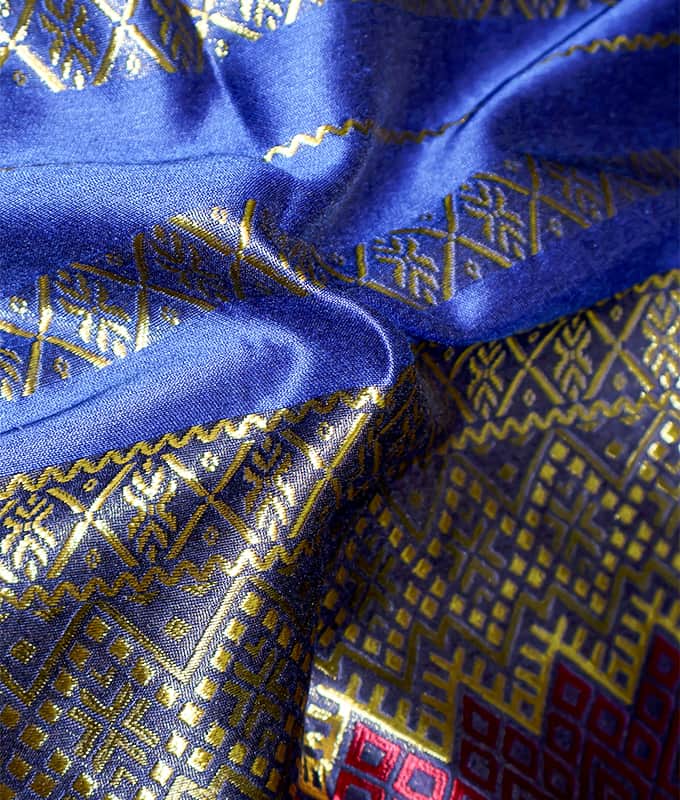 100% Polyester Jacquard Pattern Colorful Southeast Asian Sarong Fabric100% Polyester Jacquard Pattern Colorful Southeast Asian Sarong Fabric – durable, vibrant, and easy to care for, designed to bring both beauty and practicality to your...View Product →
Printed patterns: speed and color range
Printing solves a different commercial problem. It lets a buyer test a new motif, refresh a seasonal palette, or place a low-risk first order without committing to loom programming. Polyester and polycotton bases handle detailed florals, geometric repeats, and large panel artwork well, provided registration and curing are controlled. Sunflower motifs, fine line work, and painterly color blends sit naturally in this group, and reorders move quickly once the artwork is approved.
Plaid, gold thread, and hand-stitched effects
Not every ethnic pattern is figurative. Yarn-dyed checks in 100% cotton give men's sarong and daily-wear programs a clean, breathable option, while vertical gold-thread stripes lift polycotton blends into ceremonial territory for weddings and festivals. An imitation hand-stitched look, created through weave structure instead of needlework, delivers a heritage feel at a wholesale price point and with an easier care label.
Pattern and Fiber Pairings at a Glance
Pattern and fiber are usually decided together, because the same motif reads differently on cotton, polyester, and a blend. The table below summarizes how the main pattern families are normally matched and what each pairing means for a wholesale order.
| Pattern style | Typical fiber | Common end use | Wholesale consideration |
|---|---|---|---|
| Woven jacquard | Polyester or polycotton | Festive sarong and Pha Sinh | Higher setup cost, strongest repeat value |
| Printed motif | 100% polyester or polycotton | Daily clothing and tube skirts | Lower minimums, fast color changes |
| Yarn-dyed plaid | 100% cotton | Men's sarong and everyday wear | Breathable, needs shrinkage control |
| Gold-thread stripe | Polycotton blend | Ceremonial and gift-grade fabric | Metallic sheen, gentle washing guidance |
| Hand-stitched effect | Polycotton blend | Heritage-look tube skirts | Visual richness at a mid price point |
| Keffiyeh check | Cotton or polyester | Arabic head scarves | Fastness to light, sweat, and washing |
Treat the table as a starting point rather than a rule. Retail price targets, climate, and buyer feedback all shift the balance, and a short sample round usually settles the question faster than any spreadsheet.
Matching Patterns to End Markets
Southeast Asia: sarong, Pha Sinh, and Dai dress
Southeast Asian programs tend to favor rich color and visible texture. Thai traditional sarong and Pha Sinh styles often call for silky polyester jacquard with a soft drape, while Lao and short sarong styles read well with hollow jacquard in lighter weights. For Dai and neighboring ethnic dress, colorful jacquard and gold-thread accents keep the garment recognizable at a distance, which matters on festival streets and in photographs.
Middle East: keffiyeh checks and borders
In the Middle East, the pattern language revolves around checks, houndstooth, and bordered edges rather than figurative print. A cotton keffiyeh with a woven check and a contrasting plaid border has to hold its color against strong sun and repeated washing, so fiber choice and dye fastness matter more than surface novelty. Lighter accessories such as cotton gauze scarves, and home textiles such as curtains and roller blinds, extend the same pattern vocabulary into other categories.
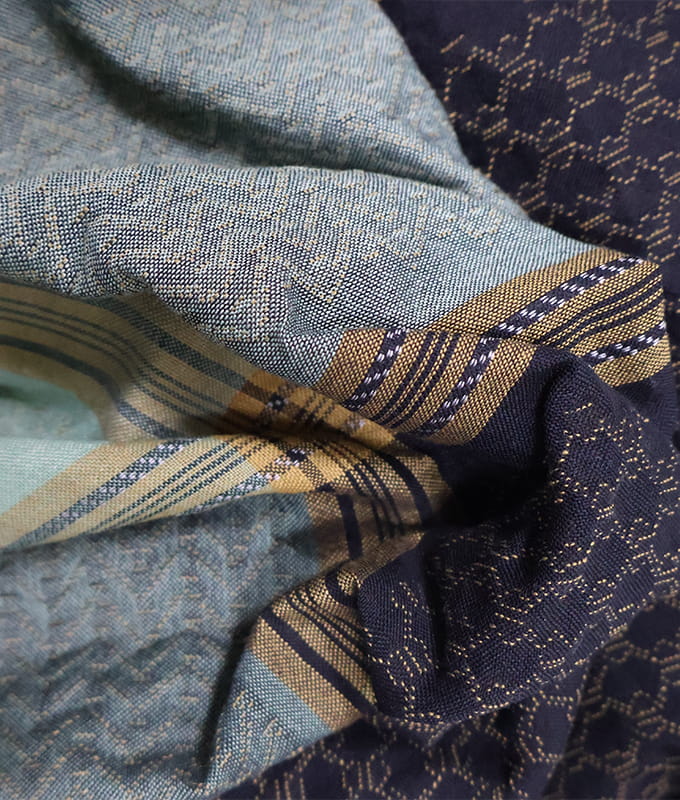 100% Cotton Keffiyeh SuppliersThe 100% cotton Arab headscarf is made of pure cotton, which is soft and skin-friendly, environmentally friendly and non-toxic. The Keffiyeh is an important symbol of ...View Product →
Custom Patterns and Small-Batch Wholesale Orders
Custom development is where a pattern stops being a catalog item and becomes a buyer's own asset. Our in-house laboratory and design team work from a reference image, a physical swatch, or a rough sketch, then translate it into a repeat the loom or printer can actually run at production speed. Working this way removes most of the guesswork that causes a beautiful sample to fail in bulk.
Small-batch production is part of the same service. With around 80 people across production and sales, we can take multi-style orders where one design runs a modest quantity and the next runs several thousand meters, which suits independent labels, boutique wholesalers, and trading companies testing a new market. Custom colorways, exclusive repeats, and material switches between cotton and polyester are handled inside one development cycle.
A hand-stitched effect polycotton sarong shows how far a mid-price construction can be pushed when the motif is designed for the weave instead of painted on afterwards.
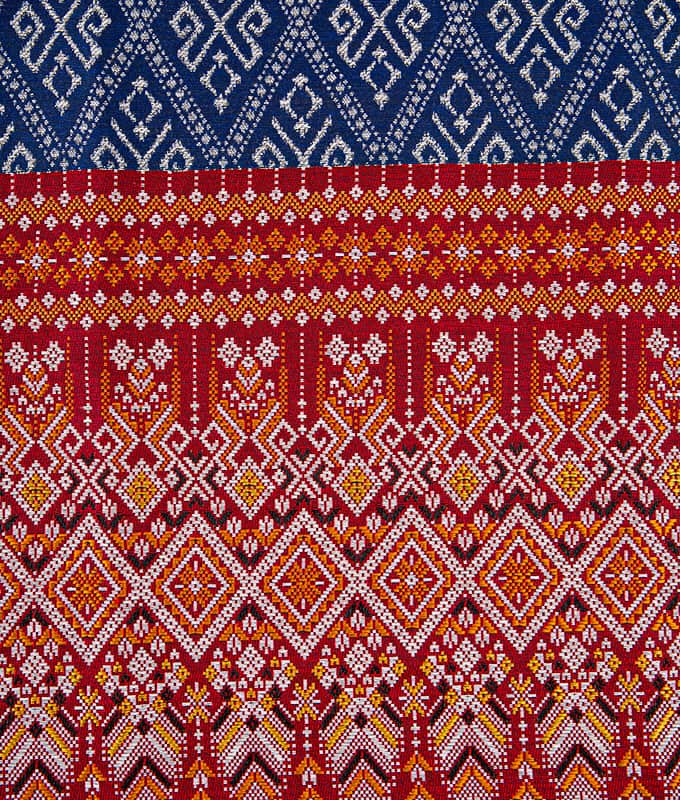 Hand-Stitched Style Poly-Cotton Sarong FabricHand-Stitched Style Poly-Cotton Fabric for Sarong— a refined blend of style and practicality, crafted to give tube skirts a smooth texture and a well-structured silhou...View Product →
Quality, Compliance, and Delivery Checks
Pattern quality is ultimately measured after washing, not on the inspection table. Three checks cover most risks: colorfastness to washing and light, dimensional stability after the first wash, and pill resistance on blends that rub against skin or chair backs. Our production follows the commitment that all products meet European environmental standards, and the in-house laboratory supports both development trials and routine inspection.
Logistics is less dramatic but just as practical. The mill sits in Linghu Town, Huzhou, about 100 km from Shanghai Pudong International Airport and roughly the same distance from Hangzhou Xiaoshan International Airport, with the Huzhou exit of the Shenjiahu Expressway about 20 km away. That keeps sample dispatch and bulk consolidation within easy reach of both air and road freight.
- Confirm motif scale against the finished garment width, not the flat fabric.
- Request a production sample in the final fiber blend and colorway.
- Check washing and light fastness before the bulk run is scheduled.
- Agree packaging and labeling requirements for the destination market.
Ethnic textile patterns reward buyers who treat them as engineering rather than artwork. The motif, the fiber, the weave, and the market all have to line up before a wholesale order makes money, and the earlier those four elements are defined, the fewer surprises appear on the production floor.
If you are planning a jacquard, printed, plaid, or keffiyeh program for the coming season, send us the motif reference, the fiber direction, and the quantity you have in mind. We will reply with a swatch plan, a realistic production window, and a price that reflects the construction you actually need.
Related products
-
-
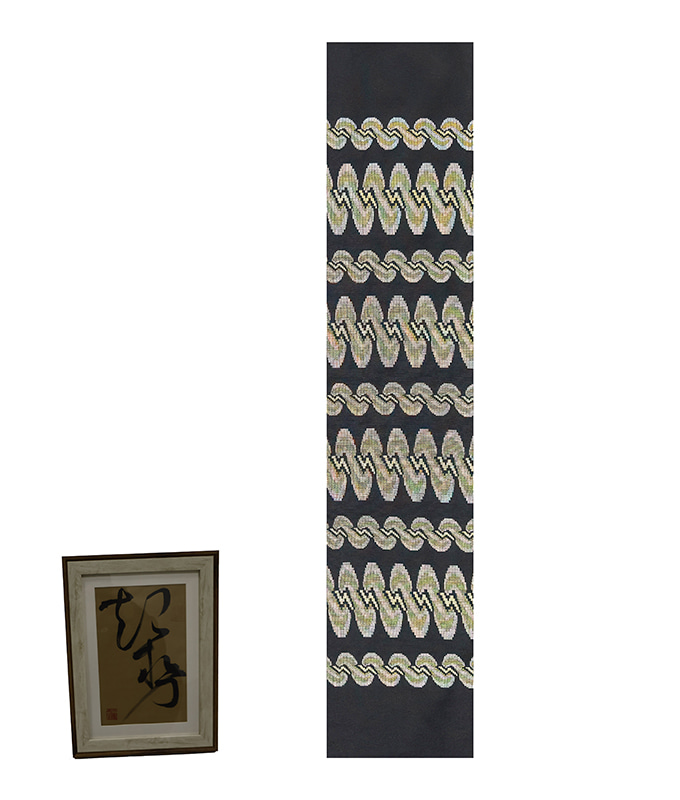
This Southeast Asian ethnic-style jacquard sarong fabric features a continuous wave and meander (Greek key) pattern as its main design. The motifs rep...
See Details -
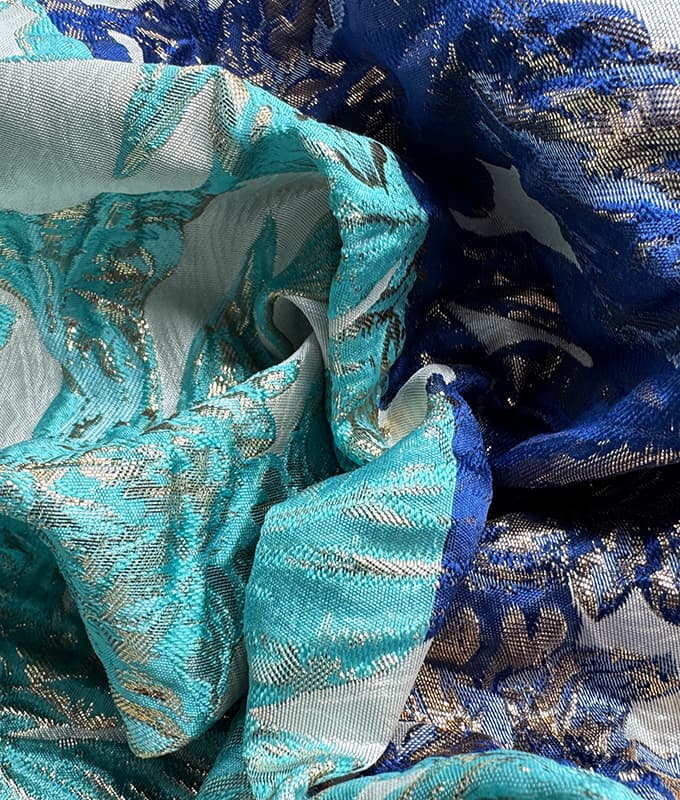
Azure Tide Gold-thread Jacquard Fabric showcases layered, dimensional leaf motifs brought to life through jacquard weaving, with turquoise and deep sa...
See Details -
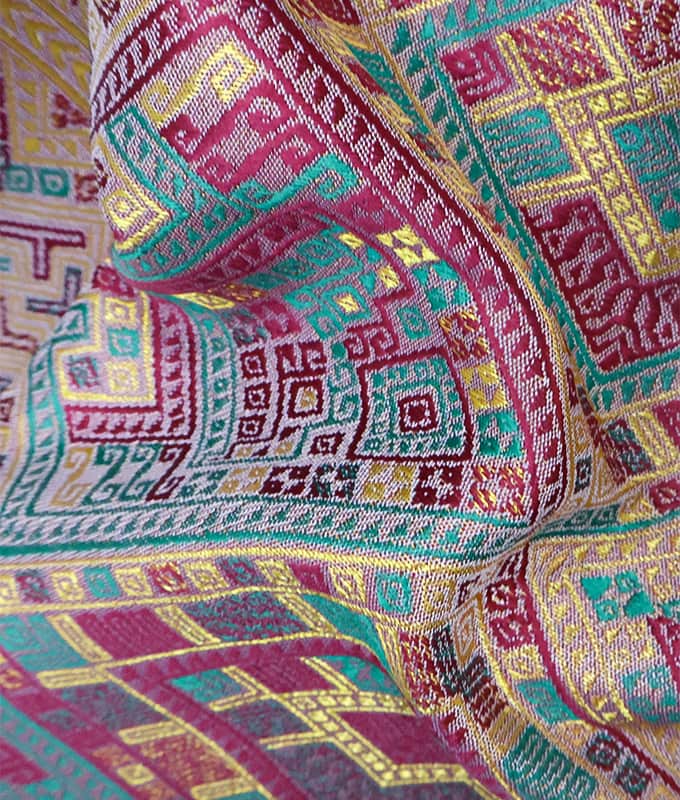
Silk-like Polyester Jacquard Fabric for Thai Pha Sinh Sarong — combining the elegance of silk-like texture with high-precision jacquard craftsmanship,...
See Details -
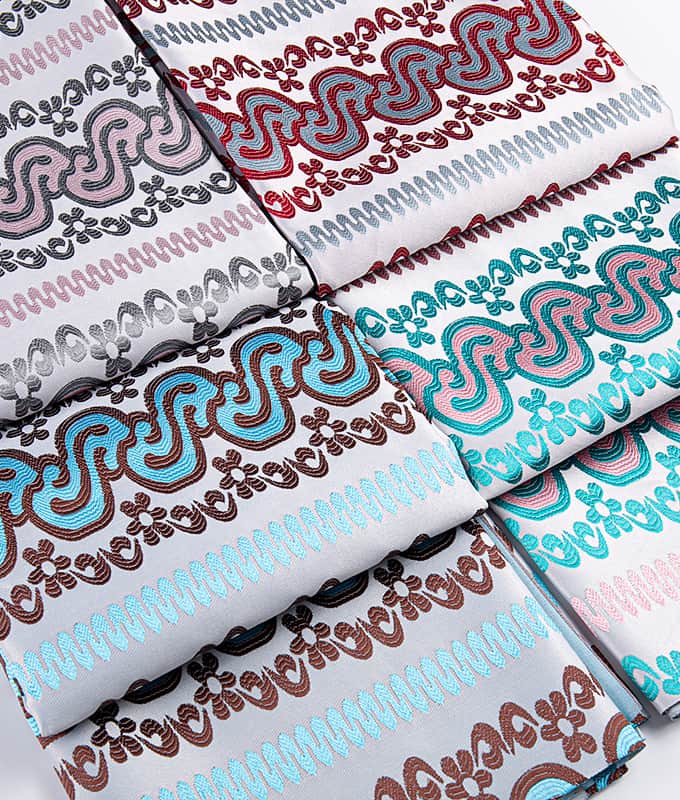
The S-Shaped 3D Textured Polyester Jacquard Fabric for Sarong combines elegance with durability. Crafted with advanced electronic jacquard technology,...
See Details -
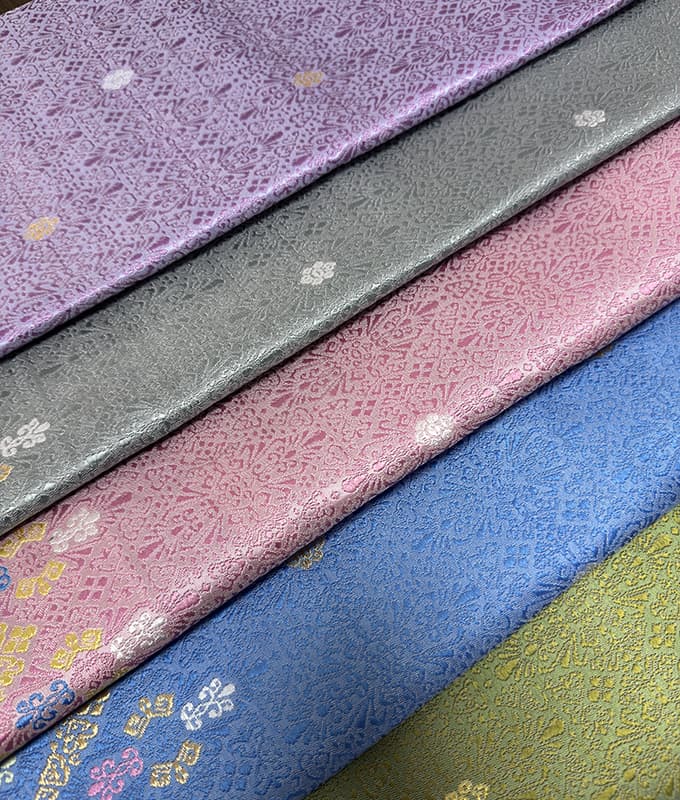
This Southeast Asian-style polyester jacquard fabric is made with a jacquard weaving technique and blends traditional ethnic geometric patterns into a...
See Details