English
 عربى
 中文简体
Silk-like Polyester Jacquard Fabric for Thai Pha Sinh Sarong — combining the elegance of silk-like texture with high-precision jacquard craftsmanship,...
See DetailsJacquard Weaving for Cultural Textiles: Motifs, Materials, and Mill Craft
Industry News-Content
- 1 What Jacquard Weaving Actually Does for Cultural Textiles
- 2 Reading the Cloth: Motifs, Borders, and Cultural Function
- 3 Common Jacquard Structures in Heritage-Style Textiles
- 4 Choosing Fibers for Cultural Textiles: Cotton, Polyester, and Blends
- 5 From Motif to Mill: How a Cultural Jacquard Design Is Developed
- 6 Quality Checks That Matter for Cultural Jacquard Fabrics
- 7 Sourcing with Cultural Respect and Commercial Sense
Cultural textiles rarely ask for less character. A sarong border, a pha sin panel, a keffiyeh edge—each detail can carry memory, status, or place. Jacquard weaving is one of the few industrial methods that can honor that detail without turning it into a flat print. At our mill in Huzhou, we have spent years learning where the loom should lead and where the maker's hand still matters.
What Jacquard Weaving Actually Does for Cultural Textiles
Jacquard is not a single fabric. It is a weaving system. Each warp end can be lifted independently, so the pattern is built pick by pick. For cultural textiles, that changes the feel of the cloth. A printed pattern sits on the surface. A woven pattern has structure, depth, and often a distinct reverse. Borders can be integrated rather than added. Motifs can be shaded, outlined, or raised with gold thread. The cloth keeps its design through washing and folding because the design is part of the weave.
That does not make jacquard the right answer for every heritage cloth. Some traditions depend on handloom, wax resist, or embroidery, and those methods should stay where they belong. But when the goal is repeatable, wearable cloth with woven motifs, jacquard is hard to beat. It gives a maker control over scale, repeat, and color while preserving the tactile quality that makes cultural dress feel like more than costume.
Reading the Cloth: Motifs, Borders, and Cultural Function
Before engineering begins, read the cultural brief. Is the cloth for daily wear, festival wear, a wedding, or a religious setting? The answer affects weight, drape, border width, and color. A sarong meant for humid weather may need a light hand and quick-dry fiber. A ceremonial wrap may call for a fuller body and a richer metallic accent. Borders often carry as much meaning as the central field, so they should not be treated as decoration added at the end.
We often point buyers to this guide on cultural storytelling through woven patterns before we open a sampling file. It helps everyone separate a motif that can be adapted from one that should be licensed, credited, or left alone. Good sourcing starts with respect. The loom can reproduce a shape, but the buyer and the mill still need to understand what that shape is doing in the community that wears it.
Common Jacquard Structures in Heritage-Style Textiles
Jacquard weaving covers a family of structures. Each one gives a different surface, weight, and visual rhythm. The table below is a practical starting point for buyers comparing cultural textile options.
| Structure | Visual Character | Typical Cultural Use | Weave Notes |
|---|---|---|---|
| Damask | Tone-on-tone, reversible, subtle sheen | Formal sarongs, jackets, ceremonial wraps | Satin and warp-faced grounds; fine detail |
| Brocade | Raised metallic or contrasting motifs | Wedding textiles, borders, festive wear | Extra weft or warp; richer hand |
| Matelassé | Quilted, padded surface | Jackets, wraps, decorative panels | Double-cloth effect; fuller weight |
| Tapestry | Pictorial, dense, matte | Heirloom panels, bags, statement pieces | Slower weaving; complex colorwork |
| Ethnic geometric jacquard | Bold diamonds, stripes, waves | Sarong, longyi, pha sin, keffiyeh | Yarn-dyed or piece-dyed; repeat control |
The table is a starting point, not a rulebook. Many cultural textiles combine structures: a damask ground with a brocade border, or a geometric jacquard with a handstitched-style finish. The right combination depends on how the cloth will be worn, folded, washed, and passed down.
Choosing Fibers for Cultural Textiles: Cotton, Polyester, and Blends
Fiber choice changes hand, drape, care, and price. Cotton is breathable, matte, and familiar against the skin. It takes dye deeply and feels traditional in keffiyeh, sarong, and everyday wraps. It can also shrink, wrinkle, and take longer to dry. Polyester is strong, color-bright, and easy to care for. It holds sharp jacquard detail and works well for high-turnover fashion sarongs, but it needs careful finishing to avoid a dry or synthetic hand. Blends sit in the middle: they can soften polyester, stabilize cotton, and balance cost with comfort.
Polyester jacquard has become a practical choice for high-color Thai sarong and pha sin styles, especially where brightness and repeatability matter. A tightly set polyester can mimic silk's liquid drape while keeping care simple.
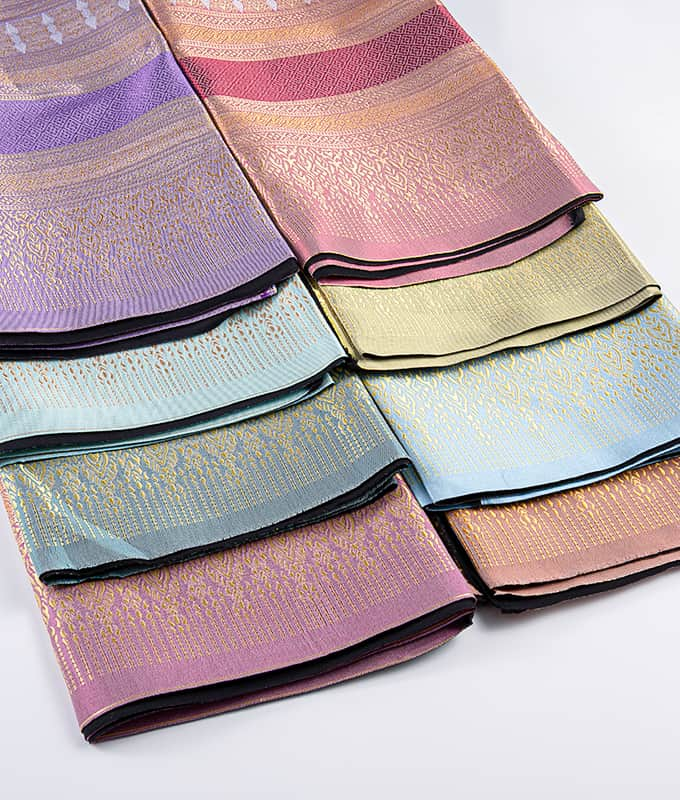 100% Polyester Jacquard Thai Sarong FabricA durable, wrinkle-resistant polyester jacquard for traditional Thai sarong and tube-skirt styles, customizable in colors, sizes, and patterns.View Product →
For buyers who want a softer, more traditional hand without moving to 100% cotton, a polycotton blend can be the middle path. The handstitched-style sarong below is one example of that balance.
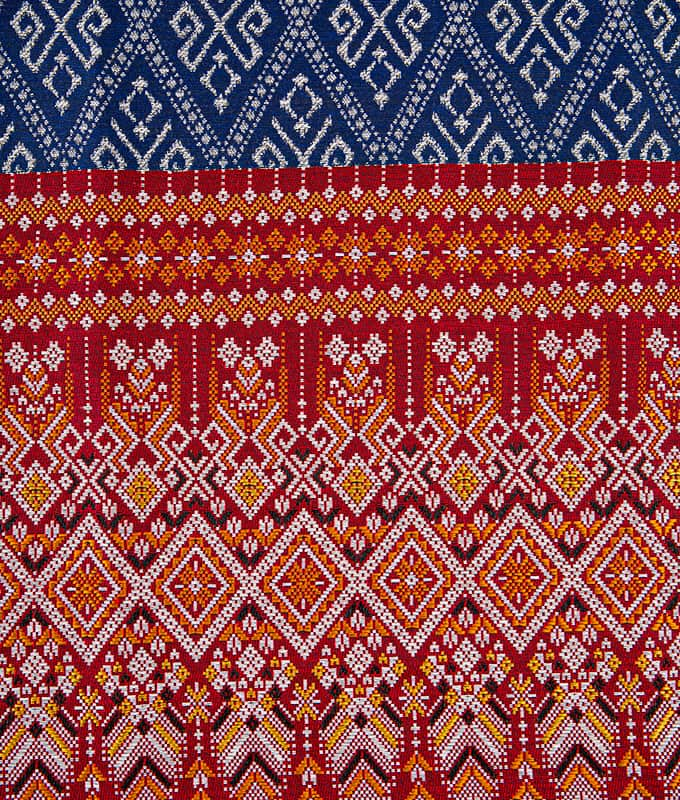 Hand-Stitched Style Poly-Cotton Sarong FabricA 65/35 polyester-cotton blend with a smooth, structured hand, offering wrinkle resistance and customizable patterns for traditional sarong and tube-skirt styles.View Product →
Cotton still leads in keffiyeh and breathable headwear. A cotton jacquard can carry houndstooth, plaid borders, and gold-thread accents without losing the matte surface people expect.
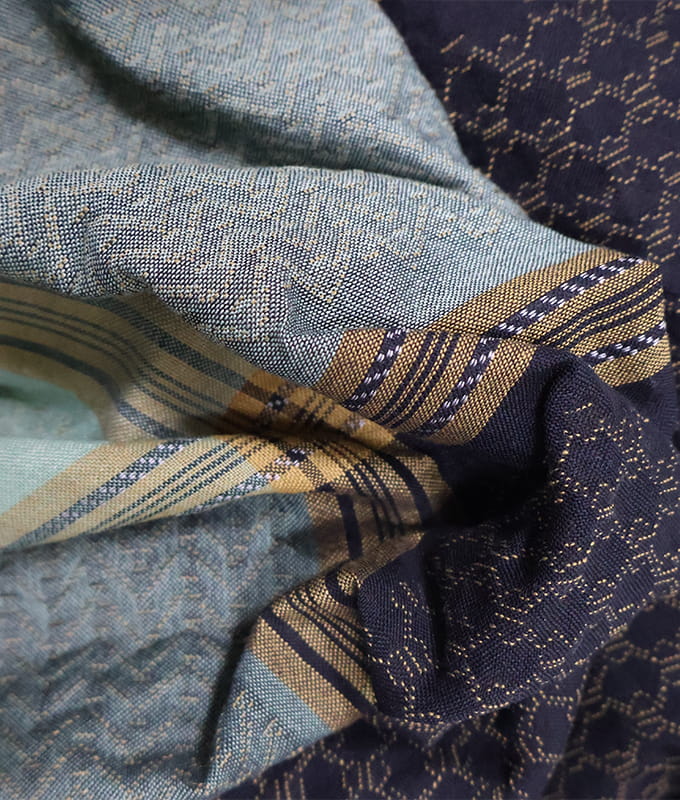 Sage Green & Navy Houndstooth Keffiyeh with Gold Plaid BorderAn oversized cotton keffiyeh combining sage houndstooth, navy honeycomb, and a gold plaid border, suited to fashion retailers and private-label collections.View Product →
From Motif to Mill: How a Cultural Jacquard Design Is Developed
Good jacquard development is a conversation between culture and engineering. A motif that looks right on paper may need redrawing for a loom repeat. A border that feels balanced in a sketch may need adjustment once warp density and pick count are set. Our factory sample room handles that translation step by step.
- Clarify the cultural and commercial brief: end use, market, care instructions, and target price.
- Translate the motif into a loom repeat while preserving proportion, border placement, and visual hierarchy.
- Select fiber, yarn count, and pick density so the cloth has the right hand and drape.
- Weave a sample and review color lab dips under daylight, not only on screen.
- Test wear behavior: folding, washing, shrinkage, and surface abrasion.
- Approve the production standard, then inspect bulk cloth for pattern alignment and color continuity.
The best samples are not always the most complicated ones. They are the ones that answer the buyer's real question: will this cloth feel right when it is worn, not just when it is flat on a table?
Quality Checks That Matter for Cultural Jacquard Fabrics
Cultural textiles are often judged up close. A misplaced diamond or a weak border can be seen immediately. Our inspection routine focuses on the details that affect both appearance and wear:
- Pattern alignment across the full width, including borders and repeated motifs.
- Color consistency between lots, with lab dips kept as the reference standard.
- Shrinkage and dimensional stability after washing or steam finishing.
- Hand feel: softness, stiffness, drape, and surface smoothness.
- Border and fringe strength, especially on sarongs and wraps.
- Colorfastness to rubbing and washing, particularly for deep reds, indigos, and golds.
- Pilling and snagging resistance on finer jacquard surfaces.
Not every order needs the same test plan. A lightweight fashion scarf and a ceremonial sarong do not live the same life. The standard should match the use, and the buyer should know what was checked before the cloth is cut.
Sourcing with Cultural Respect and Commercial Sense
Cultural textile sourcing works best when both sides are specific. Bring the story, the reference images, the wear context, and the technical limits. Ask about minimum order quantity, sampling time, lead time, and how custom colors are approved. Small-batch production is possible, but it needs clear communication from the start. A mill that understands the cultural purpose of the cloth can often suggest a more suitable weave or finish than a buyer expected.
We are based in Huzhou, Zhejiang, with convenient access to Shanghai and Hangzhou for samples and shipments. That location helps us serve buyers across Southeast Asia and the Middle East who need jacquard fabric for sarongs, keffiyeh, scarves, and special-occasion clothing. If you are planning a cultural collection, bring us the brief and the constraints. We will tell you what the loom can do well, and what should stay in another craft's hands.
A cultural textile is never only a fabric. It is a meeting point between memory and use, between the weaver's draft and the wearer's world. Jacquard weaving, used with care, can keep that meeting point alive for modern wardrobes without flattening it into a print. The right motif, the right fiber, and the right finish still matter. So does the conversation that gets you there.
Related products
-
-
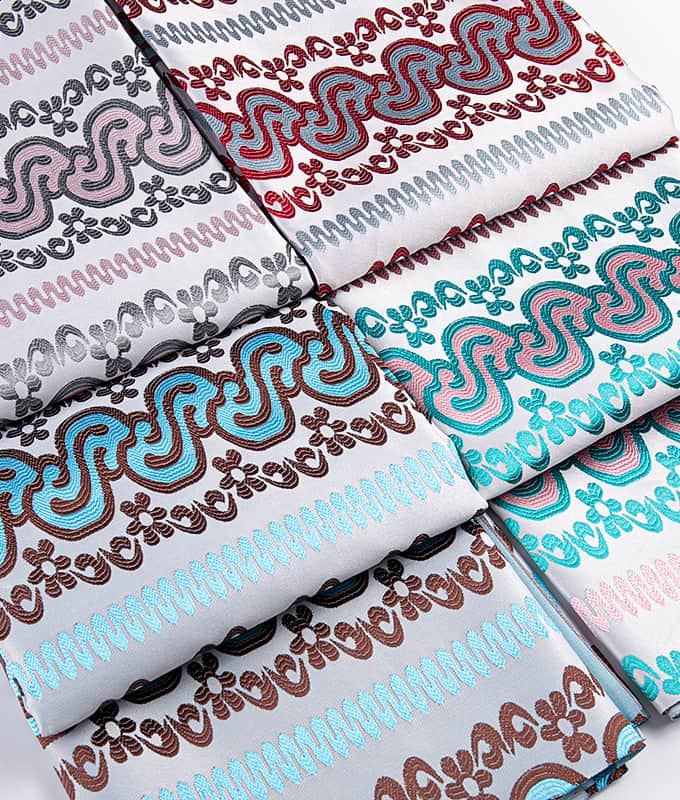
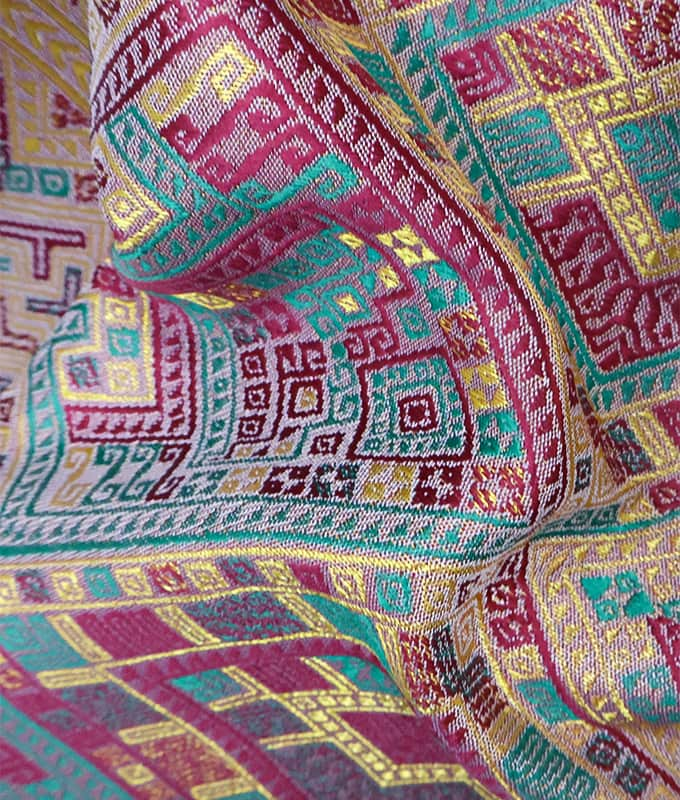
The S-Shaped 3D Textured Polyester Jacquard Fabric for Sarong combines elegance with durability. Crafted with advanced electronic jacquard technology,...
See Details -
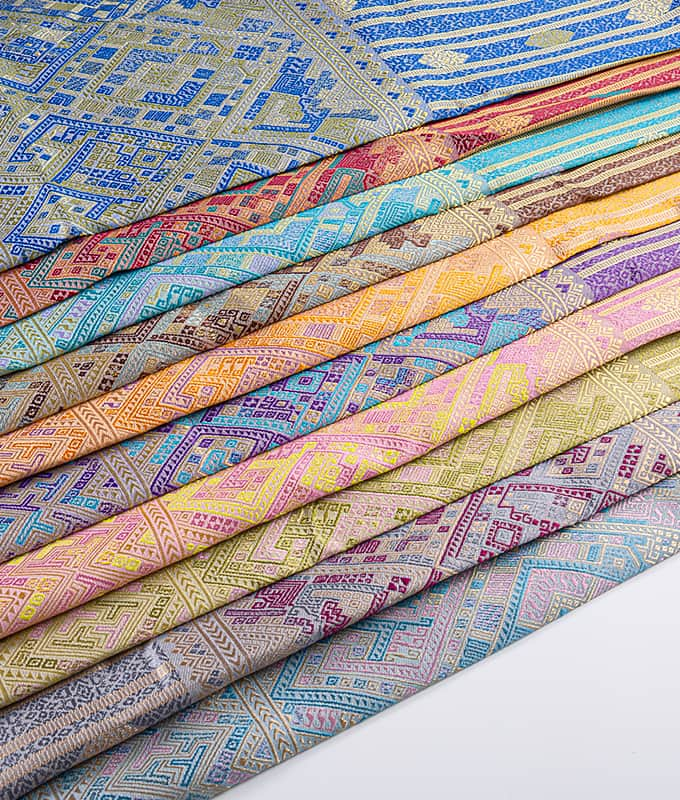
Hollow Polyester Jacquard Fabric for Laotian Traditional Sarong — a perfect fusion of Lao cultural heritage and modern fiber innovation. With symbolic...
See Details -
Hand-Stitched Style Poly-Cotton Fabric for Sarong— a refined blend of style and practicality, crafted to give tube skirts a smooth texture and a well-...
See Details -
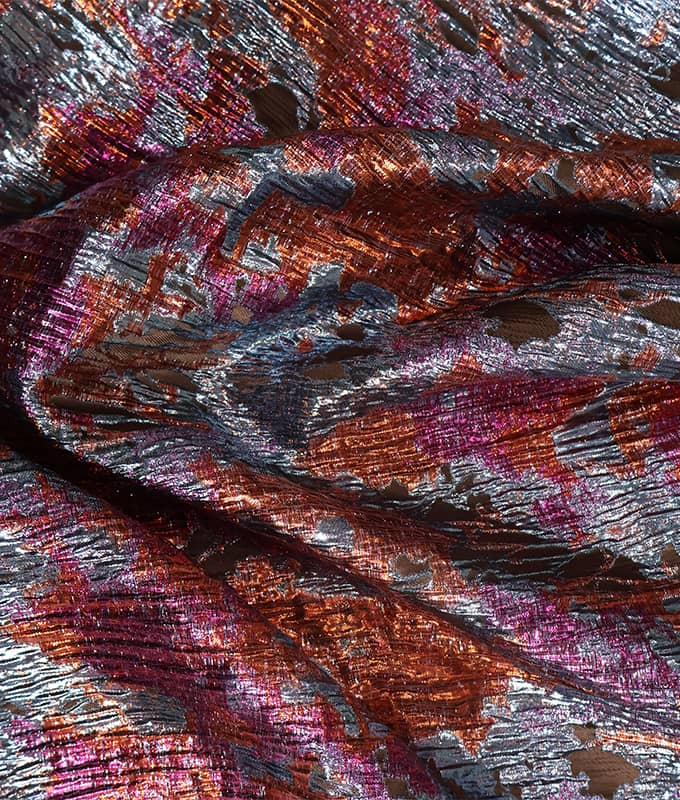
Smoldering Ember Gold-thread Jacquard Fabric is woven with an abstract, textural floral motif brought to life through jacquard construction, where met...
See Details -
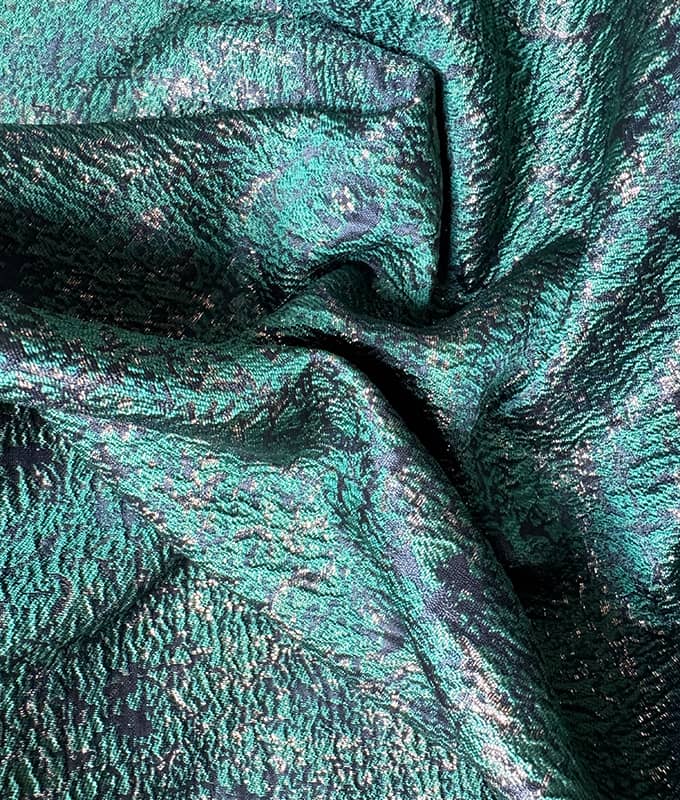
Shimmering Thicket Gold-thread Jacquard Fabric is woven with an all-over tonal floral texture, where fine, delicate branches spread continuously acros...
See Details