English
 عربى
 中文简体
This Southeast Asian ethnic-style polyester jacquard fabric is made with a jacquard weaving technique. The staggered zigzag and diamond patterns carry...
See DetailsJacquard Motifs With Cultural Meaning: A Buyer's Guide to Woven Stories
Industry News-Content
Jacquard motifs are often treated as decoration, but in many textiles they work more like language. A diamond on a sarong, a vine on a scarf, or a bordered keffiyeh can point to a region, an occasion, a family tradition, or a quiet wish for protection and prosperity. Because jacquard patterns are woven into the cloth rather than printed on top, their meaning is carried by texture as well as image: the raised surface, the reverse, the weight of the fabric, and the way light catches a gold thread all become part of the message.
At Huzhou Zhengyan Textile, we weave jacquard fabrics for Southeast Asian sarongs, Arabic head scarves, and fashion collections. That work has taught us to be careful with quick motif dictionaries. Meaning is rarely fixed. It shifts between villages, generations, religions, and fashion cycles. The useful question for a buyer is not “What does this motif mean?” but “What does this motif mean here, on this cloth, for this wearer?”
Why woven motifs carry cultural weight
Jacquard weaving builds pattern through the interlacing of warp and weft. That structural labor gives a motif a different status from a surface print. In heritage dress, a densely woven motif can signal ceremonial value; in everyday cloth, it may simply be fashionable. The same diamond that appears on a festive sarong might be reduced to a small geometric accent on a modern shawl.
Cultural meaning is also cumulative. Motifs are often combined: a central field, a border, a foot panel, a fringe. The border may frame the wearer, the central motif may anchor the composition, and the ground color may set the mood. Reading one motif without its frame is like reading a sentence without punctuation. For buyers, respect starts with asking which parts are essential: the motif itself, its scale, its placement, or its color relationship.
Woven motifs also age differently from prints. A jacquard surface can soften with washing while the pattern remains legible, which is one reason certain cloths become heirlooms. For buyers, that durability is practical, but it also raises the stakes: a borrowed motif can stay in a family’s wardrobe for years.
Common motif families and the stories they suggest
Across jacquard textiles, several motif families appear again and again. The table below is a starting point for conversations with designers, wearers, and suppliers; it is not a universal dictionary.
| Motif family | Common setting | Cultural associations to explore | Buyer’s note |
|---|---|---|---|
| Diamond and lozenge | Sarong panels, Pha Sinh, ceremonial cloth | Protection, cosmos, fertility, status in some communities | Keep the central axis; check repeat alignment |
| Floral and vine | Sarongs, fashion jacquard, scarves | Beauty, growth, fertility, continuity | Scale changes character; large florals need loom sampling |
| Geometric bands | Borders, hems, headscarves | Boundary, ancestry, trade routes, protection | Border width and color balance are critical |
| Wave and zigzag | Sarongs, skirts, shawls | Water, flow, journey, resilience | Distortion in repeat is obvious; test drape |
| Medallion or paisley | Shawls, festive wear, fashion | Prestige, blessing, heritage memory | Avoid mixing too many symbolic centers |
Scale is the quiet translator of meaning. A large central medallion reads as a focal point; the same shape repeated at 1 cm becomes a texture. Borders behave similarly. A wide woven border can frame a sarong like a formal edge, while a narrow border suggests daily wear. When a buyer changes scale to suit a price point, the motif may survive visually but lose its ceremonial weight.
In practice, a motif family is not a meaning certificate. A floral in a Thai Pha Sinh, a Lao sarong, and a fashion blouse may share visual DNA but carry different associations. Good sourcing keeps that context visible instead of flattening every pattern into “ethnic style.”
Cultural meaning in Southeast Asian sarongs
In Southeast Asian sarong traditions, the composition often matters as much as the motif. A Thai Pha Sinh may have a central body, a border, and a foot panel; a Lao sarong may emphasize a woven hem; a Myanmar longyi may rely on checks, waves, or fine geometric repeats. Diamonds and lozenges are widely used, but their associations range from cosmic order to protection, fertility, or status. Floral and vine motifs often speak of beauty, growth, and continuity. Gold thread can lift a cloth into festive or ceremonial use.
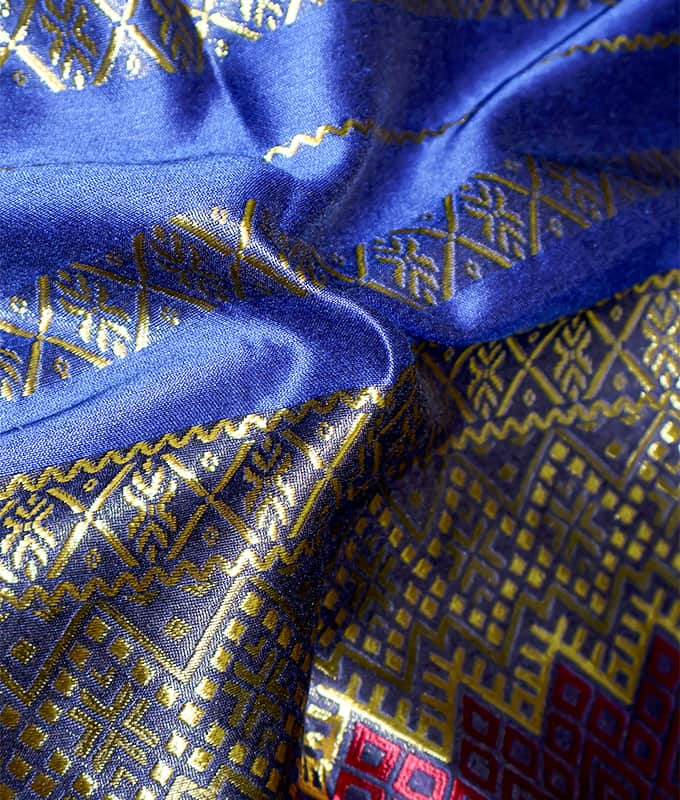 Custom Colorful Jacquard Sarong Fabric for Southeast Asian StylesA durable polyester jacquard for sarongs, offering vivid colors, shape stability, and customization; useful when matching motif scale and color to occasion.View Product →
Color adds another layer. Indigo, saffron, deep red, emerald, and soft pastel grounds can change the reading of the same motif. In our experience, buyers who ask about the occasion first—daily wear, wedding, festival, or retail fashion—make better decisions than those who start with a pattern file. Scale is equally practical: a diamond that looks elegant at 4 cm may become crowded at 2 cm, and a border that works on a wide sarong may lose its balance on a narrow scarf.
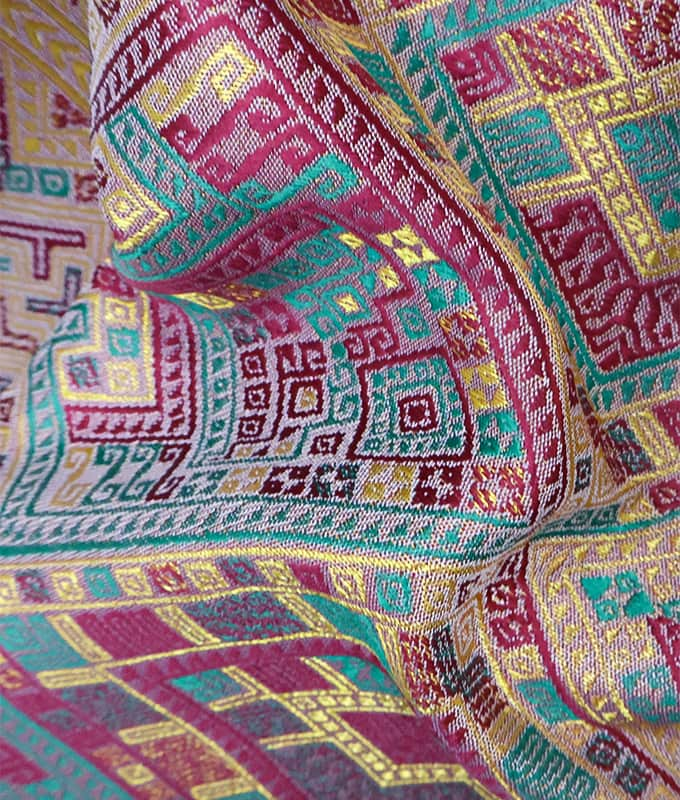 Silk-Like Jacquard Fabric for Thai Pha Sinh SarongsA breathable, wrinkle-resistant polyester jacquard with silk-like drape, suited to Thai Pha Sinh sarongs and customizable patterns, colors, and sizes.View Product →
We keep separate development notes for Thai, Lao, and broader Southeast Asian styles because repeat scale and border proportions are not interchangeable. That attention to context is part of cultural storytelling through woven patterns, and it is also good product development.
Keffiyeh motifs, borders, and color language
The keffiyeh shows how motif and color work together. A houndstooth body, a gold plaid border, or a fine fishnet ground can be read differently depending on region, generation, and styling. Popular explanations link fishnet patterns to fishing nets, olive leaves to agricultural life, and bold lines to trade routes; these are community stories rather than universal rules. Color can signal occasion, regional style, or personal preference, and the same pattern may be worn as a practical head covering, a fashion accessory, or a symbol of identity.
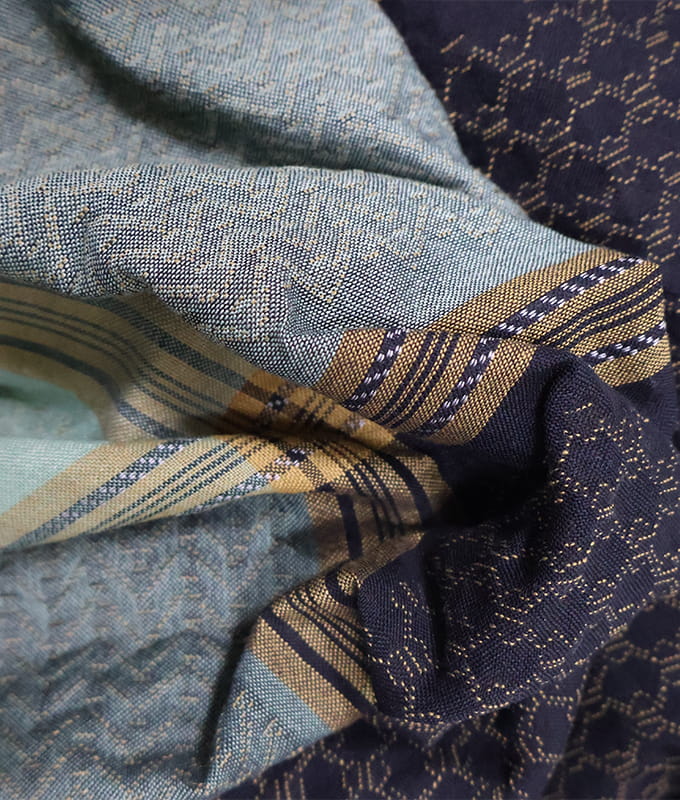 Sage Green and Navy Houndstooth Keffiyeh with Gold BorderA lightweight cotton head scarf pairing houndstooth, honeycomb, and gold plaid border details; useful for retailers seeking a distinctive Arabic-style accessory.View Product →
Borders deserve special attention because they often carry the most explicit cultural coding. A gold plaid border can frame the face, separate pattern zones, or echo a textile tradition from another region. If a buyer shortens the border or changes its thread to a cheaper metallic, the cloth may still sell, but the reference becomes weaker.
For buyers, the safest approach is to ask about the wearer and the market, then adapt with restraint. Changing a ground color is usually less sensitive than redrawing a border or shrinking a motif until it loses its character. Sampling on the final fiber matters too, because cotton and polyester take color and texture differently.
Sourcing cultural motifs without flattening them
Global buyers often need to adapt heritage motifs for cost, scale, and color standards. The question is not whether to adapt, but which parts are non-negotiable. A border may need to stay centered. A diamond may need to remain symmetrical. A floral may need breathing room. A gold thread may need to be subtle enough for everyday wear. These are design decisions as much as cultural ones, and they are easier to solve when the mill understands the end use.
In our mill, sampling is where most of these questions get answered. We test repeat scale, border alignment, handfeel, and colorfastness in the fiber and construction the buyer intends to order. Small-batch development is useful here: it lets a buyer see a motif in the right weight and drape before committing to bulk. Our factory team also keeps the production brief close to the original reference, so adjustments are documented rather than lost between seasons. Products are made to meet European environmental standards, and we welcome buyers who want to discuss both appearance and compliance.
A practical buyer’s checklist
Before a motif moves from reference to production, a short checklist can prevent most misunderstandings.
- Name the wearer and occasion before choosing a motif family.
- Ask which elements carry meaning: motif, scale, placement, color, or border.
- Keep the composition hierarchy intact when adapting a design.
- Sample the final fiber, weight, and finish, not only the artwork.
- Check repeat alignment, border balance, and reverse appearance.
- Document color approvals under the lighting used in the market.
Keeping meaning in the cloth
Jacquard motifs with cultural meaning deserve more than a label. They deserve a conversation. When buyers ask about origin, occasion, and local variation, they make better choices and build products that feel specific rather than borrowed. That is also how we like to work: translating a motif from a reference into a wearable cloth without pretending that the story is ours to simplify.
Related products
-
-
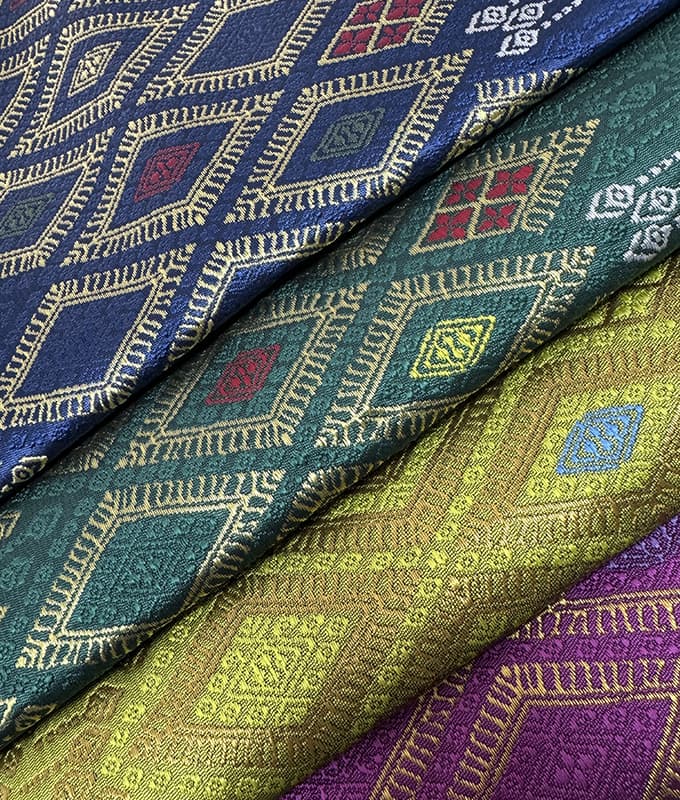
This Southeast Asian ethnic-style polyester jacquard fabric is made with a jacquard weaving technique. A classic diamond geometric pattern is paired w...
See Details -
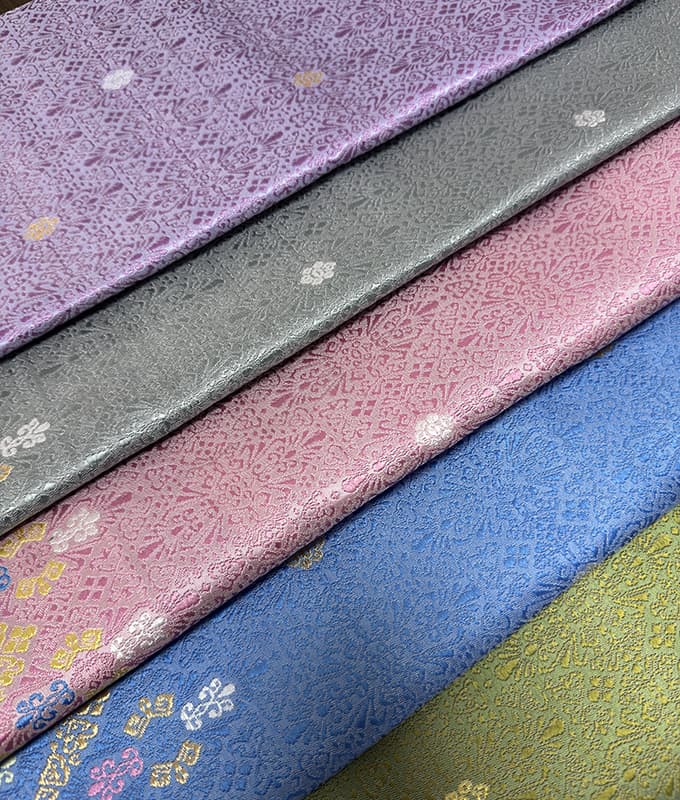
This Southeast Asian-style polyester jacquard fabric is made with a jacquard weaving technique and blends traditional ethnic geometric patterns into a...
See Details -
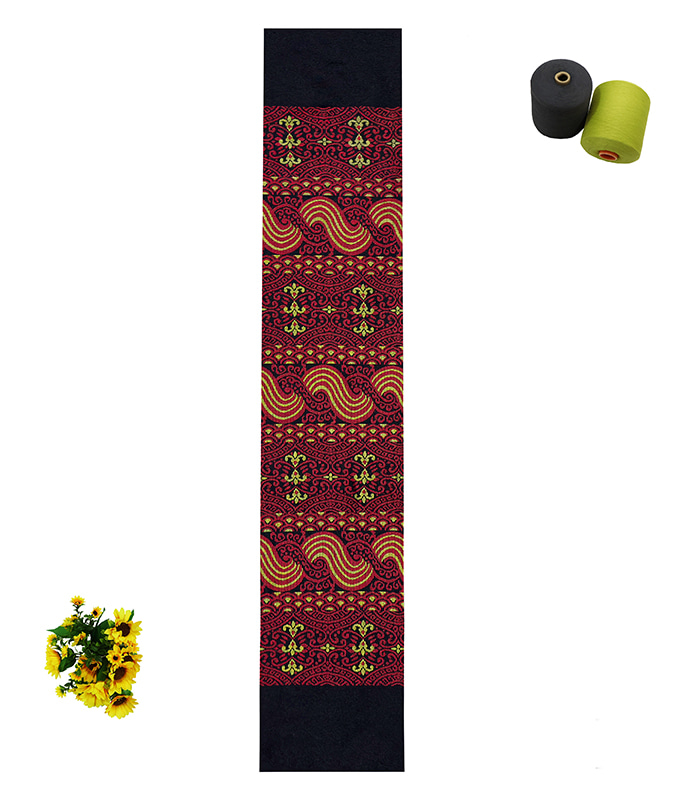
This Southeast Asian ethnic-style jacquard sarong fabric uses a sectioned structure. The top and bottom ends are solid-color blocks, while the main mi...
See Details -
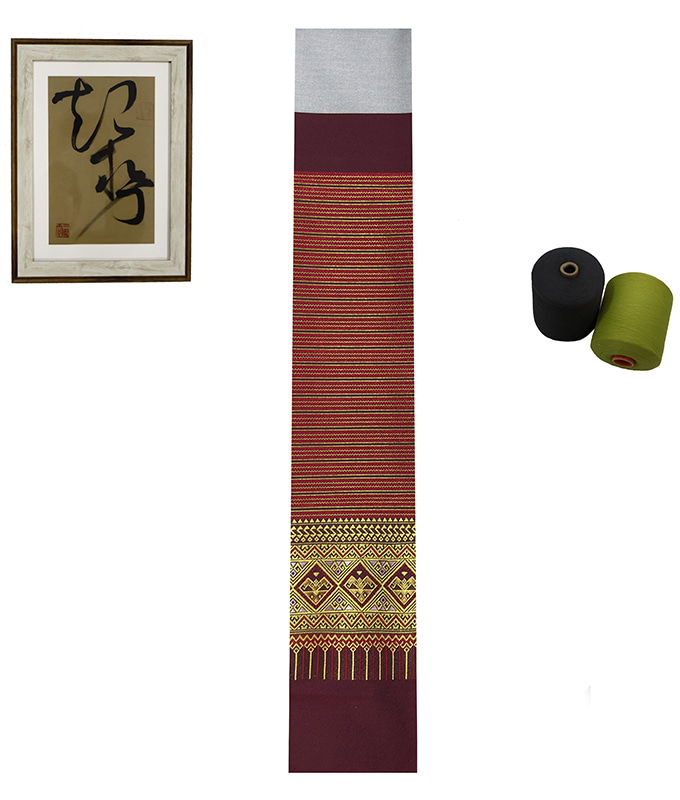
This Southeast Asian jacquard sarong fabric uses a sectioned design. The upper section is arranged with neat horizontal stripes, while the lower secti...
See Details -
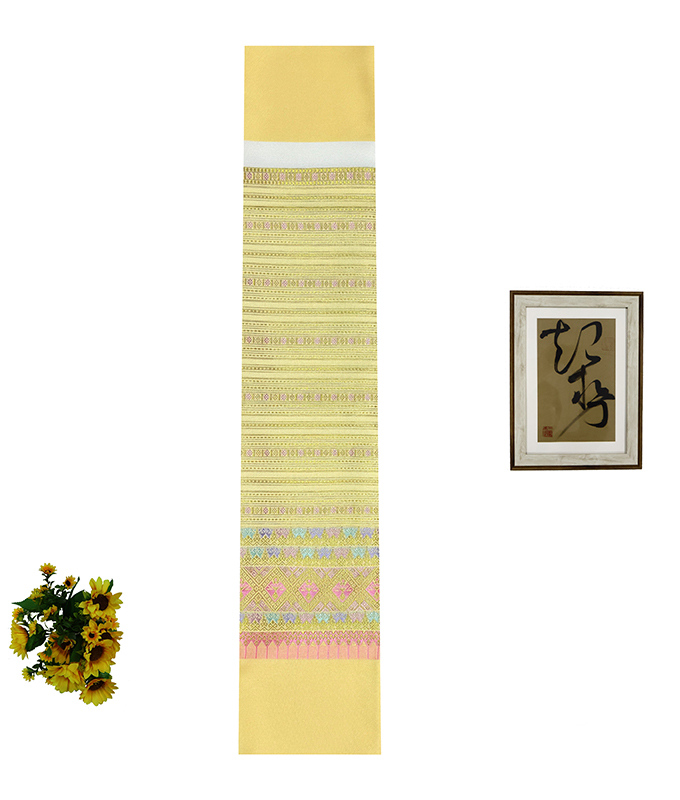
This traditional Southeast Asian jacquard sarong fabric uses a sectioned structure. The two ends are solid-color blocks, the main middle section is ar...
See Details