English
  عربى
عربى  中文简体
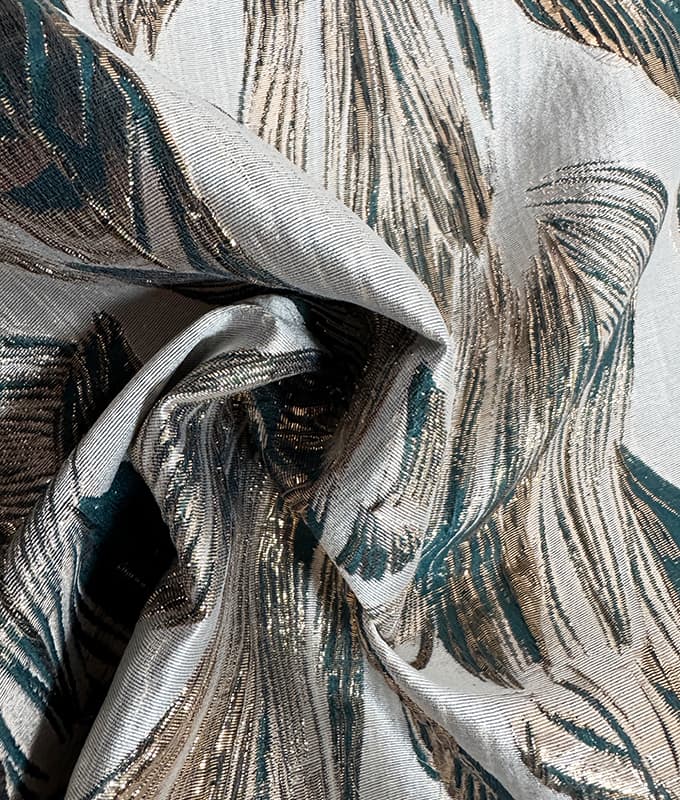
中文简体 This Sequin Jacquard Fabric features an expressive leaf pattern in deep teal, soft silver, and muted metallic tones. The overlapping botanical motifs ...
See DetailsSequin Jacquard Fabric: How to Source It Smartly for Garment Production
Industry News-Content
Two swatches labelled sequin jacquard fabric can look similar in a product photo but behave very differently on the cutting table. One may be a stiff polyester base with glued plastic sequins, while the other is a cotton-rich jacquard with sewn sequins that move like tiny fish scales. The cost difference can be 30 percent or more, and treating them as the same material is a common sourcing mistake.
What Is Sequin Jacquard Fabric?
Sequin jacquard is not one material. It is a jacquard-woven base cloth combined with a reflective sequin finish. The jacquard weave controls individual yarns to build the pattern into the cloth, so the design is part of the fabric rather than a printed layer. Sequins are then attached to the face side by sewing, string embroidery, or adhesive bonding. Common variations include flat sequins arranged in rows, overlapping mermaid-style sequins that imitate fish scales, and mixed-size sequins scattered over a woven motif.
From a buying perspective, this two-stage construction is the key to understanding price and quality. The jacquard base determines drape, strength, pattern clarity, and wash behaviour. The sequin finish determines surface texture, flexibility, shedding risk, and skin comfort. You need to assess both parts separately, and then judge how they behave as a finished combination.
Why Choose a Jacquard Base?
A jacquard base is usually chosen for two practical reasons. First, woven patterns stay visible after washing, while printed designs can fade or crack. Second, jacquard gives the fabric body and structure, allowing sequins to sit on a stable surface without pulling the garment out of shape. This makes sequin jacquard suitable for evening dresses, stage costumes, decorative tube skirts, and festive sarongs.
Printed vs. Jacquard vs. Sequin Jacquard
The table below compares the three categories most buyers evaluate when planning a decorated fabric.
| Feature | Printed Fabric | Jacquard Fabric | Sequin Jacquard Fabric |
|---|---|---|---|
| Pattern origin | Ink on the surface | Woven into the yarn structure | Woven pattern plus applied sequin layer |
| Drape and weight | Soft and flat | Medium to structured, depending on density | Heavier; sequin weight changes the drape |
| Wash durability | Can fade or crack over time | Pattern is more stable, but fibre content matters | Depends on sequin attachment; glued sequins may shed |
| Typical uses | Casual apparel, linings, accessories | Sarongs, formalwear, uniforms, ethnic clothing | Eveningwear, stage outfits, festive sarongs, special occasionwear |
| Relative cost | Low to medium | Medium | High, especially with sewn sequins |
How to Evaluate a Sequin Jacquard Fabric
Before requesting a quotation, ask the supplier to confirm three things: the base fibre composition, the method of sequin attachment, and the expected cleaning routine. These three answers will tell you more than a dozen product photos.
Base Fibre: Polyester, Cotton, or Polyester-Cotton
Polyester is the most common choice for sequin jacquard because it holds sharp woven details, takes bright colours, shrinks less, and is easy to maintain. Its main drawback is breathability, which matters if the garment is worn directly against the skin. Cotton and cotton-rich bases are more comfortable and culturally appropriate for sarongs and headscarves, but they need extra care during sequin application to avoid puckering. A polyester-cotton blend gives a useful middle position: structure from polyester and comfort from cotton.
If you want a proven base to start from, our woven jacquard clothing fabric range includes polyester, cotton, and blended options, so you can compare hand feel before deciding on sequin work.
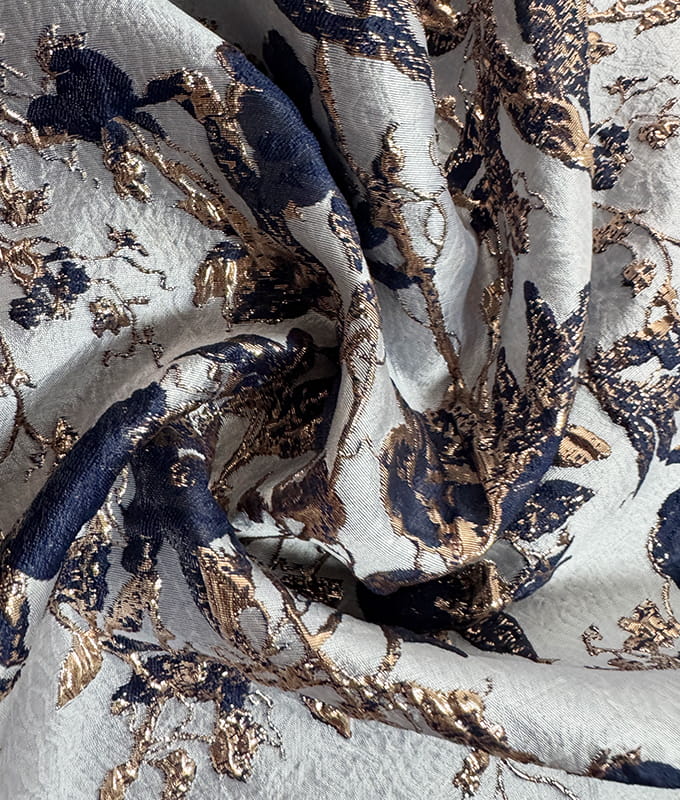 Woven Jacquard Clothing Fabric Manufacturers, Custom CompanyZhengyan Textile is Custom Woven Jacquard Clothing Fabric Manufacturers and Woven Jacquard Clothing Fabric Company in China, supply Woven...View Product →
Sequin Attachment: Sewn vs. Glued
Sewn sequins are the safer choice for garments that will be washed or worn repeatedly. They can be attached one by one or as continuous strings, and they leave a cleaner reverse side. Glued or heat-bonded sequins are less expensive and can lie flatter, but they may shed when the fabric is pulled, washed, or exposed to heat. If your supplier cannot specify the attachment method in the quotation, treat that as a red flag.
Backing, Edges, and Skin Comfort
The reverse side of a jacquard weave is rarely smooth, and sequins make it rougher. For a wrap-around sarong or an unlined dress, specify a lining or a loose sequin layout that avoids dense clusters of plastic edges touching the skin. Also look at how the fabric behaves at cut edges. Sequin jacquard can lose sequins along a seam unless the sequin layer is sewn securely or the seam is finished with a backing.
Sourcing, Samples, and Compliance
Sequin jacquard is almost always a custom product, so the sample stage is not optional. A photo can hide the stiffness of the base, the irregularity of sequin placement, and the quality of the reverse side.
Minimum Order Quantities and Pattern Repeat
The MOQ often depends on the jacquard pattern repeat. A small geometric design repeats easily and can be run in lower quantities. A large floral motif that spans many warp threads may require more yarn and longer setup time, which pushes the minimum higher. During negotiation, ask the supplier to split the MOQ into a base fabric quantity and a sequin application quantity. That makes the cost structure clearer and easier to adjust later.
Customisation for Ethnic and Festival Clothing
Because our factory supports small-batch production and custom jacquard development, we regularly build bases for Southeast Asian sarongs, Thai Pha Sin, and other traditional garments. For buyers who want a smooth, luminous base that sits well under sequin decoration, the silklike polyester jacquard fabric for Thai Pha Sinh sarongs is a practical starting point.
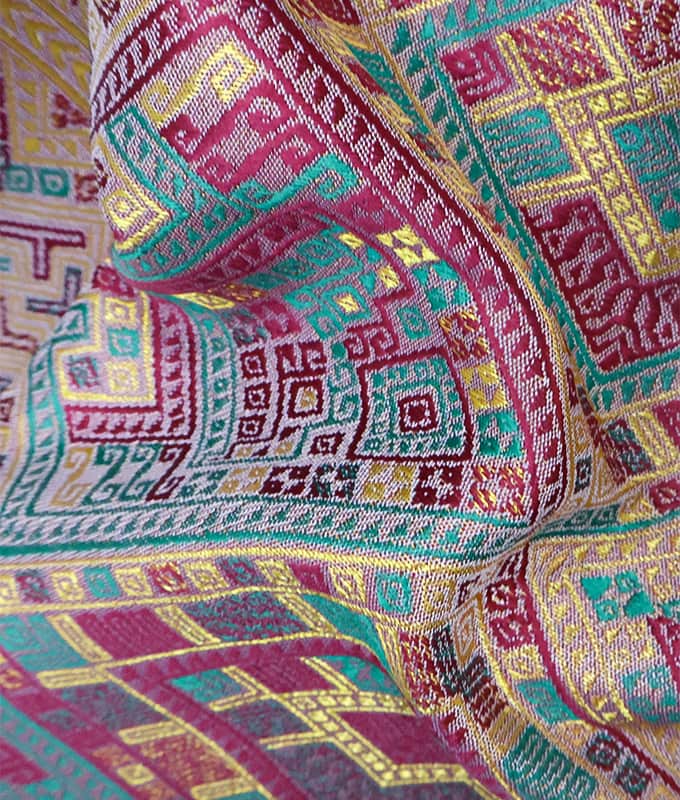 Silk-like Polyester Jacquard Fabric for Thai Pha Sinh Sarong Manufacturers, CustZhengyan Textile is top China Silk-like Polyester Jacquard Fabric for Thai Pha Sinh Sarong Manufacturer and Custom Silk-like Polyester Ja...View Product →
Compliance and Test Reports
Before committing to a large order, confirm the standards the fabric must meet. If your market is the EU, check restricted substances, sequin adhesion, colourfastness, and shrinkage. Our products are produced according to European environmental standards, but a fabric can still fail in a specific end use if the sequin density is too high or the base is too lightweight. A test report protects both the buyer and the factory.
Start with a Smart Sample
The fastest way to avoid expensive surprises is to compare a cutting sample, not a photo. Use the following sequence:
- Define the end use, washing routine, and whether the fabric touches the skin directly.
- Choose the base fibre and jacquard pattern.
- Select sewn or glued sequins and specify the density.
- Ask for a physical sample on the actual base fabric.
- Confirm MOQ, lead time, and test requirements before production.
For more base options, browse our fabric categories and compare the structures before you brief the factory.
Related products
-
-
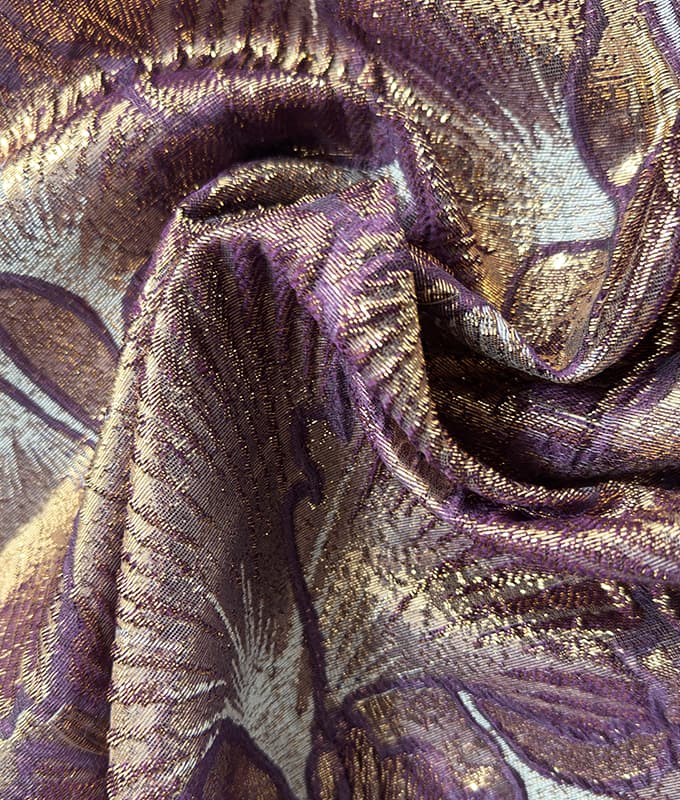
This Sequin Jacquard Fabric features oversized floral motifs in rich bronze, muted gold, and deep purple tones. The layered metallic surface creates a...
See Details -

Silk-like Polyester Jacquard Fabric for Thai Pha Sinh Sarong — combining the elegance of silk-like texture with high-precision jacquard craftsmanship,...
See Details -
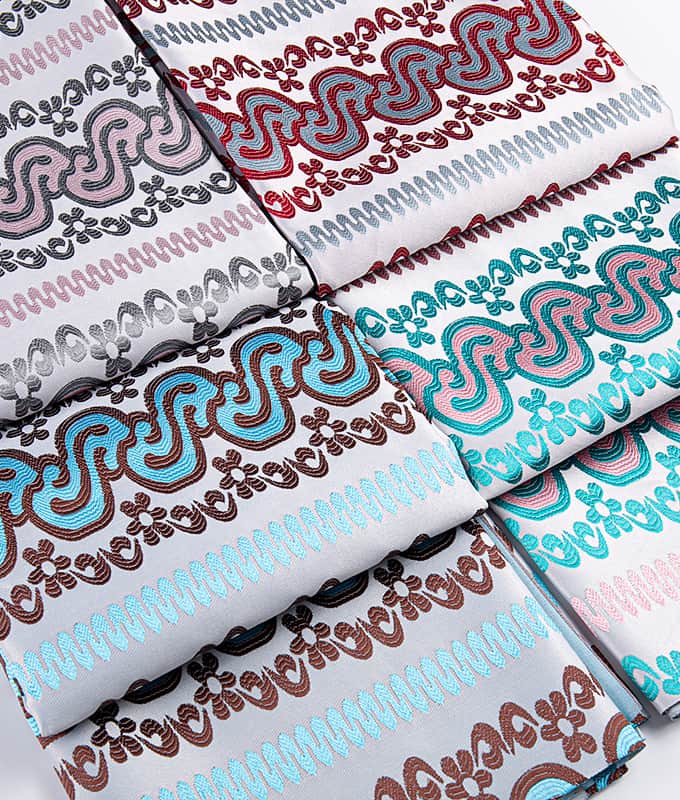
The S-Shaped 3D Textured Polyester Jacquard Fabric for Sarong combines elegance with durability. Crafted with advanced electronic jacquard technology,...
See Details -
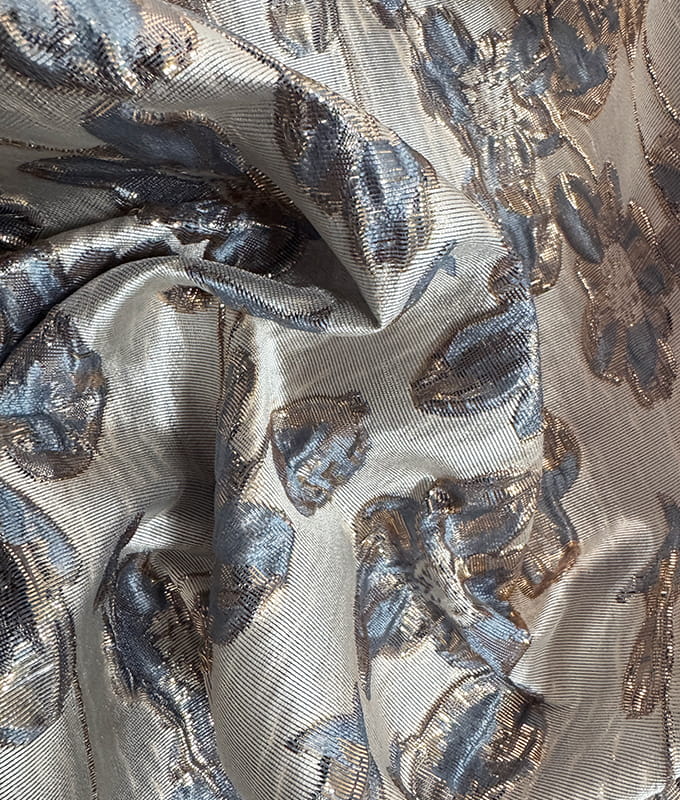
This Sequin Jacquard Fabric presents a coordinated collection of elegant botanical patterns in three distinctive colorways. Soft blue, champagne beige...
See Details -
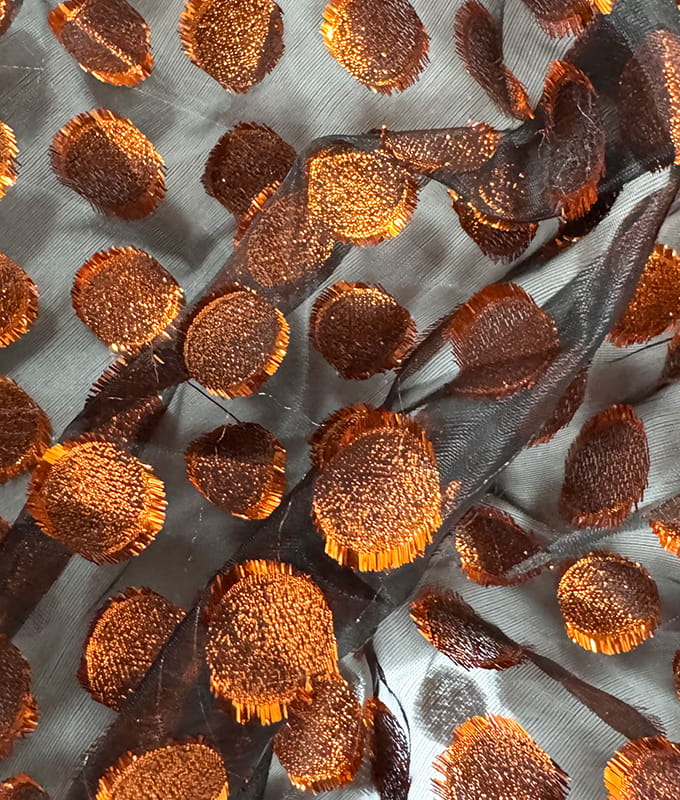
This Sequin Jacquard Fabric features bold copper-toned polka dots arranged across a lightweight sheer base. The raised circular motifs create a striki...
See Details