English
  عربى
عربى  中文简体
中文简体 Hand-Stitched Style Poly-Cotton Fabric for Sarong— a refined blend of style and practicality, crafted to give tube skirts a smooth texture and a well-...
See DetailsEthnic Sarong Fabric: How to Choose, Evaluate, and Source Quality Fabrics
Industry News-Content
Most ethnic sarong fabric orders start with the same question: which pattern will sell? After years of helping textile buyers source Southeast Asian clothing material, we usually advise starting with the garment itself. A beach wrap does not need the same stiffness as a ceremonial pha sin, and a daily-wear longyi will not perform well if the weave is too loose. The right fabric decision is a combination of fiber, weave, weight, and finish, not just color and print.
Ethnic sarong fabric refers to the woven or printed textiles used for tube-style and open-wrap garments known by many names across Southeast Asia, South Asia, and the Middle East. For buyers, the practical problem is less about naming and more about matching performance to cultural expectations. The regional guide to Southeast Asian traditional sarong fabrics can help you map the terminology, but the purchasing decision still comes down to construction and sourcing.
What Defines Ethnic Sarong Fabric?
A sarong can be a sewn tube or a flat rectangle wrapped around the body. It is worn by men and women at home, at temples, at markets, and at ceremonial events. In this sense, the fabric is the garment: pattern, drape, texture, and weight all carry meaning. A Thai pha sin usually has a tubular construction with a decorated hem. A Myanmar longyi is a stitched tube with a flat panel. An Indonesian or Malaysian kain sarung may be wrapped with a twist at the waist. Although these garments share a basic concept, each market has different expectations about color, border design, and hand feel.
Because sarongs are worn in hot, humid climates, breathability and washability matter. At the same time, formal versions often need a smooth, lustrous appearance that is difficult to achieve with ordinary cotton. For ceremonial use, many importers select a silklike polyester jacquard fabric for Thai Pha Sinh sarongs because it provides a consistent sheen and keeps its shape better than fine silk at a lower cost.
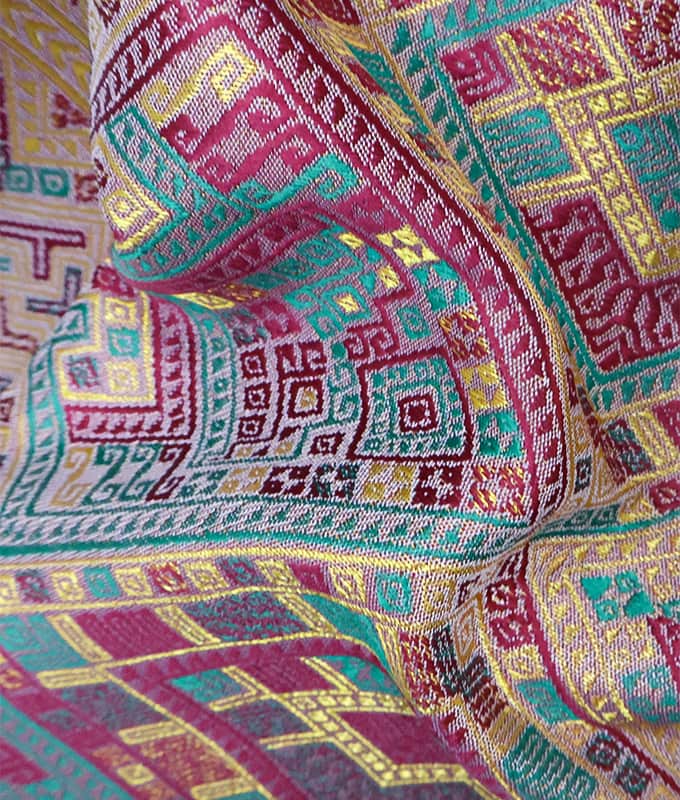 Silk-like Polyester Jacquard Fabric for Thai Pha Sinh Sarong Manufacturers, CustZhengyan Textile is top China Silk-like Polyester Jacquard Fabric for Thai Pha Sinh Sarong Manufacturer and Custom Silk-like Polyester Ja...View Product →
The Main Fabric Families for Ethnic Sarong Fabric
Most ethnic sarong fabric falls into three broad families, each with a different balance of cost, comfort, and visual effect.
- 100% cotton plaid. This is the natural starting point for traditional daily-wear sarongs. Cotton feels breathable, absorbs moisture, and softens with washing. It can wrinkle, but many buyers from tropical markets accept that in exchange for comfort.
- Polyester-cotton blended sarong fabric. The blend reduces shrinkage, improves colorfastness, and makes the fabric easier for garment factories to handle. It is widely used for affordable tube skirts with printed or handstitched-style details.
- Polyester jacquard. The pattern is woven into the fabric during production, so it does not fade or peel the way a surface print can. These fabrics work well for formal pha sin, short sarongs, and fashion pieces that require texture and sheen.
Each family can be customized with borders, gold threads, openwork effects, or specific pattern sizes.
Comparing Cotton Plaid, Polycotton Blend, and Polyester Jacquard
The fastest way to communicate with a fabric supplier is to compare construction and end use rather than describing a pattern. Before quoting an order, establish the fiber, weight, width, and finishing requirement. Most factories begin with a natural fiber option when the customer expects a traditional hand feel and airy drape; the 100% cotton plaid Southeast Asian sarong fabric is a reliable benchmark. The table below summarizes the three most common options.
 100% Cotton Plaid Southeast Asia Sarong Fabric Suppliers, Wholesale FactoryAs top China 100% Cotton Plaid Southeast Asia Sarong Fabric Suppliers and 100% Cotton Plaid Southeast Asia Sarong Fabric Factory, Zhengya...View Product →
| Fabric Type | Best Use | Main Limitation | Buyer Focus |
|---|---|---|---|
| 100% cotton plaid | Everyday sarongs and summer-weight garments | Shrinkage and wrinkling can be higher | Natural hand feel, breathability, wash performance |
| Polyester-cotton blend | Easy-care resort wear and printed tube skirts | Less breathable than pure cotton | Colorfastness, dimensional stability, consistent texture |
| Polyester jacquard | Formal pha sin and special-occasion sarongs | Can be warmer and less absorbent | Pattern clarity, sheen, durability of woven decoration |
Use this table as a starting point, then ask for physical swatches. A photo cannot show the difference between a tight 120 gsm weave and a loose 100 gsm weave, even when the two fabrics carry the same jacquard pattern.
What Buyers Should Check Before Placing an Order
Before approving production, request a sample in the exact color placement and finish you intend to buy. Then compare samples against these criteria:
- Fiber content: Confirm the percentage by certification or a simple test report; this affects price, care, and drape.
- Weight and width: Ask for the fabric’s GSM and usable width because sarong patterns may require a specific drop length or border repeat.
- Colorfastness and shrinkage: A fabric that looks bright when it leaves the mill should still look correct after washing and exposure to sweat.
- Pattern registration: Check that the plaid, border, or jacquard motif lines up consistently across the width and along the repeat.
- Finish: Confirm whether the fabric is pre-shrunk, softened, or treated for anti-pilling; this changes how it behaves in cutting and sewing.
If the sample passes these checks, a production run is far less likely to create surprises.
Sourcing Custom Ethnic Sarong Fabric from a Manufacturer
For small and mid-sized brands, the strongest reason to work with a specialized manufacturer is development flexibility. A supplier that already runs jacquard looms, screen printing, and cotton plaid programs can adapt the same base fabric to several markets. For a handmade look with easier care, a handstitched-style polycotton sarong fabric is a common choice because it keeps decorative stitching details without the production cost of a real hand-sewn finish.
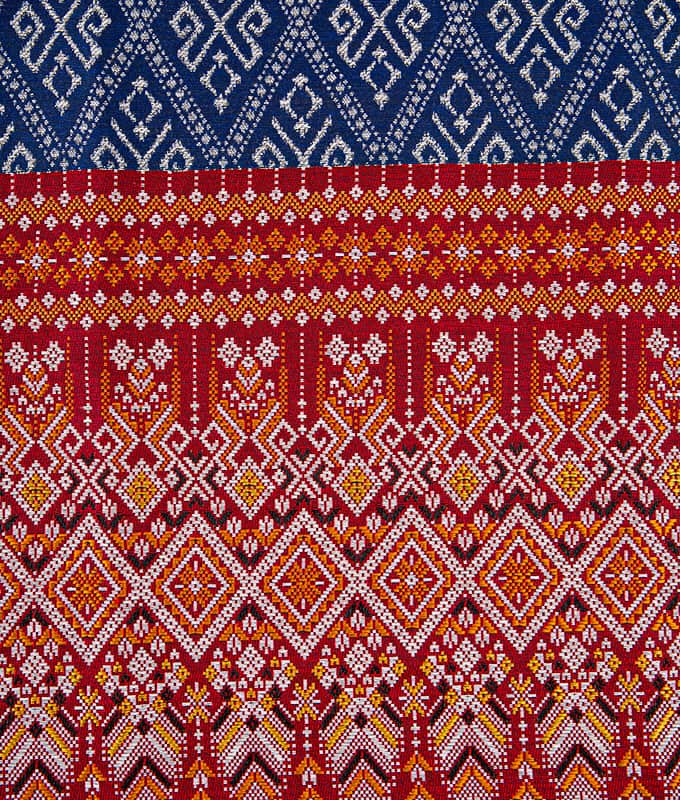 Hand-Stitched Style Poly-Cotton Sarong Fabric Manufacturers, Custom Factory - HuZhengyan Textile is top China Hand-Stitched Style Poly-Cotton Sarong Fabric Manufacturer and Custom Hand-Stitched Style Poly-Cotton Saron...View Product →
Huzhou Zhengyan Textile, a manufacturer and seller based in Huzhou, Zhejiang, focuses on high-end Dai and Southeast Asian ethnic clothing fabrics. The factory employs around 80 people, supports small-batch production, and offers custom pattern development through its in-house lab. Its location is also practical for export: about 100 km from Shanghai Pudong International Airport, 100 km from Hangzhou Xiaoshan International Airport, and 20 km from the Shen-Jia-Hu Expressway. The company states that its products meet European environmental standards, which gives importers a useful starting point for compliance discussions.
If you are sourcing for a seasonal collection, start with the full sarong fabric catalog, select a base construction, and then refine the pattern and finish with the supplier. Suppliers with woven jacquard capability can reproduce border motifs, gold-thread stripes, and openwork textures. Those details are what turn an ordinary polyester fabric into a true ethnic sarong fabric.
Related products
-

-
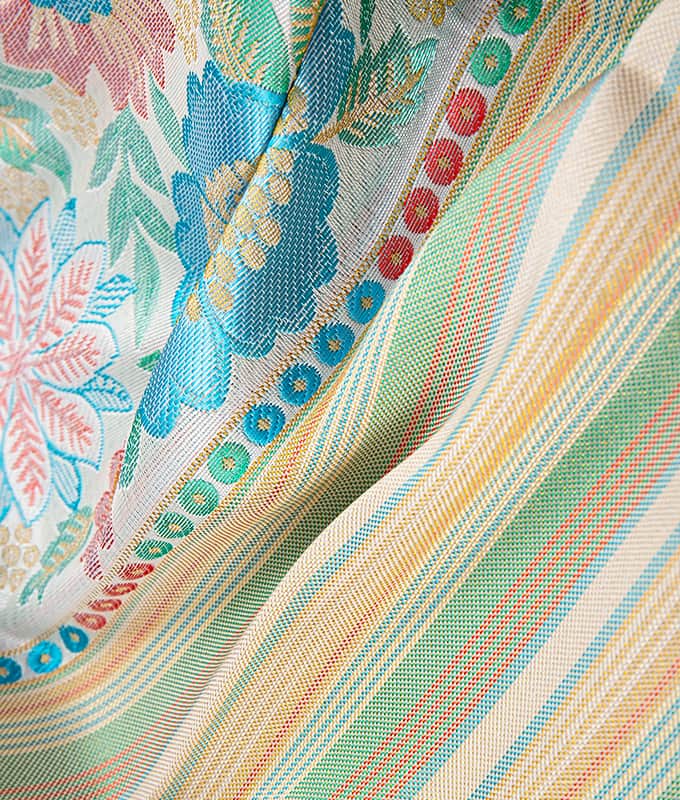
Sunflower Print Poly-Cotton Fabric for Sarong — a vibrant fabric inspired by sunflowers, radiating energy and brightness. Made with soft poly-cotton, ...
See Details -
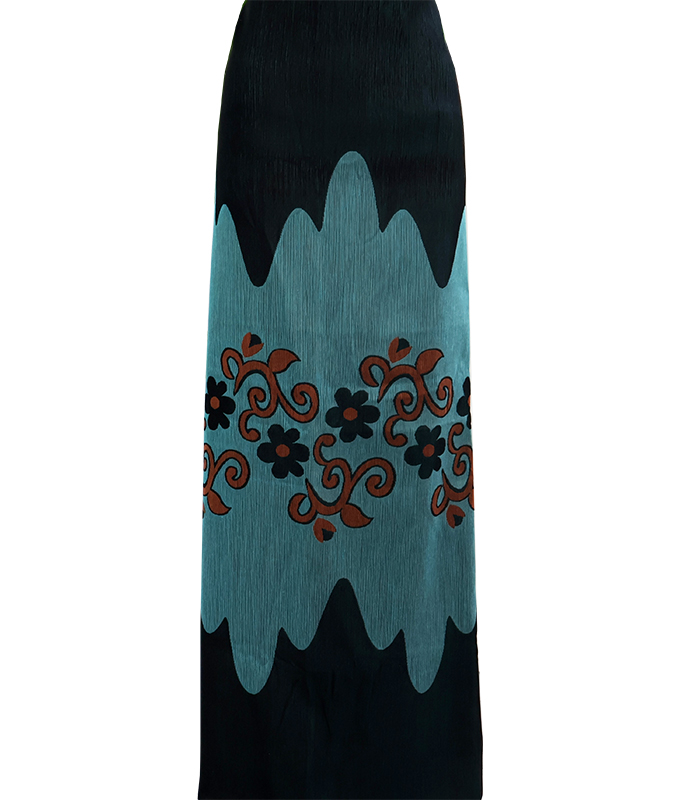
This ethnic-style jacquard sarong fabric features a wavy, sectioned color-block design. Ink black and lake blue-green blend naturally into each other,...
See Details -
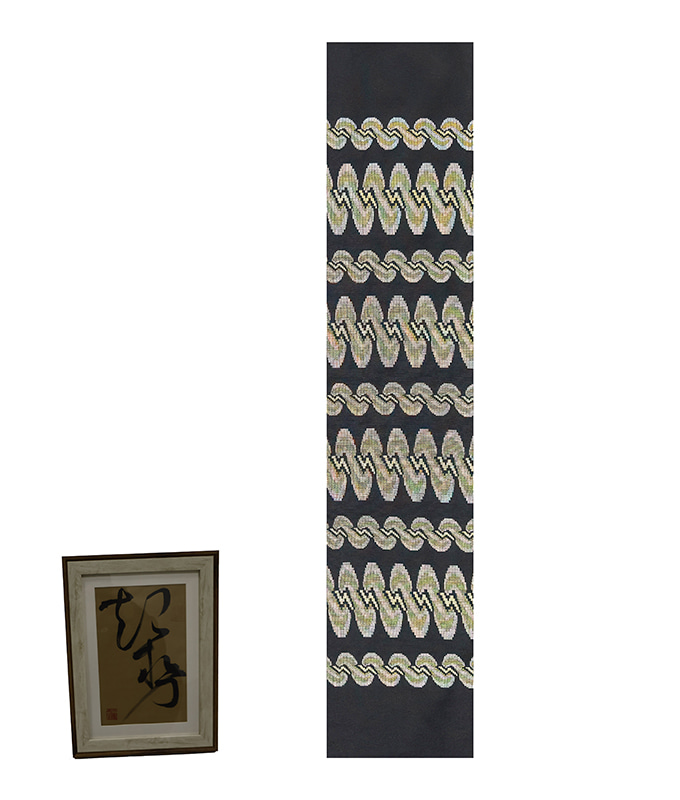
This Southeast Asian ethnic-style jacquard sarong fabric features a continuous wave and meander (Greek key) pattern as its main design. The motifs rep...
See Details -
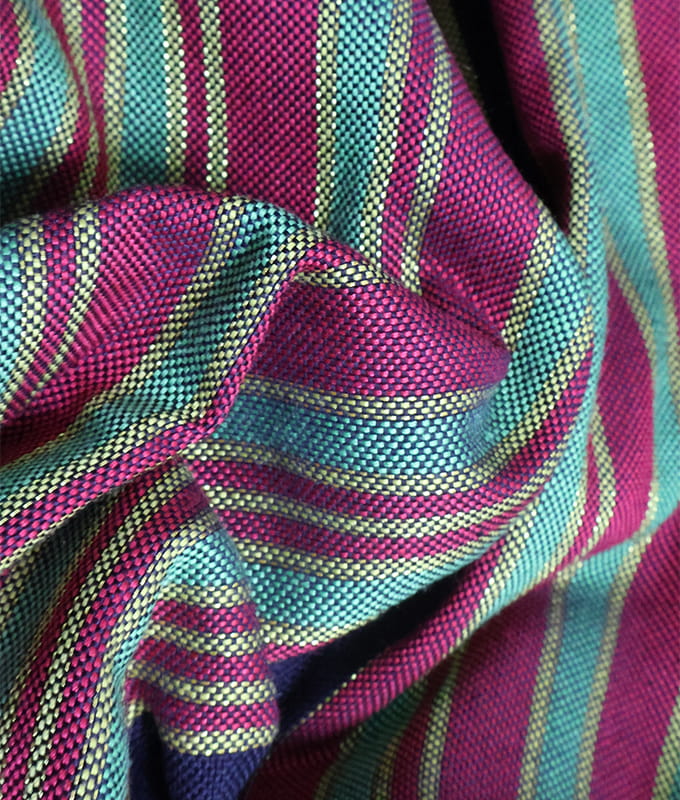
This ethnic-style striped jacquard fabric is built around rich, vibrant horizontal color bands. It is available in multiple colorways across five colo...
See Details -
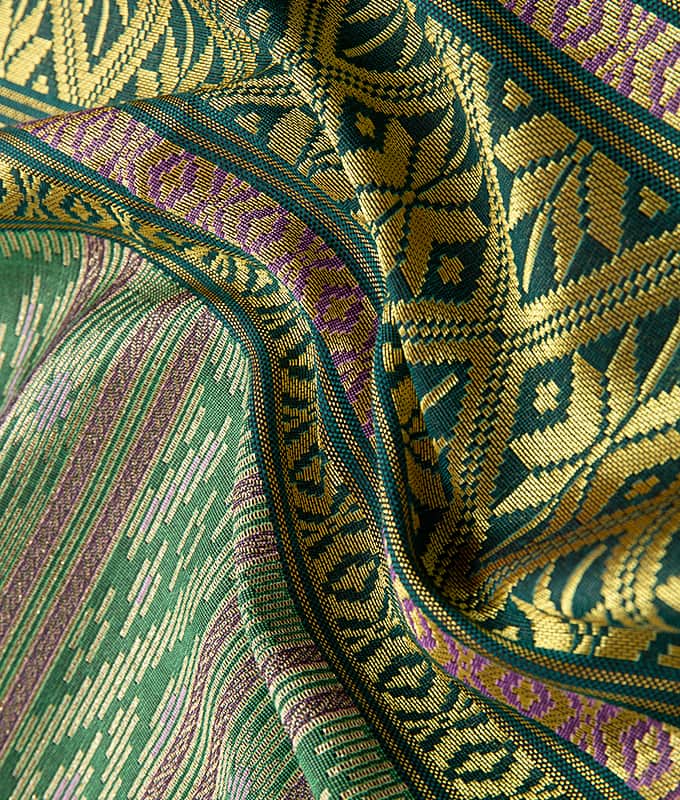
The Vertical Stripe Gold Thread Poly-Cotton Fabric for Sarong blends durability and comfort with a touch of elegance. Featuring vertically arranged go...
See Details