


 English
  عربى
عربى  中文简体
中文简体 Sunflower Print Poly-Cotton Fabric for Sarong — a vibrant fabric inspired by sunflowers, radiating energy and brightness. Made with soft poly-cotton, ...
See DetailsShemagh Color Meaning, Colors to Avoid & How to Wrap It
Industry News-Content
What Shemagh Colors Actually Mean
Color is the first thing people notice about a shemagh, and it carries more weight than most wearers realize. The two most historically significant colors are red-and-white and black-and-white, both rooted in Middle Eastern tribal and political identity. Beyond those two, colors have expanded into fashion and tactical territory, but their symbolism still matters depending on context.
Here is a breakdown of the most common shemagh colors and their associated meanings:
| Color | Region / Association | Common Meaning |
|---|---|---|
| Red & White | Jordan, Gulf States | Traditional Jordanian heritage; widely worn by Bedouin tribes |
| Black & White | Palestine, Iraq, wider Arab world | Palestinian national symbol; also used in political solidarity movements |
| White (plain) | Saudi Arabia | Formal and religious occasions; associated with cleanliness and piety |
| Olive / Tan | Military / Tactical | Field use, camouflage purposes, adopted by Western military units |
| Desert Sand | General outdoor / fashion | Neutral, practical, suitable for outdoor and travel wear |
| Blue & White | Fashion / Non-traditional | No cultural weight; worn mainly for style or branding purposes |
The red-and-white pattern, known as the keffiyeh in Jordan, has been associated with Hashemite and Bedouin culture for generations. It became especially visible during the 20th century when Jordanian soldiers and officials made it a point of national pride. The black-and-white version gained global recognition largely through Palestinian political identity, particularly after the 1960s and 1970s when it became a symbol of resistance seen at protests and in media worldwide.
Shemagh Colors to Avoid and Why
Not all shemagh colors are equally safe to wear in every context. Some colors carry strong political or cultural signals that may create unintended impressions, especially when worn outside their original cultural setting.
Black-and-White in Politically Charged Environments
The black-and-white shemagh is the most politically loaded pattern. In Western countries, wearing it at public demonstrations or near government buildings can be misread as making a political statement, even if that was not the wearer's intent. In some Middle Eastern countries with specific political tensions, it can draw unwanted attention. If you are traveling for work or in a context where political neutrality matters, avoid the black-and-white pattern entirely.
Bright or Non-Traditional Colors in Traditional Settings
Hot pink, neon green, or novelty-printed shemaghs are purely fashion items. Wearing these in countries where the shemagh is worn daily as part of cultural dress — particularly Saudi Arabia, Jordan, or the UAE — can come across as disrespectful or mocking. It signals that the garment is being treated as a costume rather than a practical or meaningful item of clothing.
Military Camouflage Patterns in Civilian Zones
Olive drab, multicam, or digitally patterned shemaghs are designed for tactical use. Wearing them in urban civilian areas, airports, or border crossings can raise flags with security personnel. In some countries, wearing military-pattern clothing as a civilian is actually restricted by local law. Stick to neutral earth tones if you want something low-profile for outdoor or travel use.
A Simple Rule of Thumb
If you are unsure which shemagh color is appropriate, go with red-and-white or a plain tan/sand color. These are the most universally accepted, the least politically associated, and the most versatile across outdoor, travel, and casual wear scenarios.
How to Wrap a Shemagh Scarf: Three Practical Methods
A shemagh is a square cloth, typically 42 to 47 inches on each side. How you wrap it depends on what you need: sun protection, wind coverage, dust filtering, or just a casual neck wrap. The three most useful wrapping methods are the basic neck wrap, the full face wrap, and the traditional Gulf-style drape.
Method 1: Basic Neck and Shoulder Wrap
This is the easiest and most common way to wear a shemagh outside of the Middle East. It works well for cold weather and casual use.
- Fold the shemagh in half diagonally to form a triangle.
- Drape it over your neck with the long folded edge at the top.
- Let both ends hang evenly in front of your chest.
- Cross the ends behind your neck and bring them forward, or simply tuck them into a jacket.
This method takes under 30 seconds and requires no pins or fasteners.
Method 2: Full Face and Head Wrap
This is the method most associated with desert environments and tactical use. It covers the nose, mouth, and top of the head, blocking dust, wind, and sun.
- Fold the shemagh diagonally into a triangle.
- Place the folded edge along your forehead with the point of the triangle hanging down your back.
- Pull one end across the lower half of your face, covering the nose and mouth.
- Wrap that end around the back of your head and bring it forward.
- Tie both ends at the side or back of the head using a simple knot or tuck them in securely.
This wrap is most effective when the fabric overlaps at the nose bridge, as a single layer does not filter fine dust well. Two layers of woven cotton can block a significant portion of airborne particles in dry, windy conditions.
Method 3: Traditional Gulf Drape (Ghutra Style)
This style is worn across Saudi Arabia, Kuwait, and the UAE. It requires an agal (the black cord ring) to hold it in place, though many people improvise without one.
- Fold the shemagh in half diagonally to form a triangle.
- Drape it over the top of your head with the folded edge at the front, level with your forehead.
- Let the two ends and the back point hang down naturally over the shoulders and back.
- Secure it with an agal placed over the crown of the head, or hold it in place by tucking one end over the opposite shoulder.
- Adjust the front so it frames the face evenly.
Without an agal, the drape tends to shift in wind. A light hair band or simply tucking the cloth under a cap works as a practical substitute.
Choosing the Right Color for Your Purpose
The best shemagh color depends entirely on what you plan to use it for. Here is a practical guide:
- Outdoor / hiking use: Tan, sand, or olive. These blend into natural environments and do not attract attention.
- Cold weather or urban wear: Red-and-white or neutral gray. These are versatile and work well with most clothing.
- Travel in the Middle East: Avoid bright novelty colors. Red-and-white or white is widely respected and appropriate.
- Tactical / field use: Olive, tan, or multicam. Prioritize function over symbolism in these contexts.
- Making a cultural connection: If honoring Middle Eastern heritage, red-and-white is the safest and most widely accepted choice globally.
The shemagh is one of the most practical pieces of cloth you can carry. A single 45-inch square of woven cotton can serve as a sun shield, dust mask, neck wrap, emergency bandage, or ground cover. The color you choose shapes how people read you — so it is worth matching the color to the context rather than picking purely on appearance.
Related products
-
-
Hand-Stitched Style Poly-Cotton Fabric for Sarong— a refined blend of style and practicality, crafted to give tube skirts a smooth texture and a well-...
See Details -
The Vertical Stripe Gold Thread Poly-Cotton Fabric for Sarong blends durability and comfort with a touch of elegance. Featuring vertically arranged go...
See Details -
This oversized Arabic-style scarf combines two distinct woven patterns in a single panel, offering a contemporary twist on the traditional keffiyeh si...
See Details -
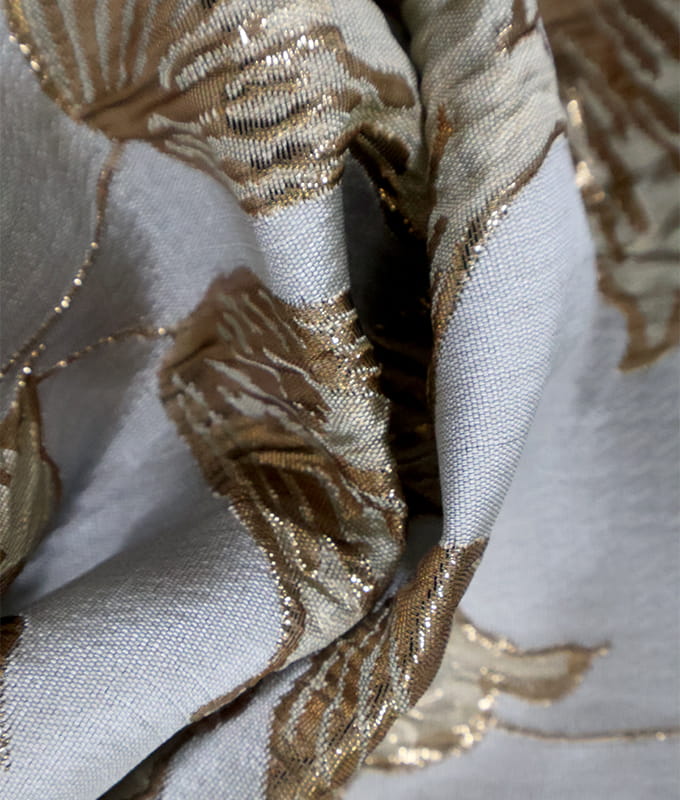
Duotone Tulip Gold-thread Jacquard Fabric is woven with a clearly layered, dimensional tulip leaf motif using jacquard construction, featuring a strik...
See Details -
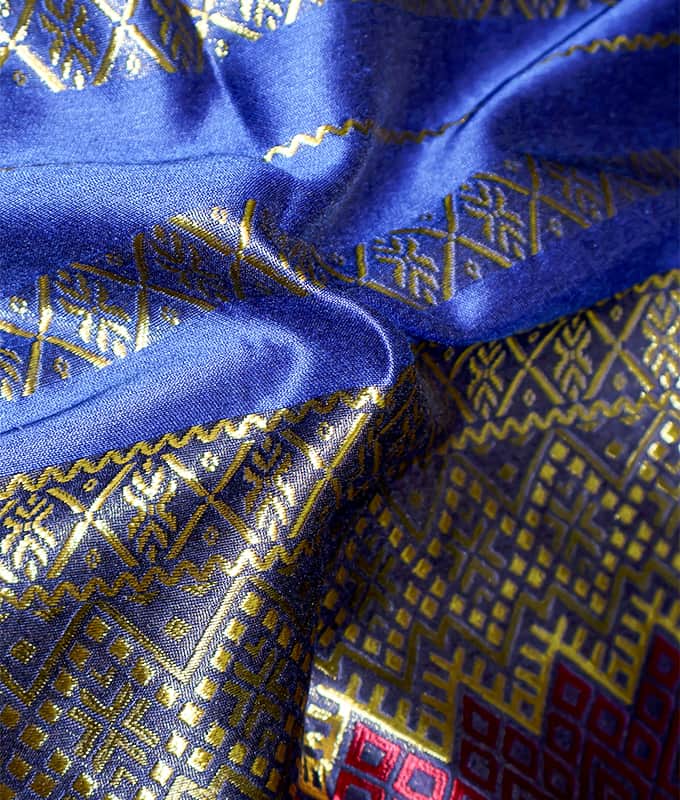
100% Polyester Jacquard Pattern Colorful Southeast Asian Sarong Fabric – durable, vibrant, and easy to care for, designed to bring both beauty and pra...
See Details

