English
  عربى
عربى  中文简体
中文简体 Hand-Stitched Style Poly-Cotton Fabric for Sarong— a refined blend of style and practicality, crafted to give tube skirts a smooth texture and a well-...
See DetailsAdapting Local Motifs for Global Buyers: What to Keep, Change, and Sample
Industry News-Content
A buyer in Dubai sends a photograph of a handwoven Lao tube skirt and asks for the same pattern in polyester, three thousand meters, delivery in six weeks. A buyer in Kuala Lumpur wants a classic houndstooth keffiyeh re-colored for a younger customer base, without losing the pattern everyone recognizes at a glance. Both are describing the same job: adapting local motifs for global buyers, which means keeping a design's identity while changing almost everything around it.
The conclusion comes first: adaptation succeeds when you separate what a motif means from how it is made. A motif's identity usually lives in its structure and its texture; its fiber, repeat scale, and often its palette are negotiable. Decide which elements are fixed and which are flexible before sampling, and the project moves quickly. Skip that decision, and you end up with either a fabric that no longer reads as the original or samples chasing a handcraft effect that no machine process can reproduce exactly.
What Adapting a Local Motif Actually Involves
In fabric production, adapting a local motif means moving a design out of its original craft context, whether that is handwoven silk in a Thai or Lao workshop, hand-drawn batik, or hand-stitched seams, into mill production for buyers in other markets. Four levers get pulled, usually in combination:
- Substrate: the fiber changes, most often silk or cotton moving to polyester or poly-cotton blends for cost, durability, and easy care.
- Technique: the way the motif is formed changes, from hand drawing, hand stitching, or hand weaving to jacquard weaving or printing.
- Colorway: the palette is re-mapped to the destination market, the season, or the buyer's range.
- Scale and repeat: the motif is enlarged, reduced, or re-engineered to fit standard loom widths and garment panels.
The point buyers overlook most often is that identity lives in structure and texture, not in fiber. A Pha Sinh skirt woven in silk-feel polyester still reads as a Pha Sinh; the same motif printed flat on a plain cloth usually does not. That is why the fixed-versus-flexible decision matters more than the price negotiation that usually dominates a first meeting.
What to Keep Fixed and What You Can Safely Change
Start with what should not change. In a keffiyeh, the houndstooth ground is the design itself; remove it and you have a checkered headscarf, not a keffiyeh. In a sarong, the border bands and the hierarchy between body motif, border, and selvedge carry the recognition. These structural elements survive every adaptation.
Color deserves more caution than buyers expect. In keffiyeh traditions, palette is not decoration: different color combinations carry regional and occasion-specific meaning in Arab countries, and a palette chosen purely from a European trend board can misfire in the destination market. Within those limits, color is the most flexible lever, because the pattern structure holds while the palette follows the market.
One working example is our cotton keffiyeh in sage green and navy houndstooth with a gold plaid border. The houndstooth structure stays intact and recognizable, while the palette and the gold border accent move the same design toward buyers who want something beyond the classic red-white and black-white combinations.
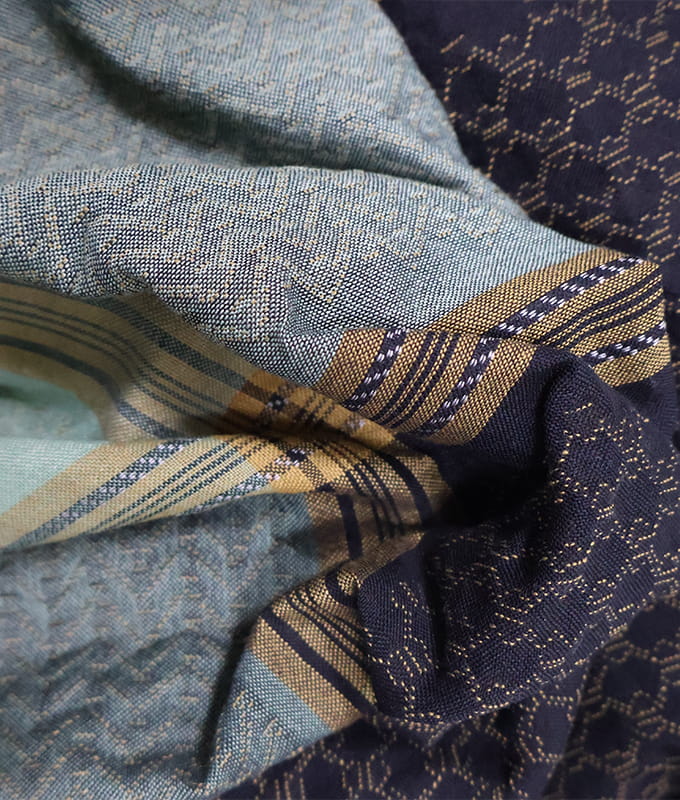 Sage Green & Navy Houndstooth Keffiyeh with Gold Plaid BorderAn oversized Arabic-style scarf pairing sage green houndstooth jacquard with navy honeycomb weave and a gold plaid border. It shows how palette changes adapt a classic keffiyeh while keeping its recognizable structure.View Product →
The table below sums up the four levers and the element that should stay fixed in each case.
| Adaptation lever | What changes | What stays fixed | Typical scenario |
|---|---|---|---|
| Substrate | Silk or cotton replaced by polyester or poly-cotton | Motif structure, weave texture, drape targets | Wholesale sarong programs needing machine washability |
| Technique | Handcraft method replaced by jacquard weaving or printing | Woven or stitch-like character of the motif | Scaling a hand-stitched look to production volumes |
| Colorway | Palette re-mapped to the destination market or season | Ground-motif contrast and symbolic color rules | Keffiyeh programs and seasonal scarves |
| Scale and repeat | Motif enlarged, reduced, or re-fit to loom width | Recognizable silhouette and border hierarchy | Skirt panels, scarves, and home textiles |
Matching the Motif to the Right Production Technique
Once you know what stays fixed, the main decision is how the motif gets made: woven or printed. This is not an aesthetic preference; it decides whether the adapted fabric still carries the original's character.
Weave it when texture is the identity
If a motif's value lies in how it feels, whether that is raised jacquard relief, glinting gold thread, or openwork structure, it has to be woven. Gold thread worked in as a metallic yarn during weaving keeps its luster and dimension through washing, while a printed metallic ink sits on the surface and flattens the same idea. This is also where substrate adaptation happens: our silk-like polyester jacquard for the Thai Pha Sinh sarong reproduces the drape and quiet sheen of handwoven silk at a price and handfeel that work for volume programs, without altering the motif layout that makes the garment read as traditional.
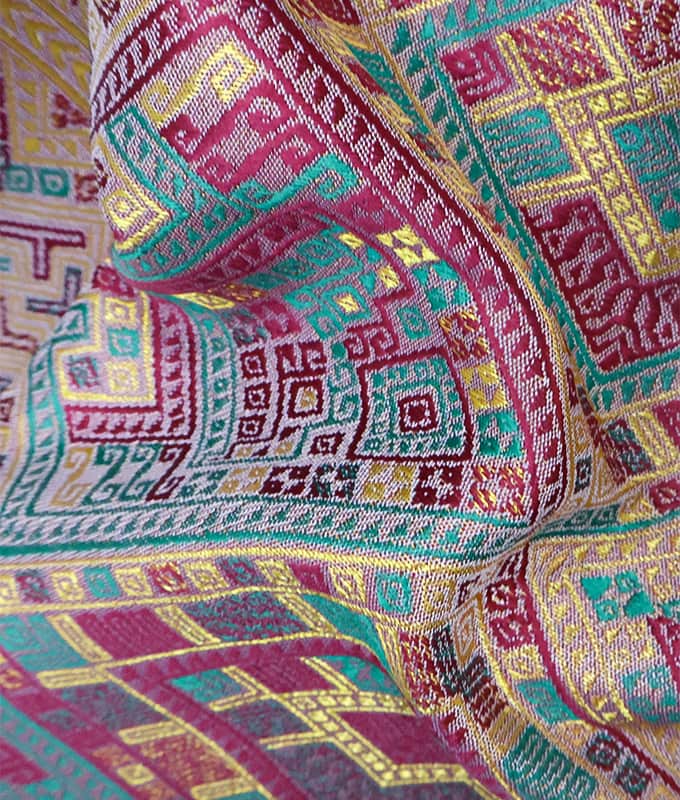 Silk-like Polyester Jacquard Fabric for Thai Pha Sinh SarongA silk-like polyester jacquard with natural drape and quiet sheen, machine-washable and wrinkle-resistant. It demonstrates how woven motifs and substrate adaptation preserve traditional character for volume programs.View Product →
Print it when the artwork leads
If the motif is graphic, such as a sunflower print, large floral fields, or batik-style rendering, printing delivers it faster and cheaper, and lets you change colorways without re-engineering a weave. The trade-offs to check at sampling are repeat alignment across the width and colorfastness on the chosen fiber, because a print that migrates or fades undoes the adaptation no matter how faithful the artwork is.
From Reference Image to Approved Bulk
Buyers who treat motif adaptation as a structured process get usable samples in one or two rounds. Buyers who treat it as "copy this photo" usually need five. The sequence we run with clients looks like this:
- Start from the original textile, not a redrawn file. Send photos of the actual cloth, including close-ups of motif details; a redrawn vector has already made several adaptation decisions for you, usually the wrong ones.
- Define end use and market: garment type, target price, washing expectations, and the compliance bar the fabric must clear. Our baseline is that all products meet European environmental standards, which matters when the destination is the EU or a brand with EU customers.
- Choose substrate and technique together, before sampling. This single decision determines how the motif renders: a silk-feel jacquard, a poly-cotton print, and an imitation hand-stitched weave give three visibly different results from the same reference.
- Sample on the full repeat. Check the motif scale at finished width, judge colors in daylight rather than under office lighting, and test how gold thread and textured weaves survive handling.
- Run a pilot batch. A small production run exposes what a lab swatch cannot: shade variation between dye lots, seam behavior, and how border bands align at garment scale.
- Lock the specification. Structure, palette, repeat, substrate, and technique are documented together, so reorders match the approved sample instead of drifting.
An example of the outcome is a poly-cotton sarong fabric whose surface imitates hand stitching, giving buyers the handmade character that sells in ethnic apparel at a machine-production price point. The full commissioning route, from first contact to bulk order, is covered in more detail in our guide for Southeast Asian ethnic apparel brands that customize fabric from scratch.
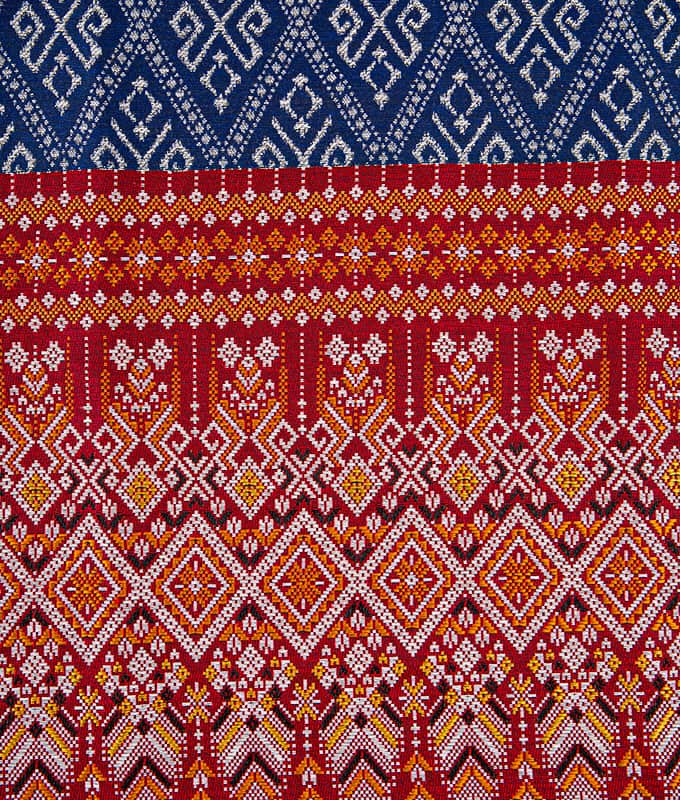 Hand-Stitched Style Poly-Cotton Sarong FabricA 65/35 poly-cotton sarong fabric with a hand-stitched look, smooth skin-friendly feel, and good shape retention. It delivers artisanal character at machine-production cost, a useful example of realistic adaptation.View Product →
Pitfalls That Cost Buyers Time and Money
Most failed adaptations fail for predictable reasons, and all of them are avoidable at the brief stage:
- Scaling a motif up without checking it at garment-panel width, so seam lines crop the pattern and break its structure.
- Demanding exact handcraft irregularity from a machine repeat. A weave can suggest the hand, not copy it; decide which you actually want before sampling.
- Treating symbolic colors as decoration. Keffiyeh palettes carry meaning in Arab markets, and a trend-driven substitution can read as a different statement entirely.
- Choosing print where weave texture is the identity, which flattens raised motifs and removes the tactile cue buyers associate with the tradition.
- Assuming a cheaper substrate is invisible. When the handfeel drifts too far from what the tradition promises, the fabric reads as a costume copy, and the price savings do not rescue it.
Good adaptation is a series of deliberate decisions, not a filter applied to a photograph: fix the structure and texture that carry the identity, flex the substrate, palette, and repeat to fit the market, then verify the result on the loom rather than on screen. That is the work Huzhou Zhengyan Textile has built its production around since 2006: high-end Dai and Southeast Asian ethnic fabrics, designed and developed in-house, tested in our own laboratory, and produced in small batches with custom colorways for buyers across Southeast Asia and the Middle East, all meeting European environmental standards. Bring the original textile, the end use, and the target price, and the adaptation decisions become a short, structured conversation.
Related products
-

-
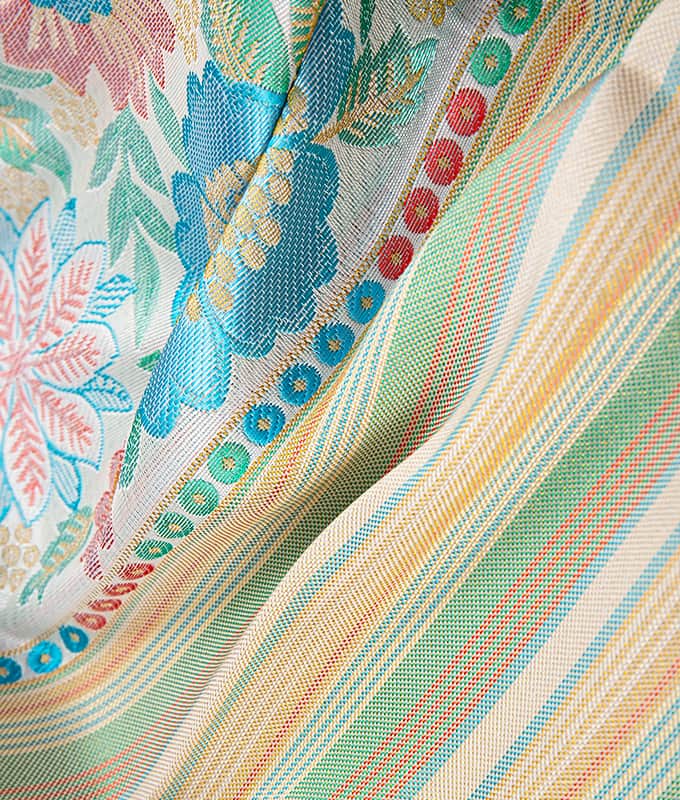
Sunflower Print Poly-Cotton Fabric for Sarong — a vibrant fabric inspired by sunflowers, radiating energy and brightness. Made with soft poly-cotton, ...
See Details -
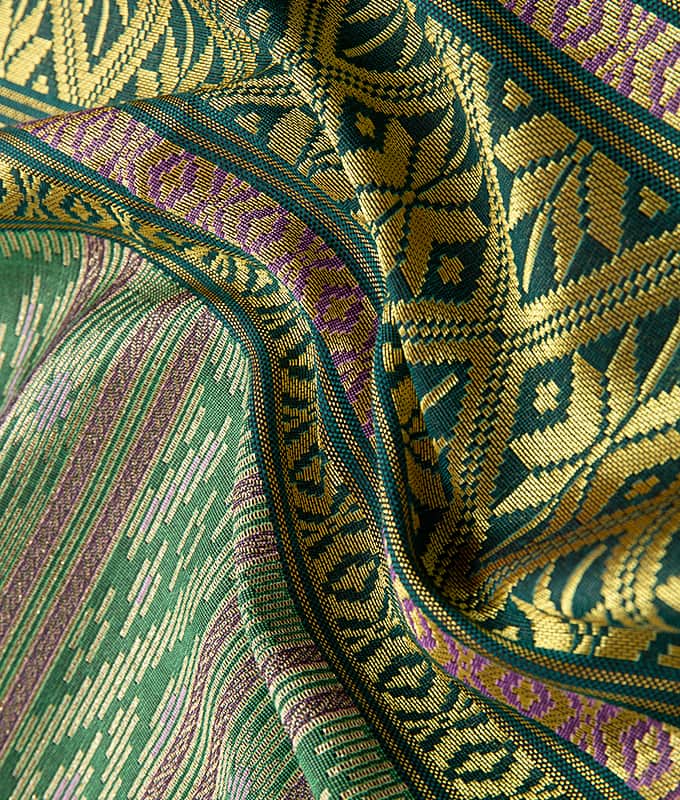
The Vertical Stripe Gold Thread Poly-Cotton Fabric for Sarong blends durability and comfort with a touch of elegance. Featuring vertically arranged go...
See Details -

Silk-like Polyester Jacquard Fabric for Thai Pha Sinh Sarong — combining the elegance of silk-like texture with high-precision jacquard craftsmanship,...
See Details -
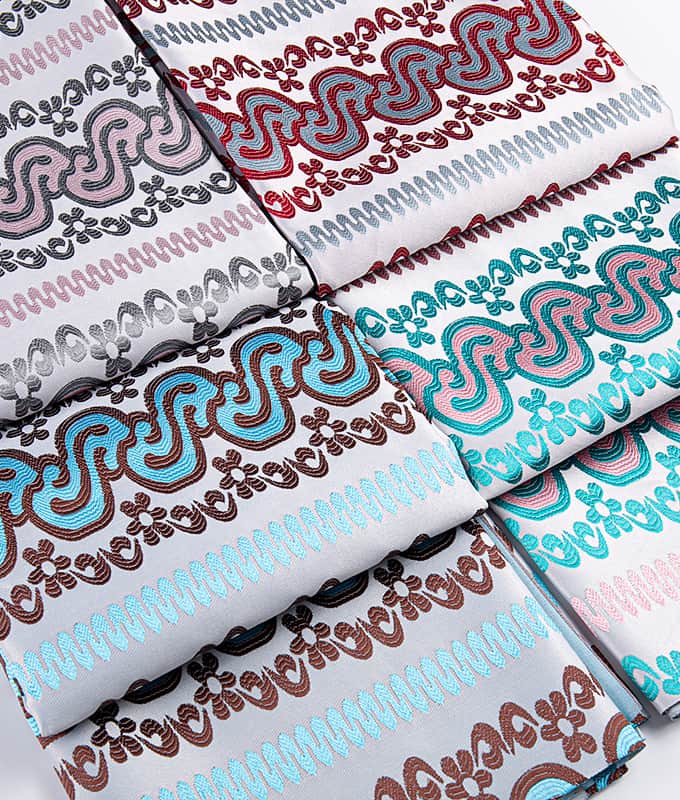
The S-Shaped 3D Textured Polyester Jacquard Fabric for Sarong combines elegance with durability. Crafted with advanced electronic jacquard technology,...
See Details -
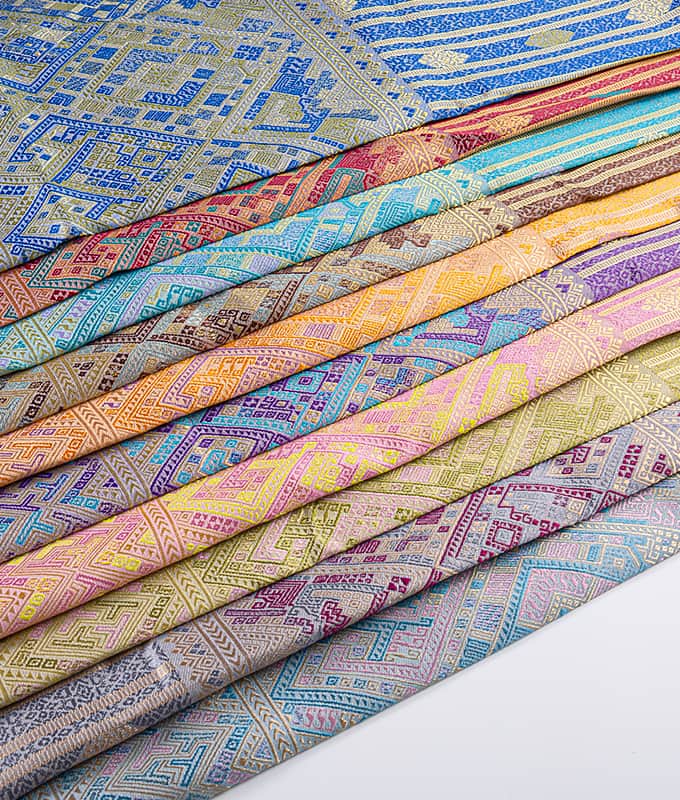
Hollow Polyester Jacquard Fabric for Laotian Traditional Sarong — a perfect fusion of Lao cultural heritage and modern fiber innovation. With symbolic...
See Details