English
  عربى
عربى  中文简体
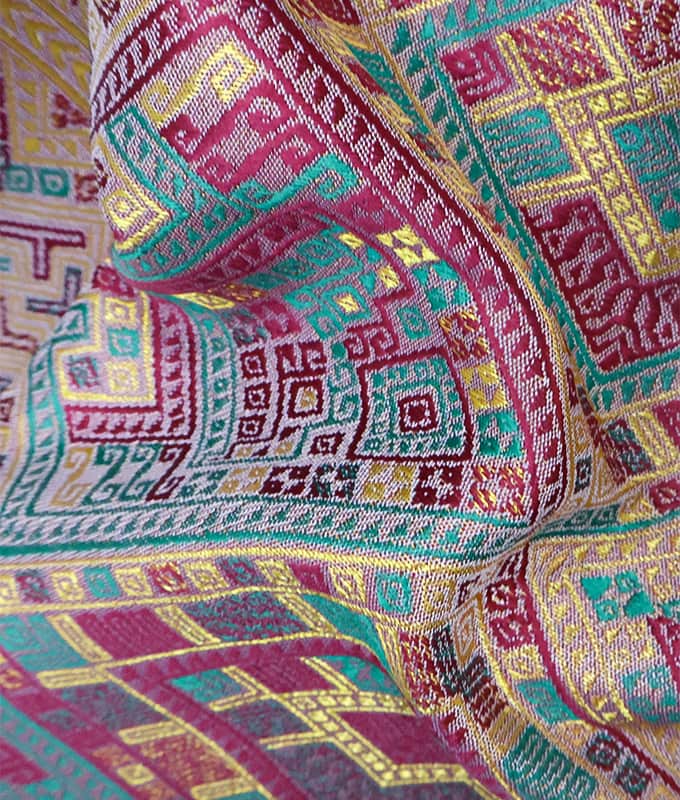
中文简体 Silk-like Polyester Jacquard Fabric for Thai Pha Sinh Sarong — combining the elegance of silk-like texture with high-precision jacquard craftsmanship,...
See DetailsJacquard vs Printed Fabric for Sarong: Which One Should You Choose?
Industry News-Content
- 1 What Is Jacquard Sarong Fabric?
- 2 What Is Printed Sarong Fabric?
- 3 Jacquard vs Printed Sarong Fabric: A Direct Comparison
- 4 When to Choose Jacquard Fabric for Sarongs
- 5 When to Choose Printed Fabric for Sarongs
- 6 Which Fabric Works Best for Different Sarong Types?
- 7 Fabric Construction and Fiber Composition: An Additional Layer of Choice
- 8 Final Recommendation: Match the Fabric to the Market
If you are sourcing fabric for sarongs — whether for traditional Southeast Asian garments, resort wear, or wholesale distribution — the choice between jacquard and printed fabric will affect the final product's appearance, durability, production cost, and market positioning. Jacquard fabric is generally the better choice for premium, ceremonial, or long-lasting sarongs, while printed fabric offers greater flexibility, lower cost, and faster turnaround for fashion-driven or high-volume orders. Understanding how each is made and where each performs best will help you make the right call for your specific use case.
What Is Jacquard Sarong Fabric?
Jacquard fabric is produced on a Jacquard loom, where the pattern is woven directly into the structure of the textile during manufacturing. The design is not applied to the surface — it is part of the weave itself. This gives jacquard fabric its defining characteristics: a raised, three-dimensional texture, strong visual depth, and patterns that are visible and consistent on both sides of the fabric.
For sarong applications, polyester jacquard is by far the most common construction. It combines the pattern complexity of traditional weaving with the durability and color retention of synthetic fiber. Common pattern types include geometric motifs, floral interlocks, and the intricate lattice designs associated with Thai Pha Sin, Laotian sinh, and Indonesian kain.
Because the pattern is woven in, jacquard sarong fabric does not fade, peel, or crack with washing. The fabric maintains its appearance throughout its usable life, which makes it the standard choice for traditional garments intended for repeated wear or ceremonial occasions. Explore the full range of Polyester Jacquard Southeast Asia Sarong Fabric options for detailed specifications and pattern variety.
What Is Printed Sarong Fabric?
Printed sarong fabric starts with a base woven textile — typically a polyester-cotton blend or 100% polyester — and the pattern is applied to the surface through a printing process. This can be screen printing, rotary printing, or digital printing, depending on the run size and design complexity. The base fabric is usually plain or lightly textured, and the visual effect comes entirely from the applied ink or dye.
Printed fabrics are significantly more versatile in terms of design. Any artwork, photograph, gradient, or intricate multicolor pattern can be reproduced on a printed sarong without the technical constraints of a loom setup. This makes printed fabric the preferred format for seasonal fashion collections, tourist-market sarongs, and orders requiring frequent design changes.
From a cost standpoint, printed sarong fabric is typically less expensive per meter than jacquard, especially for small to medium runs. However, print quality and wash durability vary significantly by production method and ink type. The Polyester Cotton Blended Southeast Asia Sarong Fabric line covers a wide range of printed options suited to different market needs.
Jacquard vs Printed Sarong Fabric: A Direct Comparison
The table below summarizes the key differences across the dimensions that matter most when selecting sarong fabric for production or procurement.
| Attribute | Jacquard Sarong Fabric | Printed Sarong Fabric |
|---|---|---|
| Pattern Method | Woven into the fabric structure | Applied to the fabric surface |
| Texture | Three-dimensional, raised feel | Flat, smooth surface |
| Durability | Very high — pattern does not fade | Moderate — depends on ink and wash method |
| Design Flexibility | Limited to loom-compatible patterns | Unlimited — any artwork or color range |
| Minimum Order | Higher MOQ for pattern setup | Lower MOQ possible, especially digital print |
| Cost per Meter | Higher | Lower to moderate |
| Lead Time | Longer (loom setup required) | Shorter (especially reorder runs) |
| Visual Effect | Premium, structured, traditional | Colorful, versatile, modern or traditional |
| Best Application | Ceremonial wear, quality retail, traditional garments | Beach sarongs, tourist market, fashion collections |
When to Choose Jacquard Fabric for Sarongs
Jacquard sarong fabric is the right choice in the following situations:
- Traditional ceremonial garments. Thai Pha Sin, Laotian sinh, and Indonesian batik-adjacent sarongs worn for religious ceremonies, weddings, or national holidays require fabric with structural integrity and visual richness. Jacquard delivers the visual weight and pattern permanence expected in these contexts.
- Premium retail positioning. If you are selling into quality apparel retail, department stores, or cultural clothing boutiques, the tactile texture and elevated appearance of jacquard fabric supports higher price points and product storytelling.
- Long-term wearability. For sarongs intended to be worn frequently and laundered regularly, jacquard is more resistant to pattern degradation. The woven design will not fade or crack regardless of wash count.
- Differentiated wholesale offerings. For distributors and wholesalers looking to offer something above standard printed sarongs, polyester jacquard provides a clear point of difference in quality and appearance at a competitive wholesale cost.
Variants like silk-effect jacquard, hollow-weave jacquard, and 3D textured jacquard allow significant aesthetic variation within the jacquard category while retaining the core durability advantages.
When to Choose Printed Fabric for Sarongs
Printed sarong fabric makes more sense in these scenarios:
- High-volume, price-sensitive markets. Beach resort gift shops, tourist market vendors, and souvenir distributors typically need large quantities at competitive price points. Printed fabric allows this while still delivering visually appealing products.
- Seasonal or trend-driven designs. If your sarong design changes frequently to match fashion trends or seasonal themes, printed fabric allows faster design turnover without incurring the loom setup costs of jacquard. New patterns can be introduced with minimal lead time.
- Complex multicolor photographic or gradient patterns. Certain design types — including photographic prints, watercolor effects, or detailed floral illustrations — are difficult or impossible to replicate on a jacquard loom. Digital or screen printing handles these patterns without limitation.
- Smaller initial orders or sample runs. For buyers testing a new market or product line, printed sarong fabric typically allows lower minimum order quantities, reducing inventory risk during the evaluation phase.
Which Fabric Works Best for Different Sarong Types?
The intended sarong format and market strongly influences which fabric category to prioritize. Below is a practical breakdown by sarong type across Southeast Asian traditions:
- Thai Pha Sin (Thailand): Traditionally uses woven fabric with intricate geometric borders. Polyester jacquard with silk-like finish closely replicates the appearance of authentic hand-woven sin fabric and is widely used in modern commercial production for both local and export markets.
- Indonesian Sarong / Kain: The market includes both traditional batik-patterned fabrics (often printed) and woven options. Printed polyester-cotton blends are commonly used for everyday sarongs, while jacquard constructions serve more formal or decorative applications.
- Laotian Sinh: Features distinctive geometric patterns and horizontal banding. Hollow-weave polyester jacquard is well-suited to replicating the open-weave sections traditional to Lao textile design.
- Beach and resort sarongs: These prioritize visual impact, lightweight drape, and affordability over durability or tradition. Printed polyester-cotton blends — including sunflower prints, geometric prints, and bold floral designs — dominate this segment.
- Multipurpose sarong (travel, casual): Buyers looking for a single versatile product often prefer printed sarongs for their lighter weight and casual aesthetic, though jacquard options with softer hand-feel are also available for this use case.
For a comprehensive overview of sarong fabric types used across Southeast Asia, the sarong fabric guide covers construction methods, fiber choices, and sourcing considerations in detail.
Fabric Construction and Fiber Composition: An Additional Layer of Choice
Within both jacquard and printed categories, fiber composition adds another decision dimension. The two most common options for sarong production are:
- 100% polyester: Offers excellent color vibrancy, strong durability, low moisture absorption, and consistent dimensional stability. Polyester jacquard fabrics in particular retain their sheen and structure through extended use. This is the dominant choice for traditional Southeast Asian sarong fabric in modern commercial production.
- Polyester-cotton blend: Combines the breathability and softness of cotton with the durability of polyester. This blend is popular for printed sarongs intended for everyday or casual wear, particularly in warmer climates where comfort is prioritized. Common blending ratios range from 65/35 to 50/50 polyester-to-cotton.
Both fiber types are available across jacquard and printed construction methods, allowing buyers to optimize for their specific performance, comfort, and cost requirements. The full Southeast Asia National Traditional Sarong Fabric range includes options across both fiber categories and construction types.
Final Recommendation: Match the Fabric to the Market
Choose jacquard sarong fabric when your target market values craftsmanship, durability, and traditional authenticity — or when you need to position the product above standard market price points. Jacquard is the right investment for ceremonial garments, quality wholesale lines, and products where pattern permanence justifies a higher per-meter cost.
Choose printed sarong fabric when design flexibility, lower unit cost, faster turnaround, or smaller MOQ requirements are the priority. Printed constructions are the standard for resort wear, tourist-market sarongs, and fashion-driven collections where designs change frequently.
Many buyers source both fabric types simultaneously — jacquard for their core traditional range and printed polyester-cotton for volume or seasonal lines. This approach maximizes product range without overcommitting to a single production format. For buyers looking to evaluate specific options across both categories, the Polyester Cotton Blended Southeast Asia Sarong Fabric and polyester jacquard lines offer a clear basis for direct comparison.
Related products
-
-
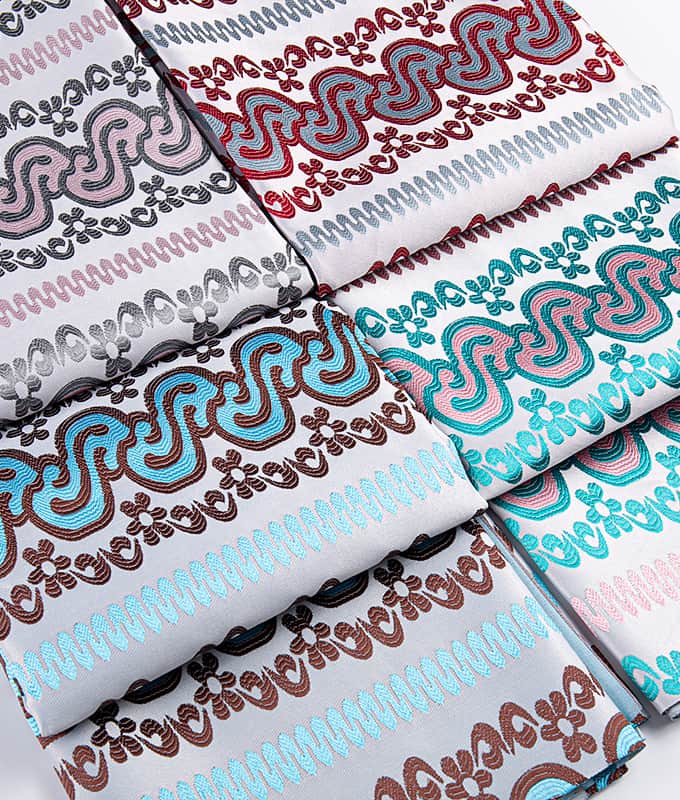
The S-Shaped 3D Textured Polyester Jacquard Fabric for Sarong combines elegance with durability. Crafted with advanced electronic jacquard technology,...
See Details -
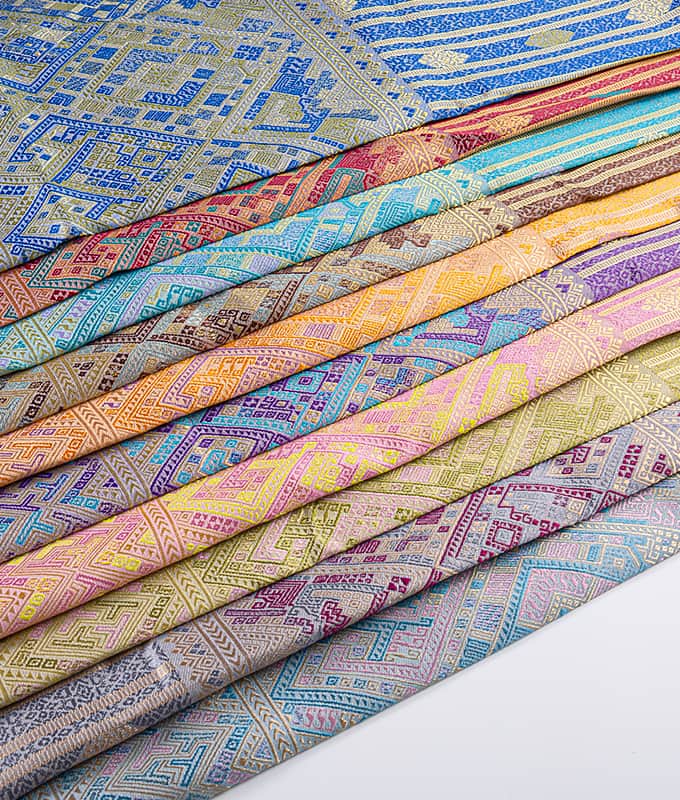
Hollow Polyester Jacquard Fabric for Laotian Traditional Sarong — a perfect fusion of Lao cultural heritage and modern fiber innovation. With symbolic...
See Details -
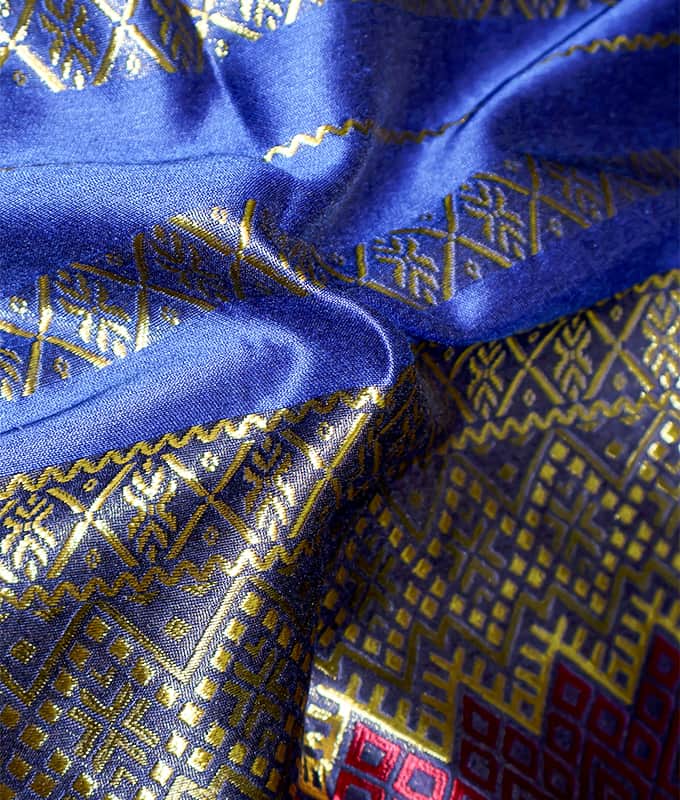
100% Polyester Jacquard Pattern Colorful Southeast Asian Sarong Fabric – durable, vibrant, and easy to care for, designed to bring both beauty and pra...
See Details -
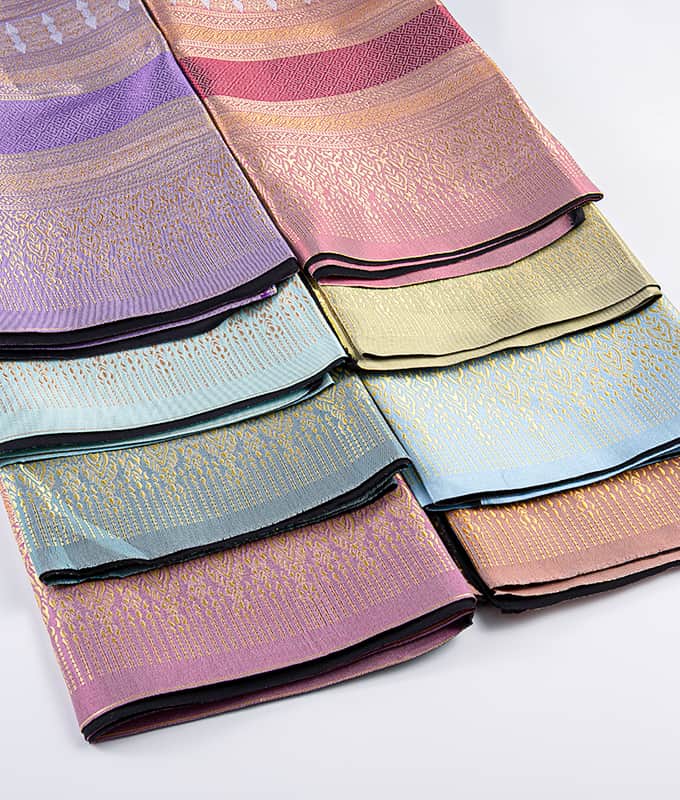
The Polyester Fabric for Popular Traditional Thai Sarong is crafted from carefully selected polyester filaments, with strict quality control from the ...
See Details -
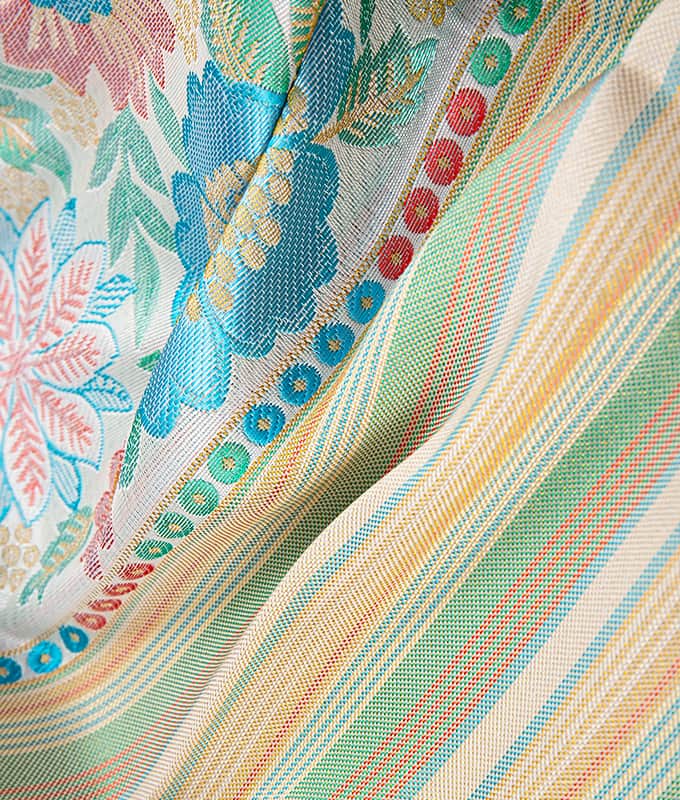
Sunflower Print Poly-Cotton Fabric for Sarong — a vibrant fabric inspired by sunflowers, radiating energy and brightness. Made with soft poly-cotton, ...
See Details