


 English
  عربى
عربى  中文简体
中文简体 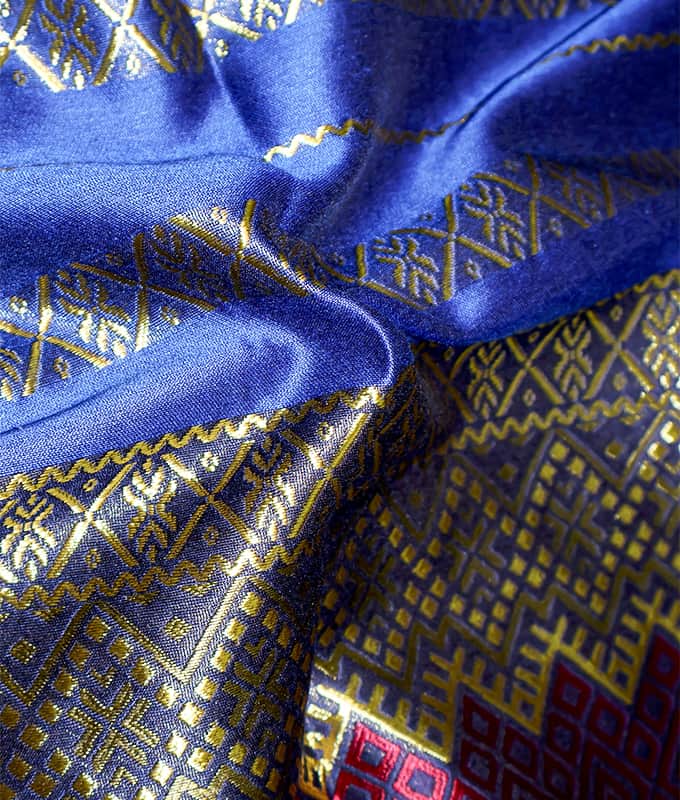
Silk-like Polyester Jacquard Fabric for Thai Pha Sinh Sarong — combining the elegance of silk-like texture with high-precision jacquard craftsmanship,...
See DetailsPha Sin Fabric Supplier China: Source Authentic Sarong Materials at Bulk Prices
Industry News-Content
- 1 What Is Pha Sin Fabric? A Quick Cultural & Technical Overview
- 2 Why Source Pha Sin Fabric from China? Key Advantages
- 3 3 Main Fabric Types for Pha Sin: Silk, Polyester Jacquard, and Cotton Blends
- 4 Jacquard vs Printed: Which Technique Preserves Traditional Patterns Better?
- 5 Step-by-Step Guide to Customizing Pha Sin Fabric with a Chinese Supplier
- 6 Cultural Do’s and Don’ts: Avoiding Design Mistakes in Pha Sin Fabric
- 7 How to Verify a Reliable Pha Sin Fabric Supplier in China
What Is Pha Sin Fabric? A Quick Cultural & Technical Overview
A Thai designer sourcing 1,000 yards of Pha Sin fabric for a retail collection often faces a 50% price gap between local silk houses and Chinese jacquard mills. That price difference alone explains why so many Southeast Asian brands now look to China for bulk orders. But cost is just one factor: Pha Sin is not simply a bolt of cloth. It is a traditional tubular skirt worn daily in Thailand and Laos, loaded with symbolic motifs that date back centuries.
Structurally, a typical Pha Sin measures about 2 yards long by 31.5 inches wide, and it usually consists of three horizontal bands: the waistband (hua sin), the main body (tua sin), and the hem border (tin sin). The fabric can be silk, cotton, or synthetic blend, but the real identity lies in the patterns. Motifs such as the Naga serpent, star flowers, diamond eyes, and flowing water lines are not just decorative. They carry meanings of protection, fertility, luck, and respect for nature.
| Motif | Common Name | Symbolism |
|---|---|---|
| Serpent with hood | Naga | Protection, fertility, water guardian |
| Eight-pointed flower | Star Flower | Luck, prosperity, often used in wedding textiles |
| Diamond shapes | Eye Motif | Wards off evil spirits |
| Horizontal wavy lines | Flowing Water | Life, rice field irrigation, continuity |
The technical challenge for any supplier is to faithfully reproduce these motifs on modern looms while meeting commercial durability and colorfastness standards. High-volume Chinese mills that specialize in polyester jacquard fabric have become a go-to solution precisely because they can render even detailed Naga scales at scale.
Why Source Pha Sin Fabric from China? Key Advantages
Chinese textile mills offer three decisive advantages for Pha Sin buyers: cost control, technological versatility, and mature export logistics. A polyester jacquard Pha Sin fabric that costs USD 3.50 per yard from a Zhejiang mill would typically quote at USD 8–10 per yard from a small workshop in northeastern Thailand. That margin can make or break a wholesale fashion line.
Beyond price, Chinese factories handle mixed techniques in one production run—a single order can combine jacquard weaving for the main body and printed hems, something that requires two separate artisan groups in Laos. Shipping adds another layer. With most fabric exported FOB Shanghai or Ningbo, container loads reach Bangkok or Vientiane in 7–12 days, compared with 3–4 weeks for fragmented inland orders.
Equally important, China’s top export-oriented mills are accustomed to international compliance. They routinely meet OEKO-TEX Standard 100 and can provide lab test reports for colorfastness, formaldehyde content, and azo dyes. For brands that sell into European or North American markets, this is not optional.
| Fabric Type | China Mill Price (USD) | Local Workshop Price (USD) | Lead Time (bulk) |
|---|---|---|---|
| Polyester Jacquard | 3.00–8.00 | 8.00–15.00 | 7–15 days (China) / 30+ days (local) |
| Cotton-Poly Blend Print | 2.00–5.00 | 5.00–9.00 | 10–18 days (China) / 25+ days (local) |
The logistics advantage is compounded by easy sampling. Most Chinese suppliers will produce a 2–3 yard sample within 3–5 days and ship it via express, allowing buyers to check hand feel, motif sharpness, and dye accuracy long before committing to thousands of yards.
3 Main Fabric Types for Pha Sin: Silk, Polyester Jacquard, and Cotton Blends
Every Pha Sin fabric buyer eventually faces a three-way choice. The decision hinges on budget, end-use occasion, and cultural expectations. Handwoven silk remains the gold standard for ceremonial and luxury garments, but its price and limited production capacity make it impractical for retail chains. Polyester jacquard and poly-cotton blends have filled this gap, each with distinct trade-offs.
Silk Pha Sin—especially Lao silk dyed with natural indigo and lac—can cost USD 200–600 per finished skirt. These pieces are heirlooms, purchased by collectors or worn at temple ceremonies. One high-end example from a master weaver in Sam Neua uses supplementary weft techniques to form star flowers and diamond eyes, and includes a tapestry “flowing water” section. That level of craftsmanship cannot be replicated on an industrial loom, so silk Pha Sin from China almost always comes from small, specialized ateliers rather than large mills.
Polyester jacquard fabric has become the volume workhorse. At 3–8 USD per yard, a single 1000-yard order can produce over 500 skirts. Modern jacquard machines can achieve a 3D texture that mimics the raised effect of hand-woven supplementary threads, and the synthetic yarns resist shrinking, fading, and wrinkling far better than silk. For daily-wear Pha Sin sold in markets across Isan or Luang Prabang, this is the practical choice.
Cotton-poly blends, often printed rather than jacquard-woven, serve the souvenir and casual segment. They are lighter, dry faster, and cost as little as 2 USD per yard. Patterns tend to be simpler—floral repeats or geometric ikat imitations—and the fabric lacks the structural stiffness some traditional tailors prefer. Still, for tourist-grade sarongs or promotional uniforms, blended fabrics hit an acceptable price-quality point. You can see examples of this construction in sunflower-print polycotton sarong fabric that balances softness with vibrant color retention.
| Fabric | Price/yard | Best For | Durability | Cultural Acceptance |
|---|---|---|---|---|
| Handwoven Silk | USD 200–600 (skirt) | Ceremonies, heirlooms | Delicate, dry clean | Highest, mandatory for elite occasions |
| Polyester Jacquard | USD 3–8 | Daily wear, retail | High, machine washable | Accepted for everyday and mid-range fashion |
| Cotton-Poly Blend Print | USD 2–5 | Souvenirs, casual | Medium, prone to surface pilling | Suitable for tourist market, less for formal use |
The cultural acceptance column matters more than many foreign buyers assume. A Lao government official will never wear a printed polyester Pha Sin to a state function. But the same official’s daughter might happily wear a jacquard piece to university. Understanding this hierarchy is the foundation of smart sourcing.
Jacquard vs Printed: Which Technique Preserves Traditional Patterns Better?
The difference between jacquard and print is not just about how the fabric looks; it determines whether a Naga motif reads as sacred or as a blur. Jacquard weaving integrates the pattern directly into the cloth structure by controlling individual warp threads, creating raised, three-dimensional designs. Printed fabric applies pigment to the surface after weaving, often via rotary or digital printing. For Pha Sin, that mechanical gap affects both texture and symbolic clarity.
A Naga scale pattern requires distinct ridges and recesses to convey its serpentine power. Jacquard looms can replicate this in hundreds of picks per inch, giving the fabric a tactile quality that flat prints cannot match. In contrast, an all-over star flower pattern, where the motif repeats symmetrically across the skirt body, may look cleaner and brighter when printed, especially on a smooth cotton-poly base. The print also allows for photorealistic color gradients, which is nearly impossible in jacquard without sacrificing speed.
| Factor | Jacquard | Printed |
|---|---|---|
| Pattern depth | 3D texture, visible from both sides | Flat, surface only |
| Motif fidelity | Sharp, up to 200 picks/inch | High for fine color detail, but no relief |
| Cost per yard | USD 3–8 | USD 2–5 |
| Minimum order | 500–1000 yards/design | 1000–3000 yards/design |
| Best motifs | Naga, diamond eyes, flowing water | Floral repeats, ikat-style stripes |
Many Chinese suppliers now offer hybrid solutions: a jacquard border sewn onto a printed main body, or vice versa. This allows the hem band to carry the culturally critical motifs in high relief while the waist-to-knee section uses a printed ground to keep overall fabric costs in check. When requesting samples, ask for both techniques on the same design file to see which suits your motif better.
Step-by-Step Guide to Customizing Pha Sin Fabric with a Chinese Supplier
The custom fabric process frightens many first-time importers, but it follows a predictable rhythm once you understand the sequence. A detailed breakdown eliminates surprises and keeps production on track. The steps below are based on the workflow of Jinjiang and Shaoxing mills that specialize in ethnic Southeast Asian textiles. For a broader view of how to approach supplier selection, refer to this sourcing guide.
- Design brief and reference submission. Send high-resolution photos or scanned sketches of your target motifs, plus Pantone color codes. Clarify which part of the Pha Sin (hua sin, tua sin, tin sin) each pattern belongs to. Most mills will accept AI or CDR files.
- Sampling and loom setup. The factory produces a 2–3 yard strike-off sample, typically in 3–5 working days. Sample fees range from USD 50 to USD 150, refundable against the bulk order. Check the sample under natural light and compare hand feel to a reference swatch.
- Lab dip and color confirmation. For dyed yarns (jacquard) or print pastes, the supplier submits lab dips for approval. This step can take 2–3 additional days. Confirm colors before signing off, as bulk variation beyond a Delta E of 1.5 is usually considered a defect.
- Bulk production. Once the color standard is approved, the mill schedules the run. Jacquard weaving of 1000 yards typically completes in 7–10 days; printing takes longer due to screen setup. MOQ ranges from 500 yards for jacquard to 3000 yards for rotary-printed cotton blends.
- Inspection and shipping. A third-party inspection (or your own agent) checks yardage, color consistency, and selvedge finish. Goods are then packed on rolls and shipped FOB Shanghai or Ningbo. Sea freight to Bangkok takes about 10 days, plus customs clearance.
Throughout this chain, insist on weekly production updates with photos and video. The most reliable suppliers will proactively alert you to any loom tension issues or dye lot variances, saving weeks of rework later.
Cultural Do’s and Don’ts: Avoiding Design Mistakes in Pha Sin Fabric
No matter how flawless the weave or how accurate the color, a Pha Sin fabric that violates cultural norms will be rejected outright by local distributors. The rules are unwritten but rigid, and a supplier unfamiliar with them risks turning an entire container into dead stock.
The Naga motif demands the most caution. In Lao and Thai culture, the Naga is a sacred water serpent and should never appear upside-down or truncated at the seams. The head must face upward or forward. Placing a Naga on a skirt worn by a monk or at a funeral rite is taboo. Star flowers, by contrast, are universally auspicious and work well for wedding or celebration fabrics.
Color carries its own taboos. Black or very dark Pha Sin is associated with mourning in many regions; using it for a casual fashion line aimed at young women will likely fail. Bright gold and maroon are safer for ceremonial pieces, while pastels signal everyday wear. Avoid pure white for the main body of the skirt in Lao contexts, where it can be linked to spirit rituals.
Another common mistake is mixing motifs from different ethnic groups without acknowledgment. A Tai Daeng supplementary-weft pattern combined with a Khmer ikat border can come across as disrespectful patchwork. Stick to a single design lineage per skirt unless you are working with a cultural consultant.
- Naga: sacred, must not be inverted. Suitable for ceremonial hems.
- Star Flower: safe, lucky. Ideal for weddings and festive markets.
- Diamond Eyes: protective. Often used on children’s skirts.
- Flowing Water: neutral, appreciated in agricultural communities.
- Spinning Tool motifs: honor creativity; acceptable on most garments.
When in doubt, commission a native Lao or Thai textile expert to review your artwork before production. The few hundred dollars spent on cultural vetting can prevent thousands of yards from becoming unsellable.
How to Verify a Reliable Pha Sin Fabric Supplier in China
Verifying a supplier goes beyond checking a website. Three practical checks separate consistent export mills from trading companies that simply resell generic fabric without understanding Pha Sin requirements.
First, request a live video tour of the jacquard loom floor—not a pre-recorded marketing clip. Look for specific details: the number of active looms, the presence of design file stations, and finished rolls labeled with Southeast Asian customer names. A legitimate mill will have no problem showing you the production line during business hours.
Second, demand current OEKO-TEX or equivalent test reports for the exact fabric composition you intend to order. The report should list restricted substance compliance and be dated within the last 12 months. Cross-check the testing laboratory’s accreditation online. For printed fabrics, ask for a crocking fastness test result—poor color rub-off is a leading cause of customer returns.
Third, structure payment terms to protect your order. Standard terms are 30% deposit before production, 70% balance against a copy of the bill of lading or after a passed inspection. Avoid 100% upfront payments unless the supplier carries trade assurance and a verifiable track record. Using a third-party inspection service like SGS or Bureau Veritas for a pre-shipment check adds an independent layer of quality control.
One red flag is a supplier that claims to weave jacquard but cannot provide a minimum order below 5,000 yards per design. Genuine jacquard mills routinely accept 500-yard trial orders for new patterns, understanding that cultural motifs require market testing.
Related products
-
-
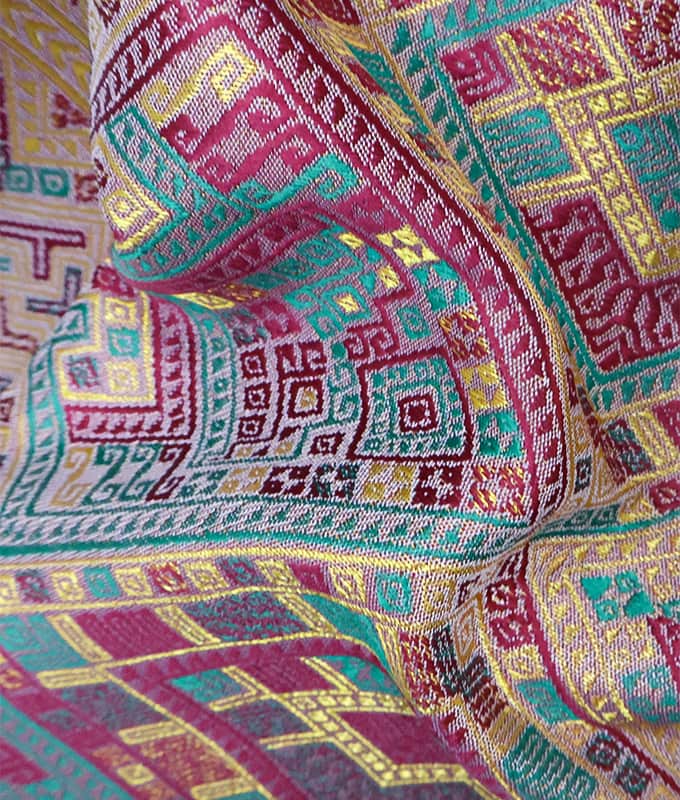
100% Polyester Jacquard Pattern Colorful Southeast Asian Sarong Fabric – durable, vibrant, and easy to care for, designed to bring both beauty and pra...
See Details -
Sunflower Print Poly-Cotton Fabric for Sarong — a vibrant fabric inspired by sunflowers, radiating energy and brightness. Made with soft poly-cotton, ...
See Details -
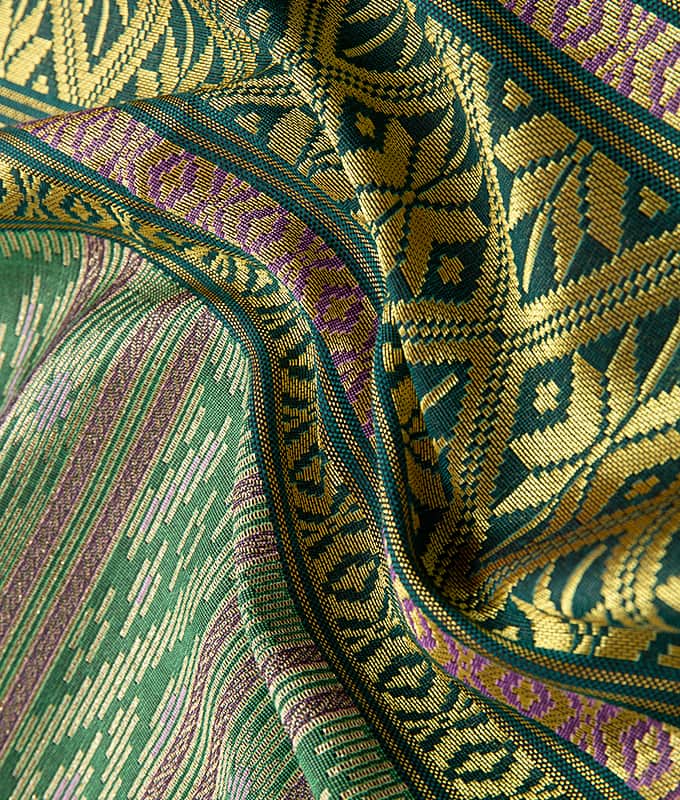
The Vertical Stripe Gold Thread Poly-Cotton Fabric for Sarong blends durability and comfort with a touch of elegance. Featuring vertically arranged go...
See Details -
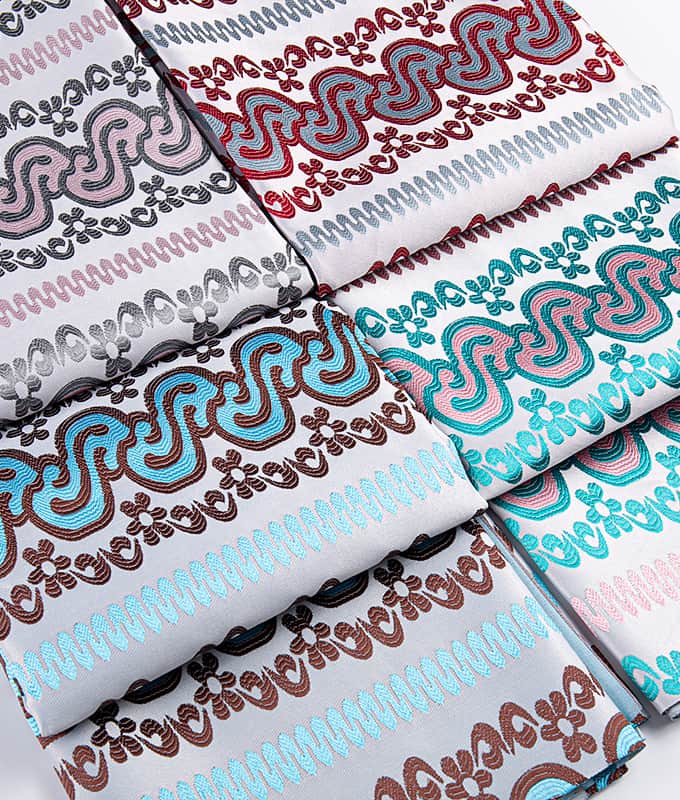
The S-Shaped 3D Textured Polyester Jacquard Fabric for Sarong combines elegance with durability. Crafted with advanced electronic jacquard technology,...
See Details -
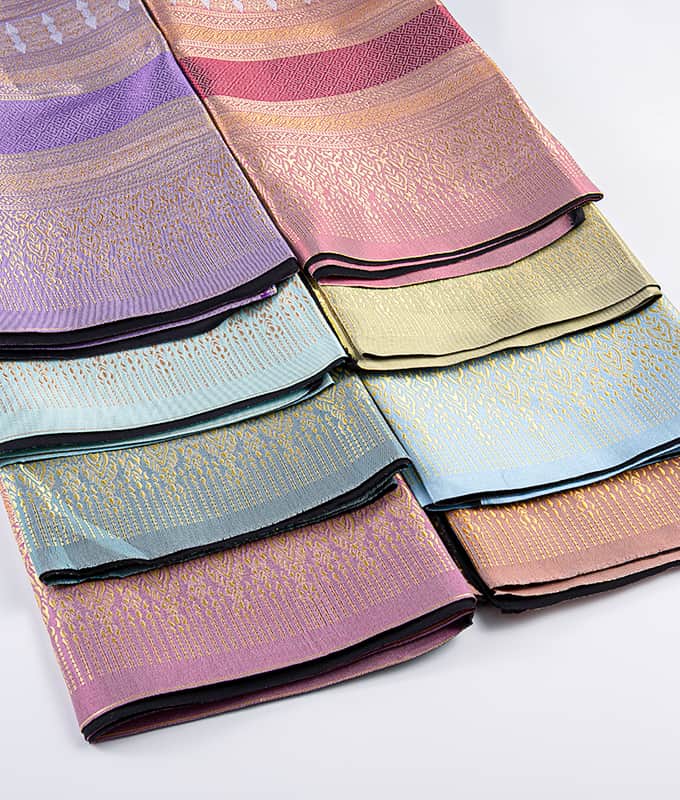
The Polyester Fabric for Popular Traditional Thai Sarong is crafted from carefully selected polyester filaments, with strict quality control from the ...
See Details

